
Introduction
If you’ve ever stood in front of your wardrobe thinking, “I have nothing to wear,” you’re not alone. Most people don’t actually have a clothing problem—they have a clarity problem.
Learning how to find your style isn’t about buying more clothes, copying influencers, or following trends. It’s about understanding:
- What you naturally enjoy wearing
- What fits your daily lifestyle
- What makes you feel confident and comfortable
Most people approach fashion backwards—they shop first and think later. But building a strong personal style works the opposite way:
: You understand yourself first, then build your wardrobe intentionally.
This ultimate guide will help you:
- Discover your true style identity
- Build a wardrobe that works in real life
- Stop wasting money on clothes you never wear
Quick Answer: How to Find Your Style (In 60 Seconds)

If you want a fast answer:
- Understand your lifestyle
- Analyze your current wardrobe
- Track your outfits daily
- Identify patterns (colors, fits, fabrics)
- Define 3 style words
- Build a simple outfit formula
:This is the simplest way to find your personal style quickly
What Is Personal Style? (Complete Understanding)

Personal style is the consistent way you choose, combine, and wear clothing based on your lifestyle, preferences, and personality.
It’s not just about clothes—it’s about:
- How you present yourself
- How you feel in your outfits
- How your wardrobe supports your life
Core Components of Personal Style
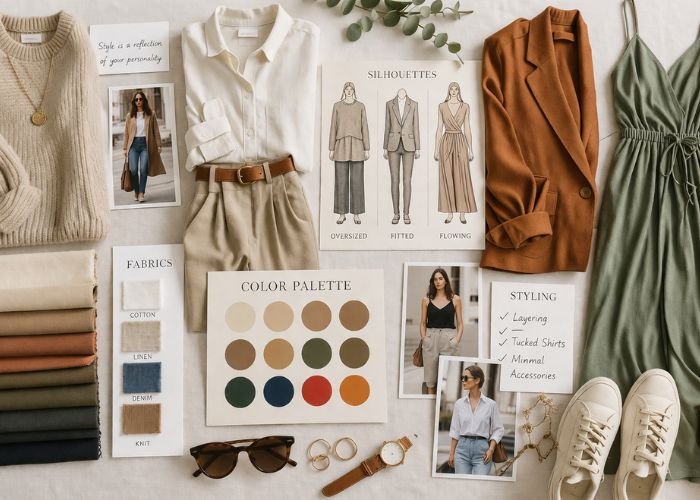
1. Silhouettes (Shape & Fit)
These define how your clothes look on your body:
- Oversized → relaxed, comfortable
- Fitted → structured, sharp
- Flowing → soft, effortless
Your preferred silhouettes form the base of your identity.
2. Colors (Visual Identity)
Your wardrobe usually leans toward:
- Neutrals → black, white, beige
- Earth tones → brown, olive, tan
- Bold colors → red, blue, green
Color consistency creates a recognizable style.
3. Fabrics (Comfort & Function)
Different fabrics impact comfort:
- Cotton → breathable, everyday wear
- Linen → lightweight, summer-friendly
- Denim → durable, structured
4. Styling Habits (How You Wear Clothes)
Small habits define your look:
- Tucked vs untucked
- Layered vs minimal
- Accessories vs no accessories
Personal Style vs Trends (Important Difference)
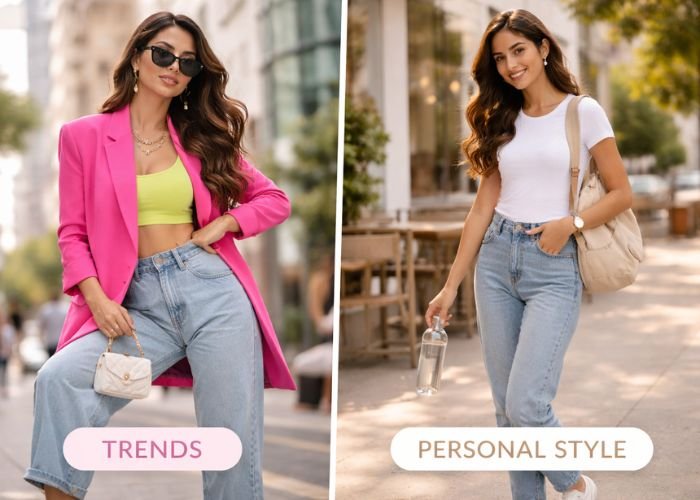
Trends:
- Change quickly
- Driven by social media
- Often impractical
Personal Style:
- Evolves slowly
- Based on your life
- Long-lasting
Example: A trending blazer may look great online—but if your daily life is casual, you’ll never wear it.
Why Most People Struggle to Find Their Style
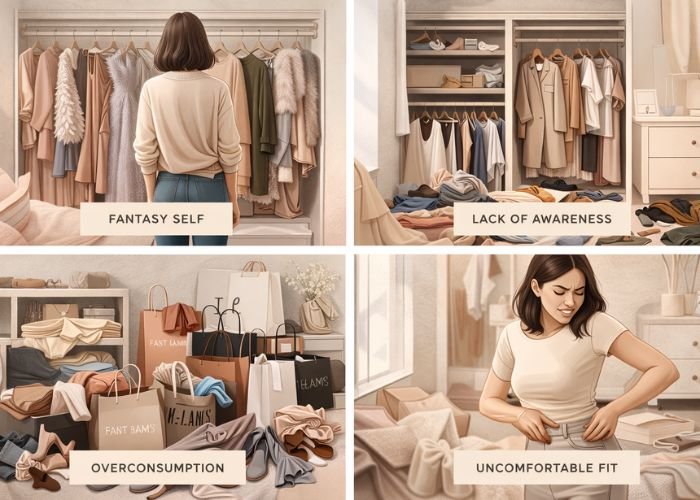
1. Dressing for a Fantasy Self
You imagine a version of yourself:
- More stylish
- More social
- More formal
and buy clothes for that version.
Reality: Those clothes stay unused.
2. Lack of Awareness
Most people don’t know:
- What they wear most
- What they avoid
- What feels uncomfortable
Without awareness, style becomes random.
3. Overconsumption
Fast fashion encourages:
- Impulse buying
- Trend chasing
Result: cluttered wardrobe, no clear identity
4. Ignoring Comfort
If clothes are uncomfortable:
- You won’t wear them
- They won’t become part of your style
How to Find Your Style for Beginners (Start Here)

If you’re completely new, don’t overcomplicate it.
1. Start With What You Already WearLook at:
- Your favorite outfits
- Your most repeated pieces
These already define your real style.
2. Focus on Comfort First
Ask:
- Can I wear this all day?
- Does it feel natural?
Comfort is the foundation of personal style.
3. Keep It Simple
Start with basics:
- T-shirts
- Jeans
- Neutral colors
Avoid mixing too many styles at once.
4. Observe Before Buying
Spend 2–3 weeks noticing:
- What you wear
- What you avoid
This prevents unnecessary shopping.
Step-by-Step System to Find Your Style
Step 1 – Understand Your Lifestyle
Your lifestyle determines your style.
Analyze:
- Work (formal vs casual)
- Daily routine (active vs relaxed)
- Climate (hot, cold, humid)
Your wardrobe must support your daily life.
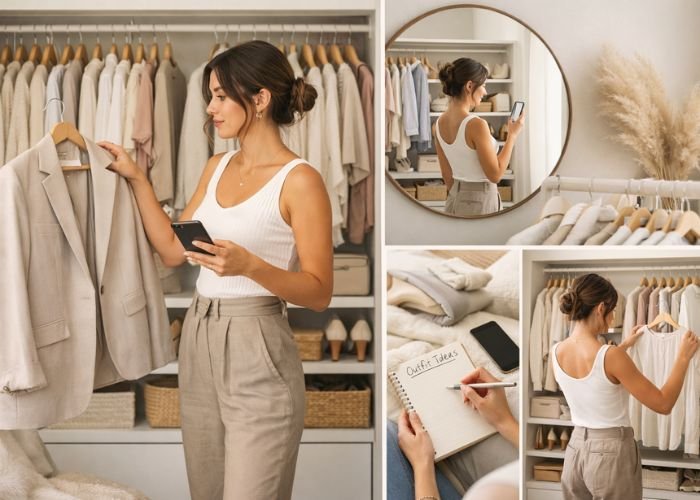
Step 2 – Wardrobe Audit
How to Do It
- Take everything out
- Divide into:
- Frequently worn
- Sometimes worn
- Never worn
Identify Patterns
- Which items do you repeat?
- Which colors dominate?
- Which fits feel best?
Your repeated outfits = your real style
Step 3 – Outfit Tracking (Game-Changer)
How to Track
- Take daily outfit photos
- Store weekly
- Review regularly
What You’ll Learn
- Your most worn outfits
- Your comfort preferences
- Your style patterns
This removes guesswork completely.
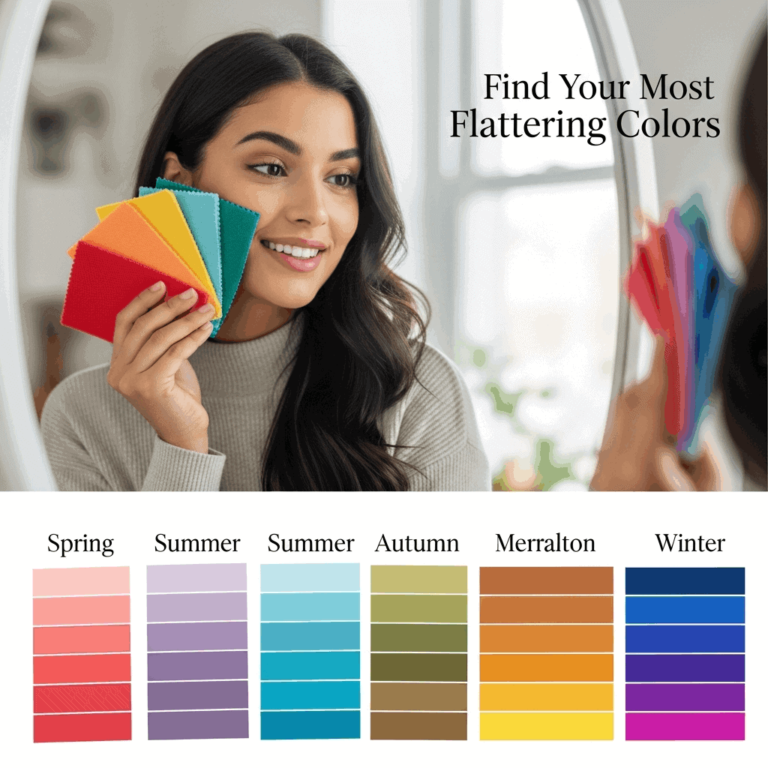
Step 4 – Color Analysis
Understand:
- Warm vs cool tones
- Light vs dark shades
- Bright vs muted colors
Practical Tip
Instead of strict rules:
- Notice what colors you wear often
- Keep what makes you feel confident
Step 5 – Body Shape & Proportion
Focus on Balance:
- Loose + fitted combinations
- Avoid extreme fits
- Ensure movement comfort
Style should feel natural, not forced.
Step 6 – Identify Your Style Aesthetic
Common Style Types:
- Minimalist
- Casual
- Classic
- Streetwear
- Boho
Tip:
You can combine styles:
- Minimal + casual
- Classic + modern
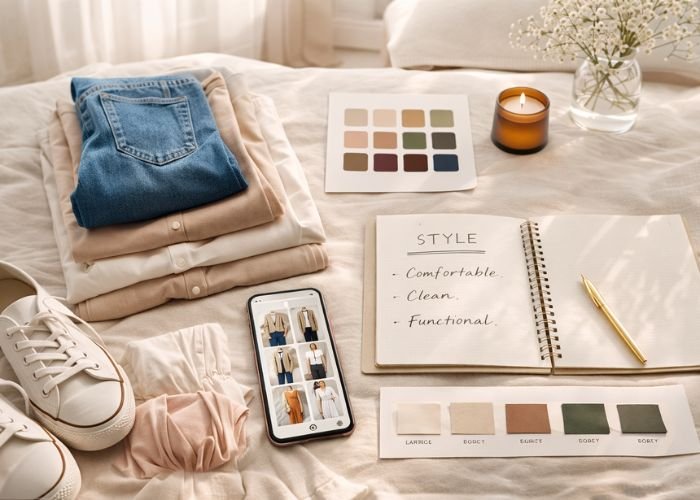
Step 7 – 3-Word Style Method
Example:
- Comfortable
- Clean
- Functional
Use these words to guide every purchase.
Step 8 – Build an Outfit Formula
Example:
- Oversized shirt + jeans + sneakers
Benefits:
- Saves time
- Creates consistency
- Builds signature look
Step 9 – Minimalism & Color System
Strategy:
- 2–3 base colors
- 1–2 accent colors
Benefits:
- Easy outfit matching
- Smarter shopping
- Cleaner wardrobe
Real-Life Style Examples
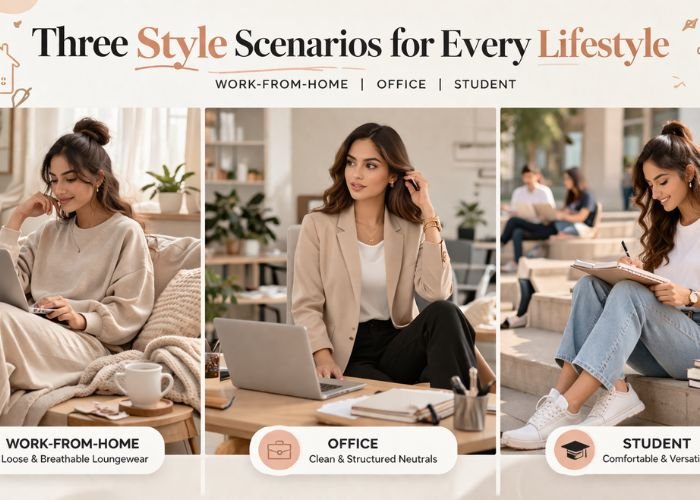
Work-from-Home
- Loose, breathable clothes
- Minimal styling
Style: Casual + Minimal
Office Worker
- Structured outfits
- Neutral colors
Style: Classic
Student
- Comfortable, versatile outfits
Style: Casual + Functional
Advanced Style Frameworks
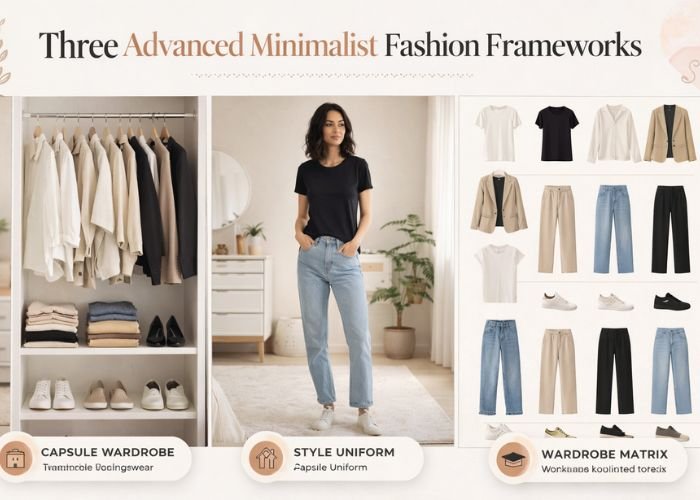
1. Capsule Wardrobe
Structure:
- 8–10 tops
- 4–6 bottoms
- 2–3 shoes
Creates 30+ outfit combinations
2. Style Uniform
Wear similar outfits daily.
Example:
- Black tee + jeans + sneakers
3. Wardrobe Matrix
| Tops | Bottoms | Shoes |
| Shirt | Jeans | Sneakers |
| Tee | Trousers | Loafers |
Helps visualize outfits easily
How to Shop Smart After Finding Your Style

Rule of 3
Only buy if:
- It matches 3 outfits
- Fits your style words
- Works with your wardrobe
Avoid Emotional Buying
Don’t buy because:
- It’s trendy
- It’s on sale
Real Style vs Fantasy Style

Fantasy Style
- Based on imagination
- Rarely used
Real Style
- Based on daily life
- Highly repeatable
Align your wardrobe with reality.
Capsule Wardrobe
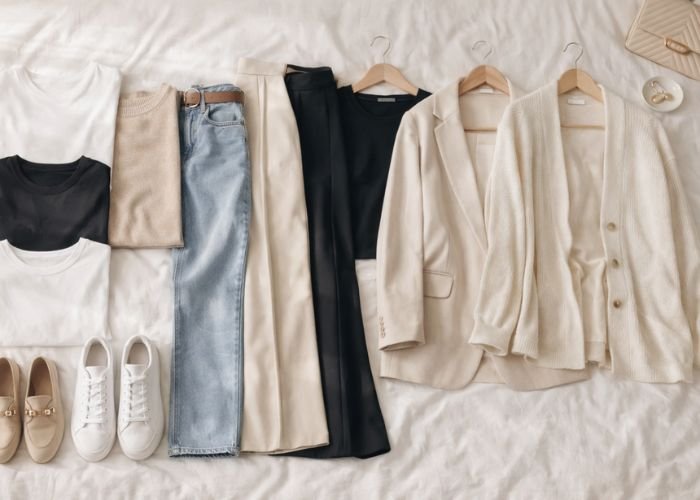
Essentials:
- Neutral tops
- Versatile bottoms
- Comfortable shoes
- Layering pieces
Focus on quality over quantity.
Pro Tips to Refine Your Style Faster

- Track outfits for 30 days
- Repeat outfits confidently
- Focus on versatility
- Avoid impulse shopping
FAQs
How to find your style quickly?
Start with outfit tracking and wardrobe analysis.
How to find my style as a beginner?
Focus on comfort and observe your habits.
Can personal style change?
Yes, it evolves over time.
Why do I have clothes but nothing to wear?
Because your wardrobe doesn’t match your lifestyle.
Final Thoughts
Finding your personal style is not about achieving perfection or following strict fashion rules—it’s about building clarity, consistency, and self-awareness over time.
Instead of constantly searching for the “perfect outfit,” focus on understanding the patterns behind your choices. The more you intentionally observe and analyze your habits, the easier it becomes to create a wardrobe that truly works for you.
To simplify the process, focus on these three core actions:
- Observe your habits → Notice what you actually wear, not what you think you like
- Understand your preferences → Identify the colors, fits, and fabrics that make you feel confident
- Align with your lifestyle → Choose clothes that support your daily routine and comfort
When these three elements come together, your personal style becomes:
- Easier to maintain
- More consistent
- Naturally authentic
The most important thing to remember: you don’t need a completely new wardrobe to find your style.
Everything starts with what you already own. By experimenting, refining, and repeating what works, you can gradually build a style that feels effortless and truly your own.