
Belly button piercings remain a timeless body modification, but double belly button piercings—featuring top-and-bottom vertical stacks or side-by-side placements—have become increasingly popular for creating a unique, layered look. Because this style involves piercing through two tissue sites instead of one, it requires extra care during the healing process. Following professional safety recommendations, including guidance from the Association of Professional Piercers (APP), can help reduce the risk of irritation, migration, and rejection.
Whether you’re planning your first navel piercing or upgrading from a single piercing to a double design, understanding how the piercing works is essential. Choosing high-quality jewelry, following a proper saline cleaning routine, and recognizing normal healing signs can make the recovery process much smoother. This beginner-friendly guide explains everything you need to know in simple language, helping you make informed decisions before and after your appointment.
What Is a Double Belly Button Piercing?
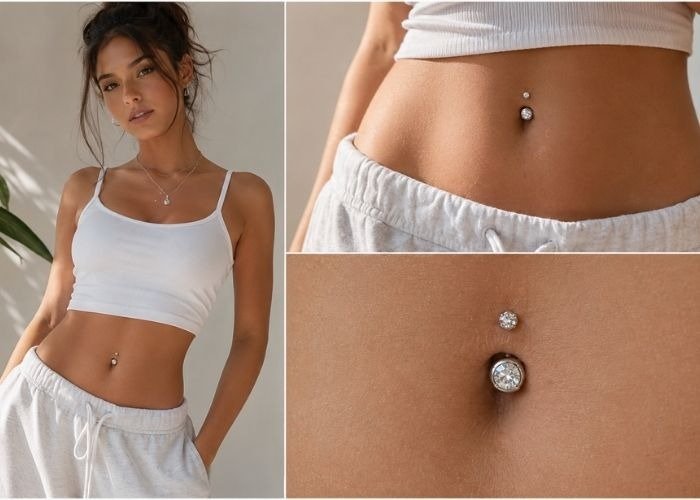
A double belly button piercing uses two separate piercings around the navel instead of the traditional single piercing. Depending on your anatomy and preferred style, the two piercings can be positioned in several different ways.
The most common placement options include:
- Two piercings above the belly button
- One piercing above and one below the navel
- Two side-by-side piercings
- Slightly angled or curved placements for a customized appearance
Unlike a standard belly button piercing, this style creates a more layered and eye-catching look while allowing you to wear matching or contrasting jewelry.
Not every belly button is suitable for every placement. An experienced professional piercer will examine your anatomy before piercing to determine which design offers the safest healing and best long-term results.
Technical Specifications and Anatomy Check
Before booking your appointment, it’s helpful to understand a few technical details that can affect both healing and comfort.
Standard Piercing Gauge
Most professional piercers perform double belly button piercings using 14-gauge (1.6 mm) needles and jewelry.
Although standard piercing gauge sizes like 16G or 18G may appear less intimidating, they can increase the chance of the jewelry slowly cutting through tissue over time, often called the “cheese-wire effect.” A 14G piercing generally provides better stability and supports healthier long-term healing.
Anatomy Requirements
A successful double navel piercing depends on having enough tissue to support the jewelry.
Ideally, your belly button should have:
- A clearly defined upper or lower rim of skin
- Enough tissue for a curved barbell to sit securely
- Minimal folding or collapsing when sitting
If your navel becomes flat when you sit down, your piercer may recommend floating navel jewelry instead of a traditional curved barbell. Floating jewelry uses a flat disc or a very small bead inside the navel, reducing pressure and improving comfort during healing.
A professional consultation is the best way to determine which placement suits your anatomy.
Double Belly Button Piercing vs. Single Belly Button Piercing
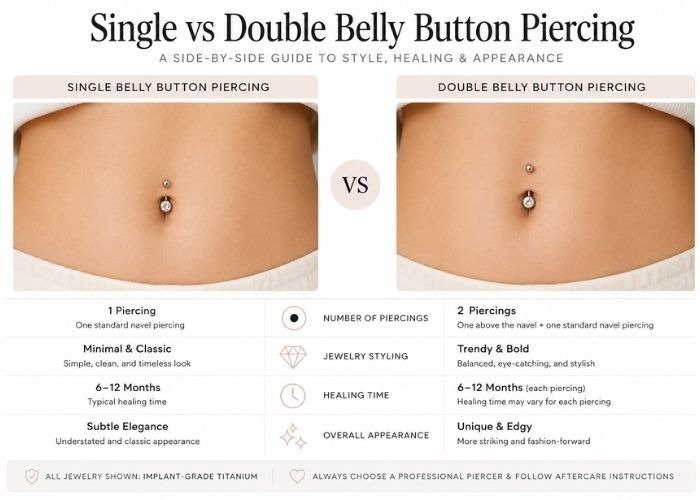
Before deciding on a double piercing, it’s useful to compare it with a traditional single belly button piercing.
| Feature | Double Belly Button Piercing | Single Belly Button Piercing |
| Number of Piercings | Two separate piercings around the navel | One piercing above the navel |
| Healing Time | 6–12 months (two piercing sites healing together) | 6–12 months |
| Pain Level | Moderate (two piercings in one appointment) | Mild to moderate |
| Jewelry Options | More styling combinations and layered looks | One jewelry piece |
| Aftercare | Requires extra attention because two piercings heal at once | Easier daily maintenance |
| Risk of Irritation | Slightly higher because of increased movement and surface tension | Lower than a double piercing |
| Recommended Jewelry | ASTM F-136 implant-grade titanium, niobium, or solid 14K/18K gold | ASTM F-136 implant-grade titanium, niobium, or solid 14K/18K gold |
| Best For | People wanting a unique, fashionable appearance | Beginners looking for a classic navel piercing |
Why Are Double Belly Button Piercings So Popular?
Double belly button piercings have become a popular trend because they provide greater flexibility in styling and create a more personalized appearance than a traditional single piercing.
Some of the biggest advantages include:
- A modern and fashionable look
- More jewelry combinations
- Better symmetry around the navel
- Opportunities to mix gemstones, charms, or minimalist barbells
- A unique style that reflects your personality
Many people begin with a single piercing and later add a second one to create a stacked or symmetrical design. Others choose to get both piercings at the same appointment for a coordinated look from the start.
Healing Time for Double Belly Button Piercings
Healing is one of the most important parts of getting a double belly button piercing. Since your body is repairing two piercing channels, patience and consistent aftercare are essential.
For most people, complete healing takes 6 to 12 months, although individual healing times vary.
Several factors can influence how quickly your piercing heals, including:
- Your overall health
- Immune system function
- Daily cleaning routine
- Jewelry quality
- Clothing that rubs against the piercing
- Smoking or other lifestyle habits
Even when the outside appears healed, the tissue underneath often continues repairing for several more months. Replacing jewelry too early can interrupt this process and increase the risk of irritation.
Healing Stages
Understanding each healing stage helps you know what to expect.
First 2–6 Weeks
The body immediately begins repairing the tissue around the jewelry.
During this period, it’s completely normal to notice:
- Mild swelling
- Tenderness
- Slight redness
- Clear or pale yellow lymph fluid that dries into small crusts
These symptoms usually improve gradually with proper aftercare.
One to Three Months
As healing continues, you may notice:
- Reduced swelling
- Less tenderness
- Healthier tissue around the jewelry
- Fewer crusts during cleaning
Although your piercing may feel much better, it is still healing internally. Avoid changing jewelry during this stage unless your professional piercer recommends it.
Six Months and Beyond
At this point, most people experience very little discomfort. However, complete internal healing may still take several more months.
Continuing your cleaning routine and attending follow-up appointments can help ensure your piercing heals properly and remains healthy for years to come.
Choosing the Right Jewelry
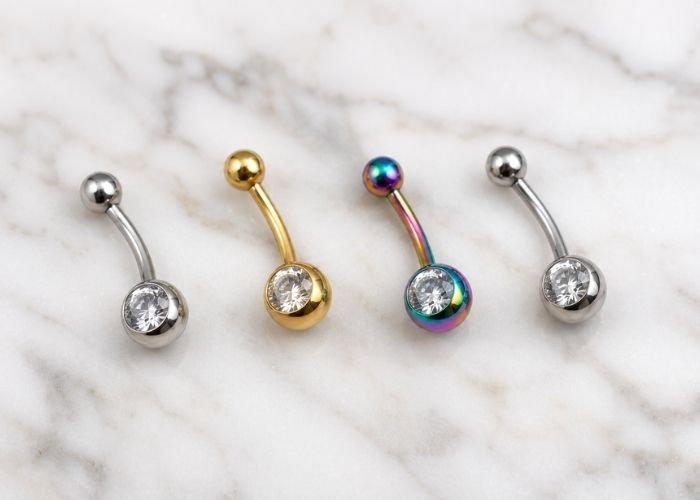
The jewelry you choose affects more than your appearance—it also plays a major role in how comfortably your piercing heals. High-quality, body-safe materials reduce irritation, lower the risk of allergic reactions, and help support healthy tissue as the piercing recovers.
Although decorative jewelry may look appealing, it’s best to keep your initial jewelry simple until your double belly button piercing has completely healed.
ASTM F-136 Implant-Grade Titanium
ASTM F-136 implant-grade titanium is considered the gold standard for new body piercings.
Benefits include:
- 100% nickel-free
- Lightweight and comfortable
- Hypoallergenic
- Highly resistant to corrosion
- Ideal for sensitive skin
Because titanium rarely causes allergic reactions, many professional piercers recommend it for first-time belly button piercings.
Niobium or Solid 14K/18K Gold
Niobium and solid 14K or 18K gold are also excellent choices when they are certified biocompatible and free from nickel.
If you choose gold jewelry, make sure it is solid gold, not gold-plated. Plated jewelry can wear down over time and expose the base metal underneath, increasing the chance of irritation.
Surgical Steel Notice
Although surgical steel is commonly used in body jewelry, standard 316L surgical steel may contain trace amounts of nickel.
If you have sensitive skin or a nickel allergy, implant-grade titanium is generally the safer option for your initial jewelry.
Pro Piercer Tip: Why Downsizing Matters
Many people don’t realize that the jewelry inserted on piercing day is only temporary.
Professional piercers intentionally use longer barbells—typically 7/16 inch or 1/2 inch—to leave room for natural swelling during the first 4 to 8 weeks.
Once the swelling has gone down, return to your piercer for a downsizing appointment.
Replacing the longer bar with a properly fitted one helps:
- Reduce unnecessary movement
- Prevent jewelry from catching on clothing
- Lower irritation
- Improve long-term healing
Skipping this appointment may increase the risk of migration or rejection.
Popular Jewelry Styles
After your piercing has healed completely, you can experiment with different jewelry styles.
Curved Barbells
The most popular option for belly button piercings.
They offer:
- A comfortable fit
- Easy cleaning
- Excellent support during healing
Floating Navel Jewelry
Floating jewelry is specially designed for people whose belly buttons flatten when sitting.
Instead of a traditional bottom ball, it uses a flat disc or tiny bead, making it more comfortable for certain body types.
Gemstone Jewelry
Small crystals or gemstones add sparkle while remaining lightweight.
Choose high-quality settings that won’t snag on clothing.
Matching Jewelry Sets
Many people enjoy coordinated jewelry combinations, such as:
- Matching titanium barbells
- Gold gemstone pairs
- Minimalist silver designs
- Opal jewelry
- Moon and star charms
Wait until your piercings are fully healed before wearing heavier decorative jewelry.
How to Clean Your Double Belly Button Piercing
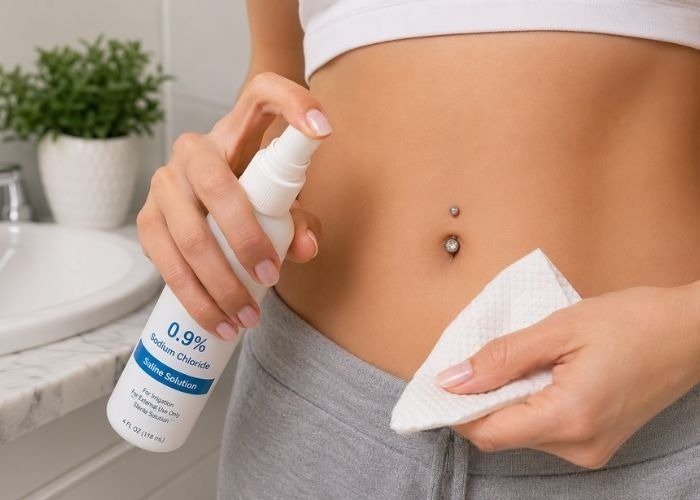
Keeping your piercing clean is one of the best ways to support healing and reduce the risk of infection.
The Association of Professional Piercers (APP) recommends a simple saline routine rather than using harsh disinfectants.
Recommended Cleaning Routine
Follow these steps once or twice each day:
- Wash your hands thoroughly with liquid soap and warm water before touching your piercing.
- Apply 0.9% sterile saline solution (a wound wash containing only purified water and 0.9% sodium chloride).
- Spray or soak the area for 2–3 minutes to soften dried lymph fluid, commonly called “crusties.”
- Gently pat the area dry using clean disposable paper towels or sterile non-woven gauze.
- Leave any crust that doesn’t slide off easily. Picking at it can create tiny tears that delay healing.
Keeping your routine simple is usually the most effective approach.
What Should You Avoid?
Avoid using products that can dry out or irritate the piercing, including:
- Alcohol
- Hydrogen peroxide
- Strong antibacterial soaps
- Tea tree oil directly on fresh piercings
- Homemade saltwater mixtures
- Cloth towels that may trap bacteria
- Cotton swabs that leave fibers behind
Using only sterile saline and clean water is typically all that’s needed.
Aftercare Tips for Better Healing
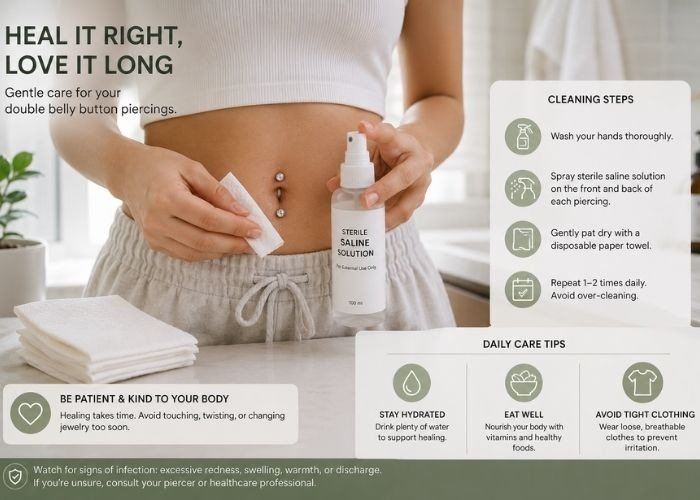
Small daily habits can have a big impact on how well your piercing heals.
Do
- Clean your piercing consistently.
- Wear loose, breathable clothing.
- Drink plenty of water.
- Eat a balanced diet rich in protein and vitamins.
- Sleep on your back whenever possible.
- Visit your piercer for follow-up appointments.
Don’t
- Twist or rotate the jewelry.
- Touch the piercing with dirty hands.
- Change jewelry before it’s fully healed.
- Swim in pools, lakes, hot tubs, or oceans during early healing.
- Wear tight waistbands that constantly rub against the piercing.
- Use makeup or lotions around the piercing.
Following these simple habits can help minimize irritation and encourage healthy tissue growth.
Signs Your Piercing Is Healing Normally
Many beginners worry when they notice small changes during healing. Fortunately, several mild symptoms are completely normal.
You may experience:
- Slight redness
- Mild swelling
- Clear or white lymph fluid
- Small crust formations
- Occasional itching
- Mild tenderness
These signs usually become less noticeable as the piercing continues to heal.
Signs of Possible Infection
Although infections are uncommon when proper aftercare is followed, it’s important to recognize warning signs.
Seek medical advice if you notice:
- Thick yellow or green discharge
- Severe or increasing pain
- Excessive swelling
- Skin that feels hot around the piercing
- Fever
- A strong unpleasant odor
- Red streaks spreading away from the piercing
Do not remove the jewelry unless instructed by a healthcare professional, as doing so may trap the infection inside the piercing channel.
Piercing Rejection vs. Migration: How to Spot the Difference
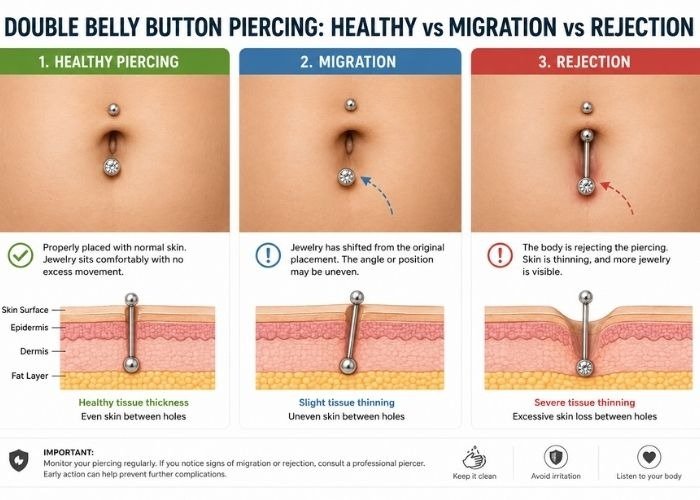
Double belly button piercings experience more surface tension than traditional single piercings, making migration and rejection important risks to understand.
Although the terms are often used interchangeably, they describe different processes.
What Is Migration?
Migration happens when the jewelry slowly shifts away from its original position. It may stop on its own if the irritation is corrected early.
What Is Rejection?
Rejection occurs when your body gradually pushes the jewelry toward the skin’s surface until it eventually comes out.
Signs of Rejection
Watch for these warning signs:
- The skin between the entry and exit holes becomes noticeably thinner.
- More of the jewelry bar becomes visible beneath the skin.
- The piercing holes appear larger or change shape.
- The surrounding skin stays shiny, red, and fails to improve over time.
How to Reduce the Risk
If you suspect migration or rejection:
- Contact your professional piercer as soon as possible.
- Do not remove the jewelry yourself.
- Attend your downsizing appointment if you haven’t already.
- Wear loose-fitting clothing that doesn’t press against the piercing.
- Avoid snagging the jewelry during daily activities.
Early professional advice may prevent the piercing from being completely rejected.
Long-Term Care Tips for Double Belly Button Piercings
Once your double belly button piercing has fully healed, maintaining it becomes much easier. However, regular care is still essential to keep your piercing healthy and your jewelry looking its best. A healed piercing still benefits from occasional cleaning and routine jewelry checks to prevent irritation.
Clean Your Jewelry Regularly
Body oils, sweat, lotion, and dead skin can build up around your jewelry over time.
To keep everything clean:
- Wash the area during your regular shower.
- Remove healed jewelry occasionally for a deep clean.
- Rinse jewelry thoroughly before reinserting it.
- Dry the area completely before putting jewelry back in.
Wear Quality Jewelry
Even after your piercing heals, low-quality metals can cause irritation.
Choose jewelry made from:
- ASTM F-136 Implant-Grade Titanium
- Solid 14K or 18K Gold
- Niobium
Avoid inexpensive fashion jewelry made with unknown metal alloys, especially if you have sensitive skin.
Jewelry Material Comparison
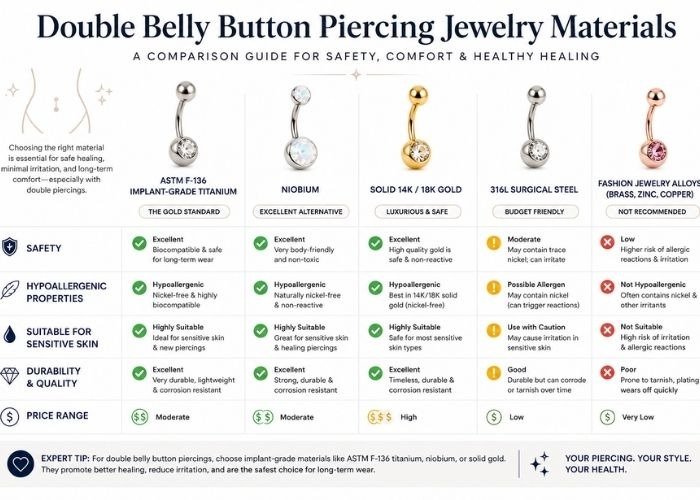
Choosing the right jewelry material helps reduce irritation and supports long-term comfort.
| Jewelry Material | Safe for New Piercings | Hypoallergenic | Best for Sensitive Skin |
| ASTM F-136 Implant-Grade Titanium | ✅ Yes | ✅ Yes | ⭐ Excellent |
| Niobium | ✅ Yes | ✅ Yes | ⭐ Excellent |
| Solid 14K/18K Gold | ✅ Yes | ✅ Yes (Nickel-Free) | ⭐ Very Good |
| 316L Surgical Steel | ⚠️ Sometimes | ❌ May Contain Nickel | Moderate |
| Fashion Jewelry Alloys | ❌ No | ❌ No | Poor |
Is a Double Belly Button Piercing Right for You?
A double belly button piercing can be a stylish way to express your personality, but it’s important to make sure it’s the right choice for your body and lifestyle.
Before scheduling your appointment, think about:
- Your belly button anatomy
- Your ability to follow daily aftercare
- Your clothing preferences
- Your work or fitness routine
- Your patience during the healing period
If your anatomy isn’t suitable for a traditional double piercing, your piercer may recommend a floating navel piercing, which offers a similar appearance while reducing pressure on the jewelry.
Remember, every body is different. A professional consultation is the best way to determine which piercing style will heal safely.
Common Mistakes to Avoid
Many piercing complications happen because of simple mistakes that are easy to prevent.
Changing Jewelry Too Soon
Even if your piercing looks healed on the outside, the tissue underneath may still be repairing.
Changing jewelry too early may lead to:
- Delayed healing
- Swelling
- Irritation
- Increased risk of infection
Wearing Tight Clothing
High-waisted jeans, shapewear, and tight waistbands constantly rub against the jewelry.
Loose-fitting clothing is usually much more comfortable during healing.
Touching the Piercing Frequently
Every unnecessary touch transfers bacteria from your hands to the piercing.
Only touch your jewelry when cleaning it or if your piercer instructs you to do so.
Ignoring Warning Signs
Persistent swelling, unusual discharge, or jewelry movement should never be ignored.
Seeking advice from a professional piercer early can often prevent more serious complications.
Quick Care Checklist
Before wrapping up, here’s a simple checklist to help you remember the essentials.
| ✔ Do This | ✘ Avoid This |
| Clean with sterile saline solution | Twist or rotate the jewelry |
| Wash hands before touching the piercing | Touch with dirty hands |
| Wear loose, breathable clothing | Wear tight waistbands |
| Choose implant-grade titanium jewelry | Buy cheap fashion jewelry |
| Visit your piercer for downsizing | Skip follow-up appointments |
| Be patient during healing | Change jewelry too early |
Conclusion
A double belly button piercing is more than just a fashion statement—it’s a body modification that requires thoughtful planning, quality jewelry, and consistent aftercare. While healing takes longer than many people expect, following professional recommendations can significantly reduce the chances of irritation, migration, or rejection.
Choosing implant-grade jewelry, cleaning with sterile saline solution, avoiding unnecessary pressure, and attending follow-up appointments all contribute to a smoother healing experience.
Most importantly, remember that everyone’s body heals differently. Don’t compare your progress to someone else’s. If you ever notice unusual pain, excessive swelling, or signs that your jewelry is moving, contact your professional piercer promptly.
With patience and proper care, your double belly button piercing can remain healthy, comfortable, and beautiful for many years.
Frequently Asked Questions
Does a double belly button piercing hurt more than a single piercing?
Most people describe it as slightly more painful because two piercings are performed instead of one. However, the discomfort is usually brief and depends on your individual pain tolerance.
How long does a double belly button piercing take to heal?
Most people heal within 6 to 12 months, although healing varies depending on your body, aftercare routine, and jewelry quality.
Can I shower after getting a double belly button piercing?
Yes. Showering is encouraged because clean running water helps remove sweat and debris. After showering, gently pat the area dry with a clean disposable paper towel.
What is the best jewelry for healing?
Most professional piercers recommend ASTM F-136 implant-grade titanium because it is lightweight, nickel-free, corrosion-resistant, and suitable for sensitive skin.
Is it normal for my piercing to itch?
Yes. Mild itching is a normal part of the healing process, especially as new skin forms. Avoid scratching or picking at the area.
Can I wear high-waisted jeans while my piercing heals?
It’s best to avoid tight clothing during the early healing period because constant rubbing can irritate the piercing and delay healing.
Can I get both double belly button piercings done in the same session?
Yes. Many professional piercers perform both piercings during one appointment if your anatomy supports it. However, if you have a low pain tolerance or tend to swell significantly, your piercer may recommend getting the upper piercing first and waiting 2–3 months before adding the second one.
What is a floating double navel piercing?
A floating double navel piercing uses specialized jewelry with a flat disc or small bead inside the navel instead of a traditional decorative ball. This design helps reduce pressure and is often recommended for belly buttons that fold inward when sitting.
How do I know if my piercing is rejecting?
Signs of rejection include thinning skin between the piercing holes, jewelry becoming more visible under the skin, enlarged holes, and the jewelry gradually moving toward the surface. Contact your professional piercer if you notice these changes.