
Custom clothing has never been easier to make. Upload a design, pick a garment, and a print-on-demand service produces and ships it, whether that’s a single tee for yourself or a full line for an online shop. Two names come up first in almost every conversation: Printful and Printify.
Both let you design apparel online with no inventory and no minimum order. They differ in how they produce your clothes, which affects consistency, price, decoration options, and branding. If you’re still finding your personal style, knowing those differences helps you pick the platform that fits what you actually want to wear or sell.
Here’s how the two compare for custom clothing, and which suits different goals.
Key takeaways
- Different production models. One manages its own fulfillment network; the other connects you with a marketplace of independent print providers.
- Both skip minimums. You can order a single piece or sell made-to-order clothing without holding stock on either platform.
- Pick by priority. Choose consistency and decoration range, or flexibility to compare providers on price and location.
How the two models differ
The biggest difference isn’t price or catalog size. It’s who actually makes your clothes.
Printful runs its own fulfillment network. You design a product, and Printful handles printing, packing, and shipping. Because it controls production, the experience tends to be consistent from one order to the next.
Printify works as a marketplace. You choose a product and then a print provider from its global network of independent partners, each with its own pricing, location, and production times. If one provider can’t fulfill an order, Printify can automatically route it to another.
Neither approach is better in every case. Centralized production favors predictability; a provider marketplace favors choice.
Printful for custom clothing
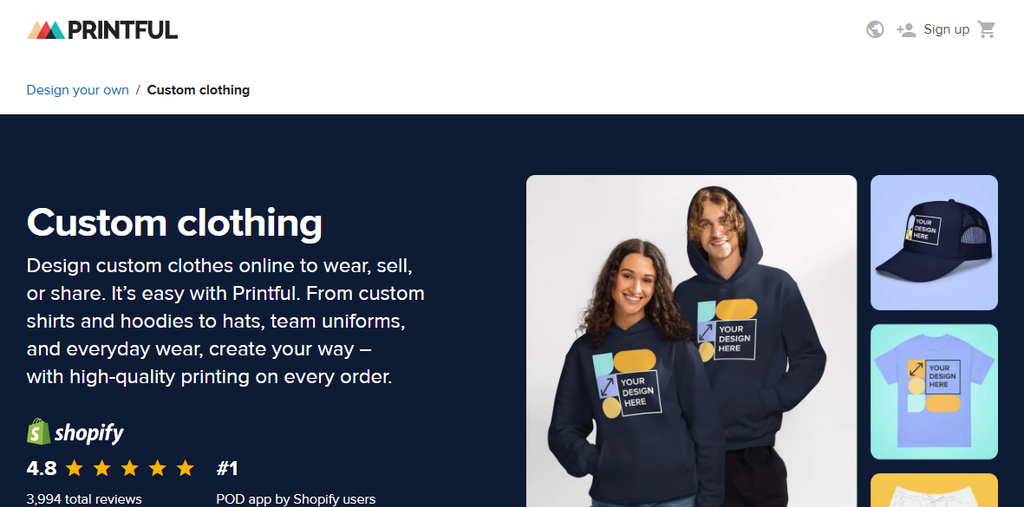
Printful’s custom apparel printing covers everyday staples, activewear, and outerwear, printed on well-known blanks including Gildan, Bella+Canvas, Champion, and Comfort Colors. It isn’t only for bulk buyers or resellers: you can open the catalog, pick a product, add your design or logo in the free Design Maker, and order a single T-shirt or hoodie for yourself with no minimums and no hidden fees.
Decoration range. You can choose DTG, DTFlex, all-over print, embroidery, or knitting, depending on the garment. Its unlimited-color embroidery suits multicolor logos on polos, hats, and fleece.
Branding for sellers. You can add your logo to labels, pack-ins, and packaging, and connect stores on Shopify, Etsy, WooCommerce, Wix, and TikTok Shop so orders sync automatically.
Group orders. Bulk discounts apply on larger orders of the same product, even when you mix sizes, colors, and designs, which suits team uniforms and event merch.
Best for: consistent quality, a wide choice of decoration methods, and branded packaging.
Printify for custom clothing
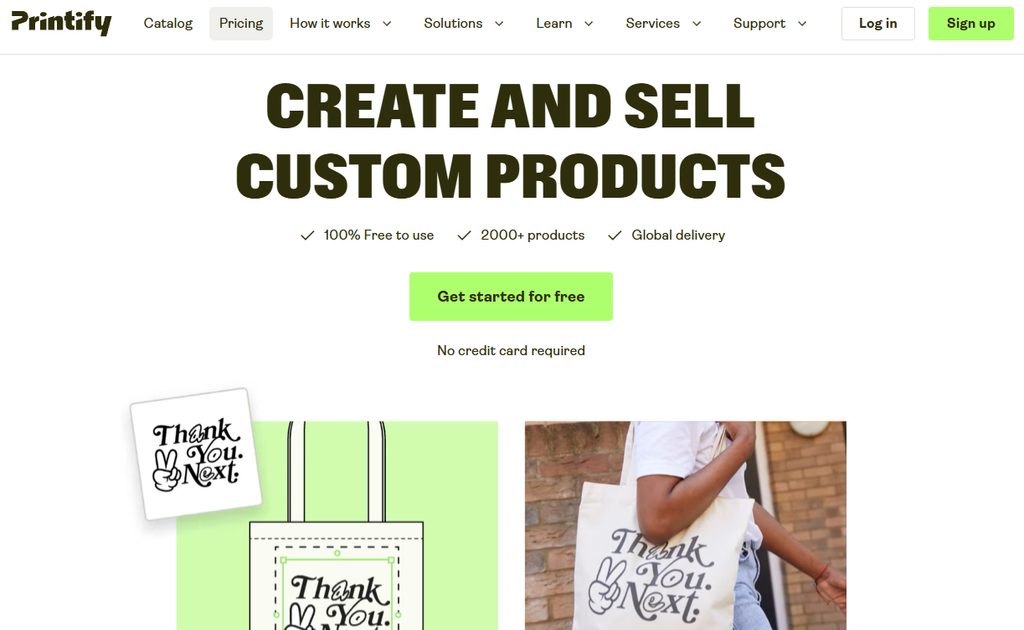
Printify gives you access to a large apparel catalog through its global network of print providers, including popular blanks such as Comfort Colors. Like Printful, it requires no inventory and no minimum order quantity, and you pay only when an order is placed.
Provider choice. For many products you can compare several print providers on price, location, and production time, then pick the one that suits your margins or your customers’ location.
Pricing plans. The Free plan covers the core tools. An optional paid Premium plan adds discounts of up to 20% on all products, which can make sense once you’re selling regularly.
Branding and channels. You can add custom labels and packaging inserts and connect stores on Shopify, Etsy, Amazon, and other channels.
Bulk savings. Larger orders from the same print provider can unlock product and shipping discounts on eligible items.
Best for: sellers who want to compare providers and optimize cost per item.
Head-to-head comparison
| Feature | Printful | Printify |
| Production model | Own fulfillment network | Marketplace of independent print providers |
| Minimum order | None | None |
| Decoration methods | DTG, DTFlex, all-over print, embroidery, knitting | Varies by product and provider |
| Consistency | Uniform production across orders | Depends on the provider you choose |
| Pricing approach | No setup fees; pay per item | Free plan, optional Premium with up to 20% off products |
| Branding | Custom labels, pack-ins, packaging | Custom labels and packaging inserts |
| Best for | Quality control and decoration range | Comparing providers on price and location |
Which should you choose?
The right platform depends on what you’re making and why.
- A one-off piece for yourself. Both platforms let you order a single item. If you want a specific finish, such as embroidery on a polo or a knitted motif, check which platform offers that method on the garment you like.
- A small fashion label. If consistent quality and branded packaging matter most to your customers’ experience, a centralized production network keeps things predictable.
- A price-sensitive online shop. If margins drive your decisions, a provider marketplace lets you compare base costs and production locations product by product.
- Team or event apparel. Look at bulk discount rules on each platform and order one test piece before committing to the full group.
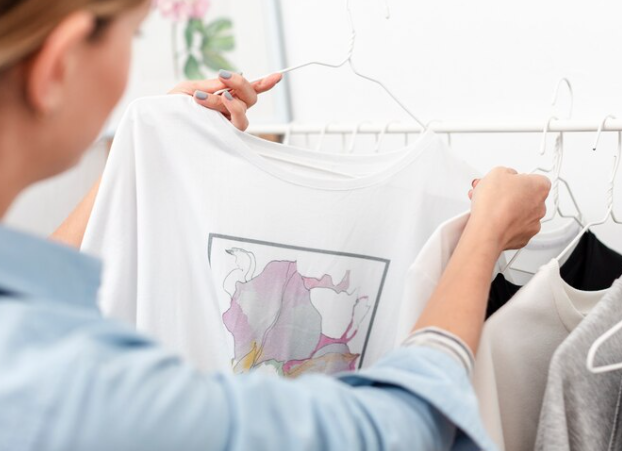
Whichever you lean toward, order a sample of your best-selling design first. Feeling the fabric, checking the print or stitching, and timing the delivery will tell you more than any comparison table.
The verdict
There’s no single winner for every custom clothing project. Choose centralized production when you want consistent results, a broad range of decoration methods, and branded packaging. Choose a provider marketplace when you want to compare costs and locations and fine-tune your margins.
If you’re unsure, design the same piece on both, order one sample from each, and let the finished garments decide. The platform whose clothes you’d happily wear yourself is usually the right fit for your customers too.
FAQ
Is Printful or Printify better for custom clothing?
It depends on your priorities. Printful suits people who want consistent production, a wide range of decoration methods, and branded packaging. Printify suits sellers who want to compare print providers on price and location.
Can I order a single custom shirt on either platform?
Yes. Neither platform has a minimum order, so you can design and order one piece.
Does either platform charge a monthly fee?
Both can be used without a subscription. Printify offers an optional Premium plan with product discounts.
Which platform offers embroidery?
Printful offers embroidery on supported garments such as polos, hats, and fleece. On Printify, availability depends on the product and print provider.
Should I order a sample before selling?
Yes. A sample lets you check fabric, print or stitch quality, fit, and delivery time before you list a design or place a group order.