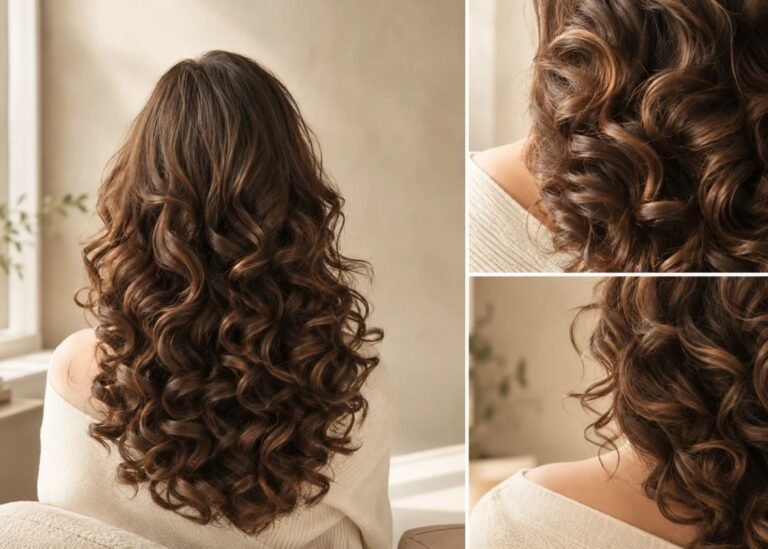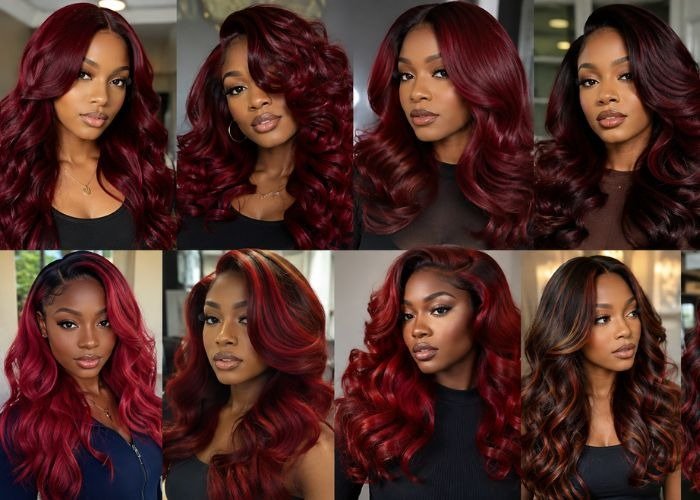

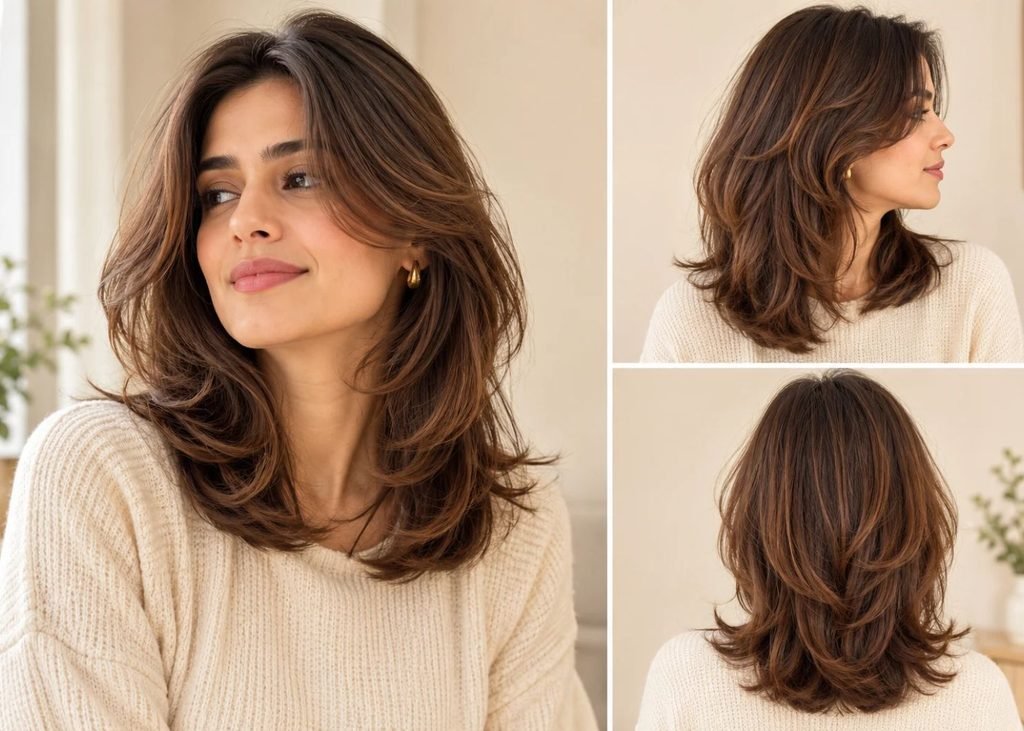
Finding a hairstyle that looks polished without requiring 30 minutes of daily heat styling can make your morning routine much easier. Medium-length hair offers a useful balance: it is long enough for ponytails, buns, and other simple styles, while still being easier to wash and manage than very long hair.
When cut correctly, layers can enhance your natural texture, add movement, and give medium-length hair a more defined shape. The right layers can also help your hair fall naturally into place after air-drying, reducing the need for daily styling.
The key is choosing a layered haircut that works with your natural hair type, density, and routine rather than one that requires constant heat or complicated products.
Here are 10 low-maintenance layered hairstyles that is easy to manage.
| Hairstyle Idea | Best Hair Type | Key Benefit | Styling Effort |
| Soft Long Layers | Straight & Wavy | Seamless grow-out | Very Low |
| Face-Framing Layers | All Types | Adds shape around the face | Low |
| Layered Lob | Fine to Medium | Adds movement and shape | Low |
| Curtain Bangs + Layers | Straight & Wavy | Soft face framing | Medium |
| Subtle Layers | Fine to Medium | Maintains fullness | Very Low |
| Wavy Layered Cut | Wavy | Enhances natural texture | Very Low |
| Soft Shag Layers | Wavy & Textured | Creates movement | Low |
| Long Layers + Middle Part | Straight & Wavy | Simple, balanced shape | Very Low |
| Shoulder-Length Layers | Most Hair Types | Easy everyday length | Low |
| Rounded Layers | Thick Hair | Reduces visual bulk | Low |
What Makes a Layered Hairstyle Low Maintenance?
A truly low-maintenance haircut is not about zero effort. It is about working with your hair’s natural pattern rather than fighting it.
Instead of requiring daily flat-ironing, curling, or a full blowout, well-designed layers can help the hair fall naturally into shape as it dries. The amount of maintenance will still depend on your hair texture, density, haircut, and desired finish.
Stylist Tip: When booking your appointment, ask your stylist for soft, blended layers and point-cut ends if you want a natural-looking grow-out. Your stylist can decide whether internal texturizing is appropriate for your hair density and texture.
Key Features of an Easy-Care Layered Cut
- Blended layers: Gradual transitions between lengths create a softer appearance and make the haircut easier to grow out.
- Balanced weight removal: Removing some weight can give thick hair more movement without making the ends look overly thin.
- Natural texture support: Layers can be designed around straight, wavy, or textured hair instead of requiring you to change your natural pattern every day.
- Minimal heat dependency: A good low-maintenance cut should still look presentable with simple air-drying and lightweight styling products.
- Practical length: Medium-length hair is long enough for several easy hairstyles while remaining relatively manageable.
10 Low-Maintenance Medium-Length Layered Hairstyles
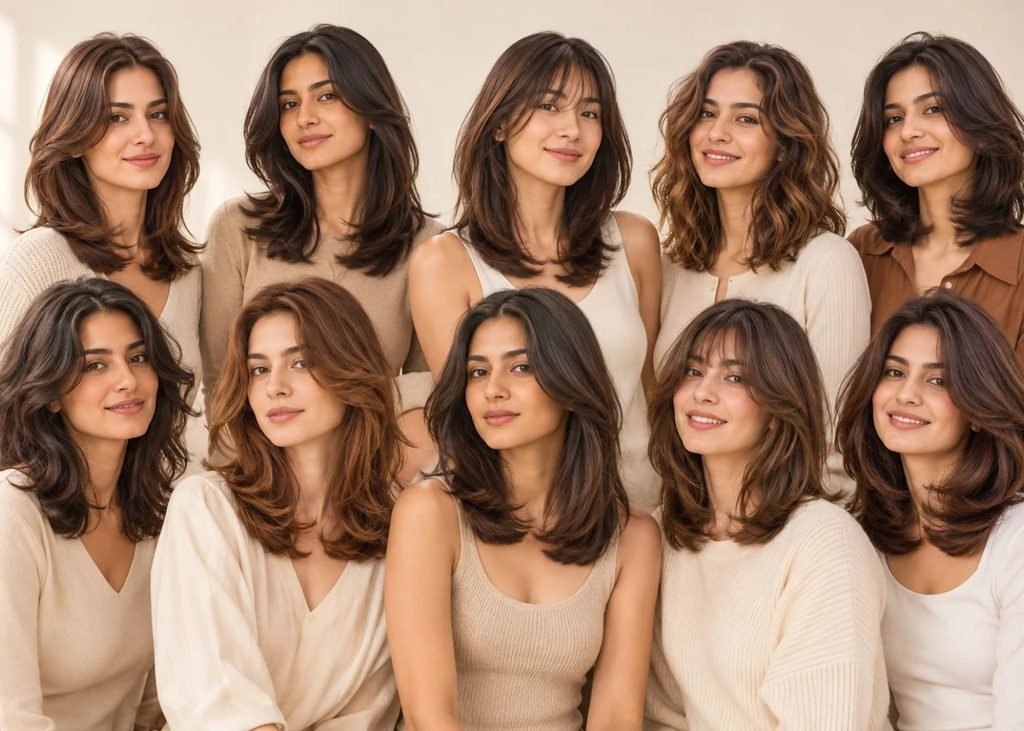
1. Soft Long Layers
Soft long layers are one of the easiest choices for medium-length hair. They keep most of the overall length while removing some weight from the lower sections.
This can help prevent thick or heavy medium-length hair from developing a triangular or overly bulky shape.
Best for: Straight, wavy, or fine-to-medium hair density.
What to Ask Your Stylist:
“I’d like long, blended layers that keep most of my length, with soft ends that transition naturally into the rest of the haircut.”
Low-Maintenance Styling: Apply a small amount of lightweight leave-in conditioner or air-dry cream to damp mid-lengths and ends. Gently arrange the layers with your fingers and let the hair dry naturally.
2. Face-Framing Layers
Face-framing layers focus on the sections around your face rather than heavily layering the entire haircut. They can begin around the cheekbones, jawline, or another point that suits your preferred shape.
The back of the hair can remain relatively simple, making this a useful choice if you want some definition without committing to lots of layers.
Best for: Most hair types and textures.
What to Ask Your Stylist:
“I’d like cascading face-framing pieces that start around the jawline and blend gradually into my overall length.”
Low-Maintenance Styling: While damp, gently tuck the front sections behind your ears. As they dry, they can develop a soft curve without requiring extensive heat styling.
3. Layered Lob
A lob, or long bob, generally falls around the shoulders or slightly below them. Adding subtle layers can make the traditional shape feel lighter and more relaxed.
A layered lob can be worn straight, naturally wavy, or loosely styled. It is also short enough to feel manageable while retaining enough length for a ponytail or half-up style.
Best for: Fine, medium, and moderately thick hair.
What to Ask Your Stylist:
“I’d like a medium-length lob with subtle layers that add movement without making the ends look thin.”
Low-Maintenance Styling: Apply a lightweight styling cream and let the hair air-dry. For straight hair, a quick brush-through after drying can be enough.
4. Curtain Bangs With Layers
Curtain bangs part through the middle or slightly off-center and sweep outward toward the sides of the face. When combined with medium-length layers, they can create a gradual transition from the shorter front pieces into the rest of the haircut.
Unlike blunt bangs, curtain bangs can eventually blend into longer face-framing pieces as they grow.
Best for: Straight and loose wavy hair.
What to Ask Your Stylist:
“I’d like curtain bangs that start around the cheekbone area and gradually taper into my face-framing layers.”
Low-Maintenance Styling: Curtain bangs may need slightly more styling than long layers. Use a small round brush to direct them away from the face while drying, or allow them to air-dry naturally for a softer finish.
5. Subtle Layers for Fine Hair
Fine hair can benefit from carefully placed layers, but too much layering can make the ends appear sparse. Subtle layers allow you to create movement while maintaining as much visual fullness as possible.
The goal is not necessarily to remove lots of weight. Instead, the haircut should create shape without sacrificing the appearance of density.
Best for: Fine or low-density hair.
What to Ask Your Stylist:
“I’d like subtle, longer layers that add movement but keep the ends looking full.”
Low-Maintenance Styling: Apply a lightweight volumizing mousse to damp roots and let the rest air-dry. Avoid using heavy oils or creams that can weigh fine hair down.
6. Wavy Layered Hair
Wavy hair can work particularly well with layers because removing some weight may allow the natural wave pattern to show more clearly.
Long, strategic layers can help waves form without making the haircut look overly choppy.
Best for: Naturally wavy hair.
What to Ask Your Stylist:
“I’d like long layers that support my natural waves while keeping the overall shape soft and blended.”
Low-Maintenance Styling: Apply a lightweight wave-enhancing cream or mousse to damp hair. Scrunch gently and allow the hair to air-dry.
Avoid repeatedly brushing the hair while it dries, as this can disturb the natural wave pattern and create unwanted frizz.
7. Soft Shag-Inspired Layers
A soft shag-inspired haircut offers more visible movement than traditional long layers. For a low-maintenance version, the layers can remain blended rather than extremely short or disconnected.
This style can create a relaxed appearance while allowing natural texture to become part of the overall shape.
Best for: Wavy, textured, or naturally voluminous hair.
What to Ask Your Stylist:
“I’d like a soft, blended shag-inspired shape with enough length to keep the haircut easy to manage.”
Low-Maintenance Styling: Work a small amount of texture or wave cream through damp hair and let it dry naturally.
8. Long Layers With a Middle Part
A middle part combined with long layers creates a simple and balanced hairstyle. The layers can begin around the face and gradually continue through the lengths.
This is a good option if you want to refresh medium-length hair without making a dramatic change.
Best for: Straight and wavy hair.
What to Ask Your Stylist:
“I’d like long, blended layers with subtle face-framing pieces that work with a middle part.”
Low-Maintenance Styling: Part the hair while it is damp, apply a small amount of leave-in product, and let it dry naturally.
9. Shoulder-Length Layered Hair
Shoulder-length hair is practical for people who want a medium hairstyle that is easy to wash, dry, and style. Adding soft layers can prevent the cut from appearing too heavy around the ends.
This length also gives you plenty of options for simple ponytails, half-up hairstyles, and loose buns.
Best for: Most hair types.
What to Ask Your Stylist:
“I’d like to keep my hair around shoulder length with soft layers that make the shape lighter without removing too much length.”
Low-Maintenance Styling: Let your natural texture determine the finish. A lightweight leave-in conditioner can help keep the ends smooth while the hair dries.
10. Rounded Layers for Thick Hair
Thick hair can sometimes become bulky at medium lengths. Carefully placed layers can distribute some of that weight and help the hair move more naturally.
Rounded or blended layers can create a softer overall shape without making the haircut look excessively choppy.
Best for: Thick or dense hair.
What to Ask Your Stylist:
“I’d like blended layers that remove some weight while keeping the overall shape full and avoiding very short crown layers.”
Low-Maintenance Styling: Use a lightweight smoothing cream or leave-in conditioner on damp hair. Allow the hair to air-dry when possible, or use a diffuser if you want to encourage natural texture.
How to Choose the Right Layers for Your Hair Type
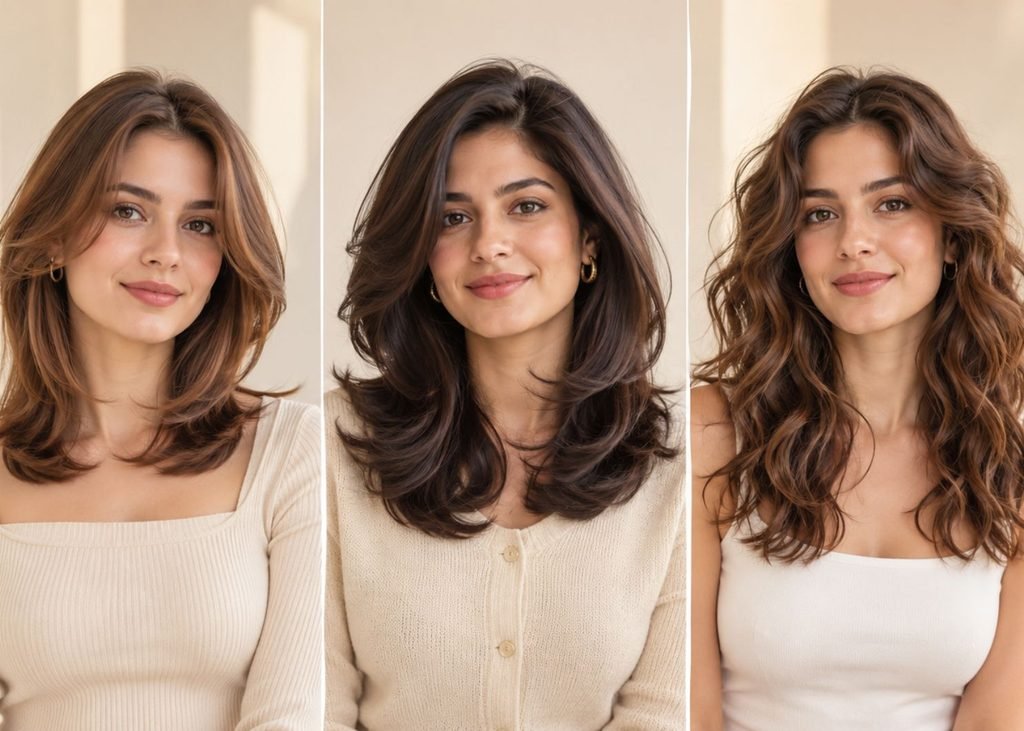
Your natural hair type plays an important role in how layered hair will look and how much styling it will require.
| Hair Type | Layering Strategy | What to Avoid | Recommended Product |
| Fine Hair | Subtle, longer layers that maintain fullness | Excessive thinning or too many short layers | Lightweight volumizing mousse |
| Thick Hair | Blended layers and controlled weight removal | Excessively short crown layers | Smoothing serum or lightweight leave-in |
| Wavy Hair | Long layers that encourage natural wave movement | Excessive layering that disrupts the wave pattern | Wave-enhancing cream |
| Straight Hair | Blended layers that add movement | Sharp, disconnected layers | Lightweight air-dry lotion |
| Textured Hair | Layers adapted to the natural pattern | One-size-fits-all layering | Lightweight curl or texture cream |
Fine Hair
If your hair is fine, maintaining fullness should usually be a priority. Long, subtle layers can add movement without making the ends appear thinner.
Avoid removing too much weight from the bottom of the haircut. Your stylist can help determine how much layering your individual hair density can handle.
Thick Hair
Thick hair often has enough density to support more noticeable layers. Strategic layering can make the hair feel lighter and easier to move.
However, removing too much weight can create unwanted volume or make the ends difficult to control. Your stylist should consider your natural texture before choosing the amount of texturizing.
Wavy Hair
Wavy hair can benefit from layers that allow individual wave sections to move more freely. Long layers are often a good starting point for maintaining a soft, natural shape.
Styling products should support the wave pattern rather than weigh it down.
Straight Hair
Straight hair tends to show the shape of a haircut clearly. Soft, blended layers can add dimension and prevent medium-length hair from appearing flat.
If you want very little daily styling, avoid extremely sharp or disconnected layers that may need heat styling to sit correctly.
How to Keep Layered Medium-Length Hair Low Maintenance
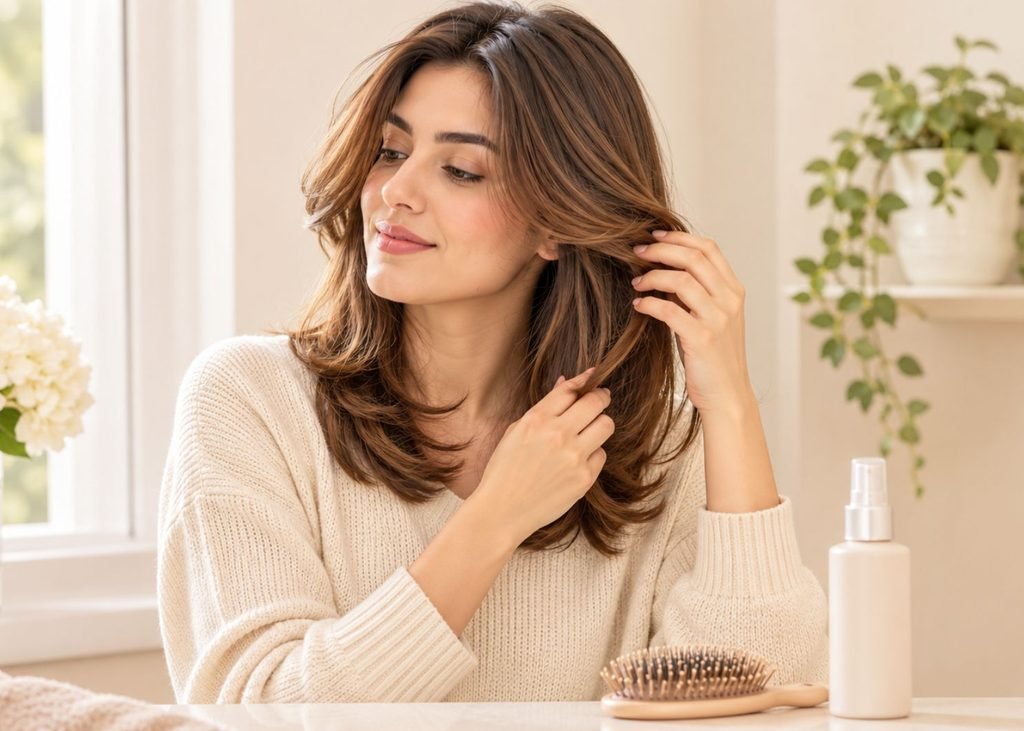
Choosing the right haircut is only the first step. Your daily routine also affects how easy your hair is to manage.
Work With Your Natural Texture
If your hair is naturally wavy, you may not need to straighten it every day. If it is naturally straight, you may be able to skip curling tools altogether.
A haircut that works with your natural pattern will generally require less effort.
Keep Your Product Routine Simple
You do not need a large collection of styling products. Depending on your hair type, one or two products may be enough.
For example:
- Fine hair: lightweight mousse
- Wavy hair: wave cream or mousse
- Thick hair: lightweight leave-in conditioner
- Straight hair: air-dry cream or light smoothing product
Limit Heat Styling
Frequent high-heat styling can contribute to dryness and breakage. When possible, allow your hair to air-dry or use lower heat settings.
You can still use a blow dryer, curling iron, or straightener when you want a more polished look, but a genuinely low-maintenance cut should not depend on heat every day.
Keep the Ends Healthy
Split or damaged ends can make even a good haircut look untidy. Regular trims can help maintain the overall shape, although the ideal schedule varies depending on your haircut and hair condition.
How Often Should You Trim Layered Medium-Length Hair?
There is no single trimming schedule that works for everyone. Long, blended layers can often remain wearable for longer because the gradual shape continues to look natural as the hair grows.
Styles with curtain bangs or shorter face-framing pieces may need more frequent maintenance because changes in length are more noticeable.
Rather than trimming solely according to a calendar, consider booking an appointment when:
- Your layers have lost their shape
- Your ends feel rough or damaged
- Your face-framing pieces have become difficult to style
- Your bangs are interfering with your preferred look
- You want to reshape the haircut
If keeping salon visits to a minimum is important to you, tell your stylist before the haircut so the shape can be designed with a more forgiving grow-out.
Common Mistakes to Avoid With Low-Maintenance Layers
Choosing Too Many Short Layers
Short layers can create additional volume and movement, but they may also require more styling. If simplicity is your priority, longer blended layers are usually easier to manage.
Removing Too Much Weight
Heavy texturizing or excessive thinning is not necessary for every hair type. Removing too much can sometimes make the ends look uneven or reduce the appearance of fullness.
Ignoring Natural Hair Texture
A haircut should account for how your hair behaves naturally. Straight, wavy, curly, fine, and thick hair may require different layering approaches.
Choosing a Style That Does Not Match Your Routine
Think about your actual morning routine before choosing a haircut. If you rarely use heat tools, choose layers that look good when air-dried.
Simple Ways to Style Layered Medium-Length Hair
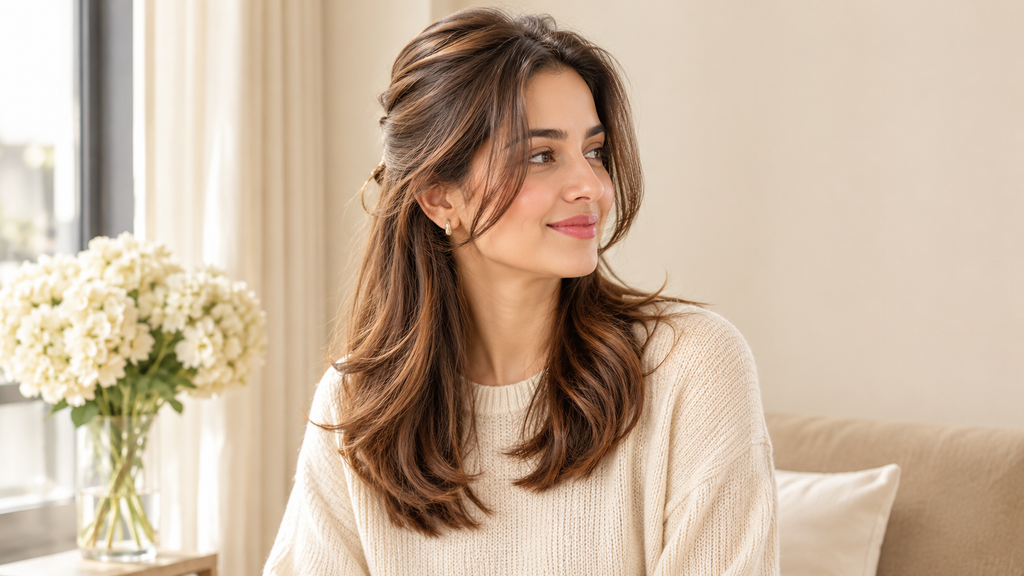
One of the biggest benefits of medium-length layered hair is its flexibility. You do not need a complicated hairstyle every day.
Try:
- Wearing it loose and naturally textured
- Creating a low ponytail
- Making a relaxed half-up style
- Using a claw clip
- Creating a loose bun
- Tucking the front pieces behind your ears
- Adding soft waves for special occasions
- Changing your part for a quick refresh
These simple changes can make the same haircut look different without requiring a completely new styling routine.
Frequently Asked Questions
What is the easiest layered haircut to maintain?
Soft long layers on medium-length hair are among the easiest layered cuts to maintain. Because the layers are longer and subtly blended, they can grow out naturally without dramatically changing the overall shape. The exact maintenance schedule depends on hair growth and the haircut.
Can layered medium-length hair air-dry without styling?
Yes, many medium-length layered haircuts can air-dry with minimal styling. Layers can help natural waves and texture move more freely, while straight hair can benefit from lightweight air-dry products. The result depends on your natural texture and the haircut’s design.
Are layers recommended for fine, medium-length hair?
Yes, fine hair can benefit from long, minimal layers that add movement while preserving fullness. Heavy layering or excessive thinning can sometimes make the ends appear sparse, so subtle layering is often a better starting point.
Are layered hairstyles good for thick hair?
Yes, layered hairstyles can make thick medium-length hair feel lighter and more manageable. Blended layers can distribute weight and add movement, but excessive thinning or very short layers may create unwanted volume.
What are the best low-maintenance layers for wavy hair?
Long, blended layers are a practical choice for naturally wavy hair. They can allow the wave pattern to move without creating an overly choppy shape. A lightweight wave cream or mousse can help define the texture while air-drying.
Do layered hairstyles need frequent trims?
Not necessarily; long, blended layers can usually be maintained without very frequent reshaping. However, shorter face-framing layers, curtain bangs, or heavily defined styles may need more regular trims to maintain their intended shape.
Are layers good for straight medium-length hair?
Yes, subtle layers can add movement and dimension to straight medium-length hair. Blended layers are usually easier to maintain than sharp, disconnected sections because they can continue to look natural as the hair grows.
How can I make layered hair look good without heat?
Use a lightweight product suited to your hair type and let the haircut’s natural shape do most of the work. Apply product to damp hair, gently arrange the layers with your fingers, and allow the hair to air-dry whenever practical.
What should I ask my stylist for if I want low-maintenance layers?
Tell your stylist that you want soft, blended layers that work with your natural texture and require minimal daily styling. You can also show a reference photo and explain how much time you normally spend styling your hair.
Can layered medium-length hair be tied up?
Yes, most medium-length layered hairstyles can be worn in simple updos. Depending on the length of the shortest layers, you can try a low ponytail, half-up style, loose bun, or claw-clip hairstyle.
Conclusion
Layered medium-length hairstyles can provide a practical balance between movement, shape, and everyday manageability. The best low-maintenance option is not necessarily the haircut with the fewest layers. It is the one that works naturally with your hair’s texture, density, and your usual styling routine.
Soft long layers, face-framing pieces, layered lobs, subtle wavy layers, and shoulder-length cuts are all useful options to discuss with a stylist. Fine hair may benefit from minimal layering, while thick hair can often handle more carefully placed weight removal. Wavy hair can be shaped around its natural texture, while straight hair can use blended layers to create movement.
Before your next haircut, think about how you actually want to wear your hair on a normal day. If you prefer to air-dry and use very little product, tell your stylist. Choosing the right shape from the beginning can make layered medium-length hair easier to style and maintain every day.