
If you have fine hair and you’re over 60, you’ve probably noticed that what worked in your 30s just doesn’t cut it anymore. Hair naturally becomes thinner and more fragile with age — but the right cutting technique can make a world of difference. The secret isn’t a magic product. It starts at the salon chair. We spoke to hairstylists who work with mature clients every day, and they all agree: most women with fine hair over 60 are getting the wrong haircut. Here’s everything they wish their clients already knew before sitting down.
Why fine hair over 60 is different
As we age, hair follicles shrink, producing thinner, finer strands. Hormonal changes — especially after menopause — reduce the hair’s natural oils and protein bonds, making it more prone to breakage and limpness. This means cuts that rely on volume or bounce need to work with your hair’s biology, not against it.
The good news? With the right technique, fine hair hairstyles for over 60 can look incredibly full, healthy, and modern. Here are the cutting techniques your stylist recommends.
The 6 best cutting techniques
1. Blunt cuts for instant thickness
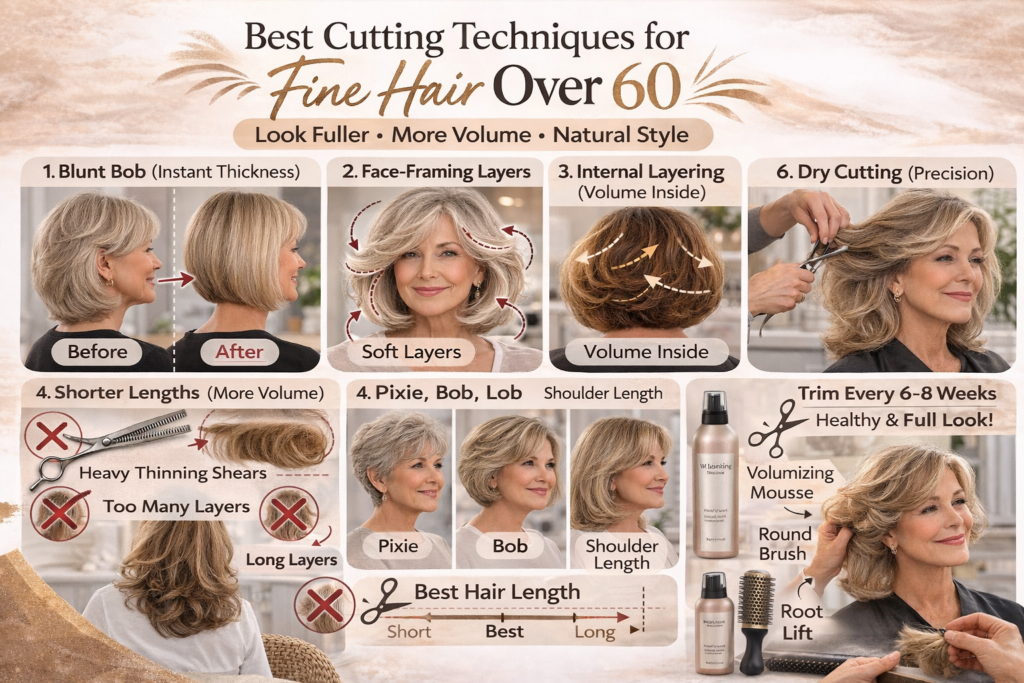
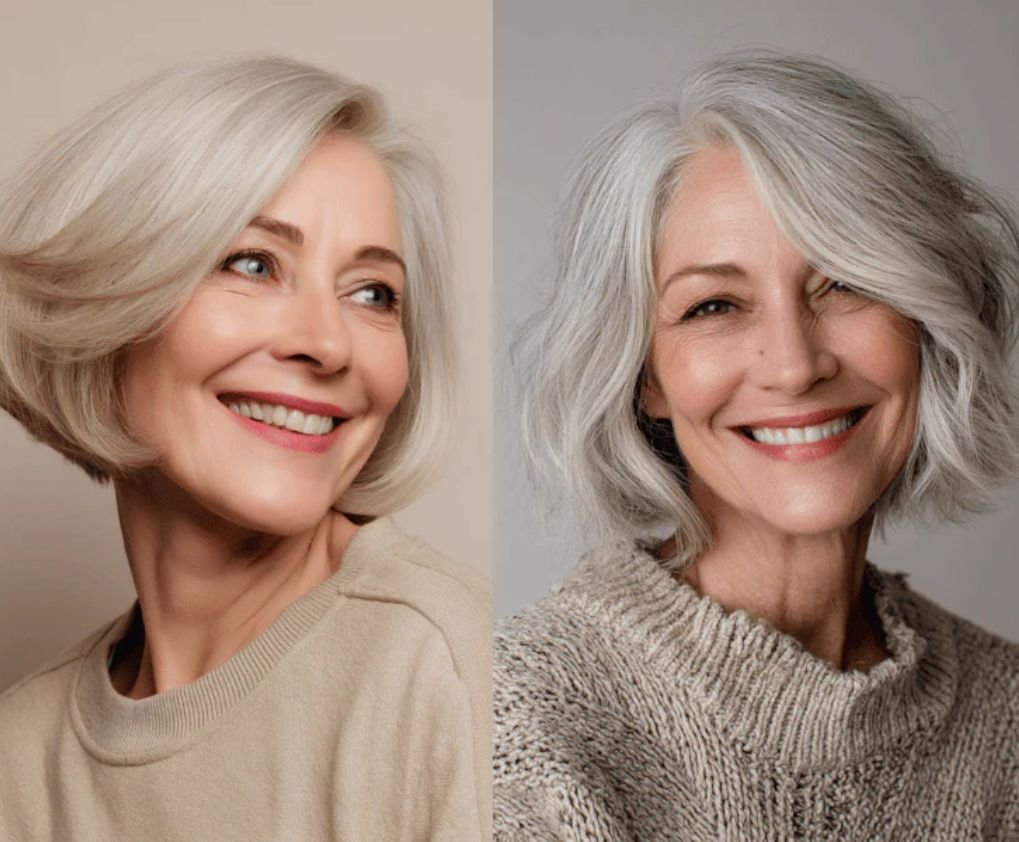
A blunt or one-length cut gives the illusion of more hair. When all the ends align at the same level, the hair looks denser and fuller. This technique works especially well for bobs and lobs (long bobs). Ask your stylist for a clean, blunt line at the ends — no feathering, no layers at the very tips.
2. Soft, face-framing layers (not too many)
Layers can either be a fine hair’s best friend or worst enemy. The key is soft, minimal layers — only around the face. This creates movement and lifts the face without removing too much weight from the rest of the hair. Avoid heavy layering throughout, which makes fine hair look even thinner and scraggly at the ends.
3. The internal layering technique
Also called “point cutting” or “interior layering,” this method removes weight from the inside of the hair rather than the surface. The result is natural movement and volume without any visible thinning of the outer silhouette. It’s ideal for fine hair because the overall shape remains full while the style gains life and bounce.
4.Shorter lengths for more volume
Length is heavy. The longer fine hair gets, the more it weighs itself down and falls flat. Many stylists recommend keeping fine hair above the shoulders — think pixie cuts, short bobs, or chin-length styles. These lengths allow the hair to hold its shape and volume throughout the day without needing constant restyling.
5. Razoring — use with caution
Razor cutting can add texture and movement, but for fine hair over 60, it’s a double-edged sword. On young, thick hair, razoring creates softness. On fine, fragile hair, it can split the ends and create flyaways. If your stylist suggests razoring, ask them to use it minimally — only for face-framing pieces, never throughout the whole cut.
6. Dry cutting for precision
More stylists are now cutting fine hair while it’s dry rather than wet. Why? Because fine hair behaves very differently dry vs. wet — it can appear much longer when wet and then shrink significantly once dry. Dry cutting lets the stylist see exactly how the hair falls naturally and make more precise adjustments. Ask if your stylist offers dry cuts — it can dramatically improve the result.
Pro tip: Always bring a photo to your appointment. Fine hair comes in many textures — wavy, straight, and everything in between. A photo helps your stylist understand the finish you’re aiming for, not just the length.
Techniques to avoid
Just as important as what to ask for is knowing what to say no to:
- Heavy thinning shears — these remove too much bulk and leave fine hair looking wispy and sparse.
- Very long layers — they drag the hair down and create uneven density.
- Lots of graduation — stacked graduation at the back can look dated and may emphasize thinness.
- One-size-fits-all cuts — your hair texture, face shape, and lifestyle all matter. A personalised cut always outperforms a trend-based one.
How often should you get a trim?

Fine hair over 60 benefits from regular trims every 6 to 8 weeks. Because the hair is more fragile, split ends travel up the shaft faster — a regular cut keeps the style looking fresh and prevents further breakage. Even if you’re growing your hair out, small maintenance trims are worth every penny.
The bottom line
Fine hair over 60 doesn’t have to mean flat, limp, or lifeless. The right cutting technique — whether it’s a blunt bob, soft face-framing layers, or a precise dry cut — can completely transform how your hair looks and feels. The next time you’re in the salon, don’t be afraid to ask questions and advocate for what your hair actually needs. Your stylist will appreciate it — and so will your mirror.
Frequently asked questions
What is the best haircut for fine thinning hair over 60?
The best haircut for fine thinning hair over 60 is usually a short to medium-length style that adds volume and movement. Popular choices include layered bobs, pixie cuts, and soft shags. These styles help create the appearance of fuller hair and are easier to maintain. A textured cut can also prevent hair from looking flat and lifeless.
Should fine hair over 60 be layered or not?
Yes, layering is often recommended for fine hair over 60. Light layers add movement and make the hair look thicker and more voluminous. However, the layers should be soft and not too heavy, because excessive layering can make thin hair appear even thinner. A stylist can add subtle layers to give the hair body while maintaining fullness.
How can I make my fine hair look thicker after 60?
There are several ways to make fine hair look thicker after 60. Choosing a layered haircut, using volumizing shampoos, and blow-drying with a round brush can help create more volume. Hair products such as mousse or texture spray can also add lift at the roots. In addition, lighter hair colors or highlights can give the illusion of thicker hair.
Is long hair a bad idea for fine hair over 60?
Long hair is not necessarily a bad idea, but very long hair can sometimes make fine hair look flatter and thinner. A shoulder-length or slightly shorter style often works better because it keeps the hair looking fuller. If you prefer longer hair, adding soft layers and maintaining regular trims can help keep it healthy and voluminous.
How often should fine hair over 60 be cut?
Fine hair over 60 should typically be trimmed every 4 to 6 weeks. Regular trims help maintain the shape of the haircut and prevent split ends, which can make hair look thinner. Keeping the ends fresh also helps the hair appear fuller and healthier.
What should I tell my stylist if I have fine hair over 60?
Tell your stylist that you want a haircut that adds volume and makes your hair look thicker. You can ask for soft layers, a textured cut, or a style that is easy to maintain. It is also helpful to discuss your daily styling routine so the stylist can recommend a haircut that fits your lifestyle and works well with fine hair.