
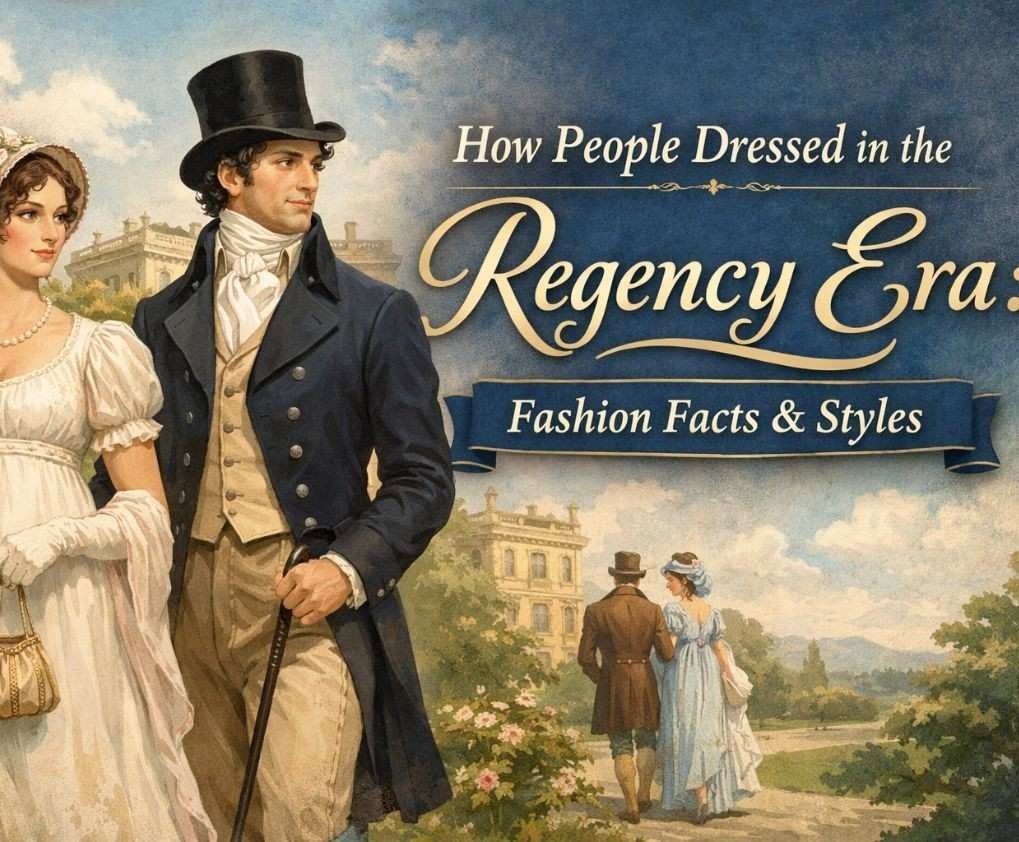
The Regency Era (roughly 1795–1820) was a time of elegance, refinement, and social change. Fashion during this period reflected a move away from heavy, ornate clothing toward simpler, more comfortable styles inspired by classical Greek and Roman design. Clothing was an important sign of class, gender, and status, and people dressed carefully for daily life, social events, and formal occasions.
This article explores how people dressed in the Regency Era, covering women’s fashion, men’s clothing, fabrics, accessories, and key style facts.
Fashion Influences of the Regency Era
Regency fashion was heavily influenced by:
- Classical Greek and Roman art
- Political changes after the French Revolution
- A desire for comfort and natural silhouettes
Unlike earlier periods with stiff corsets and wide skirts, Regency clothing focused on light fabrics and flowing lines. Clean designs replaced heavy decoration, creating a look that was graceful and understated.
Women’s Clothing in the Regency Era
Women’s fashion in the Regency Era was defined by simplicity and elegance.
Regency Dresses and Gowns
The most recognizable feature of women’s Regency clothing was the Empire waistline, which sat just below the bust. Dresses were long, flowing, and lightly fitted, allowing freedom of movement.
Common features included:
- High waistlines
- Narrow skirts
- Short puffed sleeves for daytime
- Longer sleeves for evening wear
White and pastel shades were popular, especially for formal occasions. Dresses were often made from muslin, cotton, or silk, which gave them a soft, airy appearance.
Undergarments
Women wore light corsets or stays to support the bust rather than shape the waist. Multiple layers, such as chemises and petticoats, were worn for comfort and modesty.
Men’s Fashion in the Regency Era
Men’s clothing in the Regency period was structured yet refined, emphasizing a polished appearance.
Coats and Jackets
Men commonly wore:
- Tailcoats for formal wear
- Morning coats for daytime
- Waistcoats (often colorful or patterned)
Tailoring was very important. Clothing was designed to fit closely to the body, showing a well-shaped figure.
Shirts and Trousers
Shirts were usually white with high collars. Cravats or neckcloths were tied in various styles and were an important fashion statement.
Instead of knee-length breeches from earlier periods, men began wearing full-length trousers, which became a defining trend of Regency fashion.
Fabrics and Colors
Regency Era clothing used lightweight and breathable fabrics.
Popular materials included:
- Cotton
- Muslin
- Linen
- Silk
Colors varied depending on social class and occasion. While white and soft shades were fashionable for women, men favored darker tones such as black, navy, brown, and gray.
Accessories and Footwear
Accessories played a key role in completing Regency outfits.
Women’s Accessories
Women commonly wore:
- Bonnets and straw hats
- Gloves
- Shawls
- Reticules (small handbags)
Footwear included flat slippers or low-heeled shoes made from leather or silk.
Men’s Accessories
Men accessorized with:
- Top hats
- Gloves
- Canes
- Leather boots or formal shoes
These items added sophistication and signaled social status.
Hairstyles and Grooming
Hairstyles were neat and natural during the Regency Era.
- Women often styled their hair in soft curls or updos, sometimes decorated with ribbons or flowers.
- Men wore short hair, often slightly curled, and were usually clean-shaven.
Good grooming was considered essential for both men and women, especially among the upper classes.
Fashion and Social Class
Clothing clearly reflected social status. Wealthy individuals wore finer fabrics and owned multiple outfits for different occasions. Lower classes dressed more practically, choosing durable fabrics and simpler designs.
Despite these differences, the overall style of the Regency Era remained modest and elegant across all social levels.
Lasting Impact of Regency Era Fashion
Regency fashion continues to influence modern clothing, especially in formal wear and minimalist designs. Empire waist dresses, flowing silhouettes, and tailored menswear remain popular today. Period dramas and novels have also renewed interest in this elegant style.
Conclusion
Regency Era fashion marked a turning point in clothing history. With its focus on comfort, simplicity, and classical beauty, it created timeless styles that still inspire designers and fashion lovers today. Understanding how people dressed during this era offers valuable insight into both historical culture and modern fashion trends.