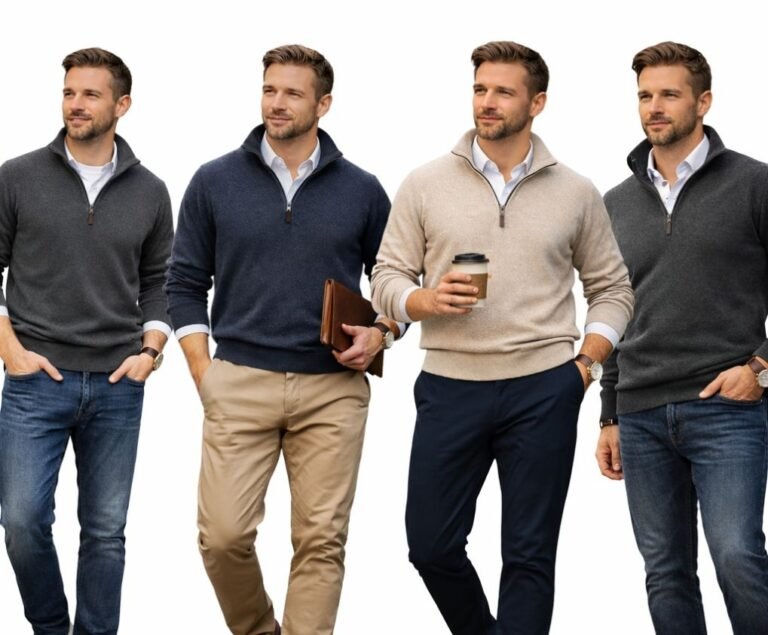

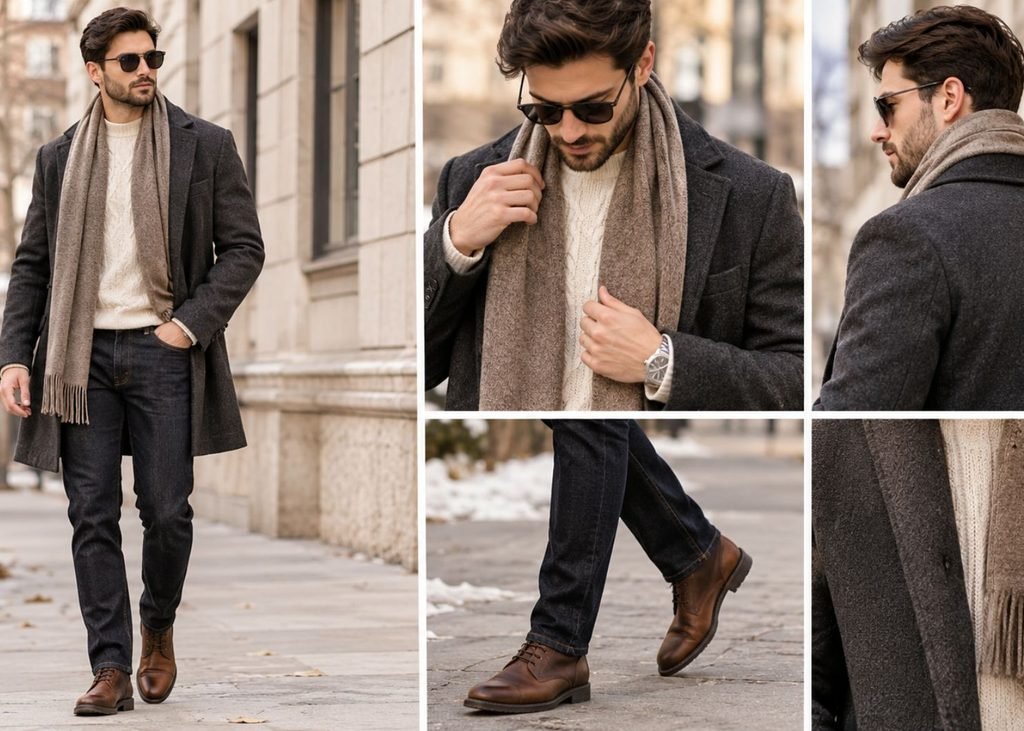
Dressing well in winter shouldn’t mean choosing between freezing in a thin jacket and looking like a marshmallow in five bulky layers. You don’t need a massive wardrobe or trend-chasing pieces to look sharp when temperatures drop. With a handful of versatile staples and a few proven pairing formulas, you can put together warm, polished outfits for work, weekends, travel, and nights out without overthinking every morning.
The secret to effortless winter dressing comes down to four elements: layering, fabric choice, fit, and proportion. A lightweight merino sweater delivers serious warmth without the bulk of a thick cotton sweatshirt, while a structured wool coat instantly elevates basic denim.
This guide covers 9 effortless mens winter outfits, practical fabric choices, temperature-based styling tips, layering techniques, winter color combinations, and accessories that actually serve a purpose.
What Makes a Good Winter Outfit for Men?
Great winter style comes down to three things: thermal efficiency, mobility, and clean proportions. Instead of relying on one extremely heavy coat, build modular outfits that adapt as you move between cold streets and heated indoor spaces.
A strong winter outfit includes:
- Moisture-managing base layer: A fitted cotton T-shirt or merino thermal sits close to the skin to trap body heat without adding bulk.
- Insulating mid-layer: Merino wool, lambswool, fleece, or a flannel overshirt locks in warmth while remaining breathable.
- Weather-shielding outer layer: A structured wool overcoat protects against dry cold, while a windproof parka or insulated puffer handles rain, snow, and strong wind.
- Substantial bottoms: Straight-fit dark denim, corduroy, wool trousers, or heavyweight chinos balance the visual weight of winter outerwear.
- Weather-ready footwear: Lug-sole leather boots or weather-treated sneakers provide better traction and protection in winter conditions.
The right combination depends on temperature, wind, precipitation, and how much time you spend outdoors. A dry, cool afternoon requires fewer layers than a freezing commute.
Men’s Winter Capsule Wardrobe Checklist
You don’t need dozens of seasonal pieces to build a versatile winter wardrobe. Start with fabrics, silhouettes, and colors that work across multiple outfits.
| Wardrobe Category | Recommended Fabrics & Styles | Most Versatile Colors |
| Sweaters | 100% Merino wool, lambswool, heavyweight cotton (crew-neck & turtleneck) | Navy, charcoal, oatmeal, cream, olive |
| Trousers | Straight-fit dark denim (12oz+), 8-wale corduroy, brushed flannel trousers | Dark indigo, washed black, khaki, brown |
| Outerwear | Single-breasted wool overcoat, matte puffer jacket, waxed field jacket | Camel, charcoal, navy, black |
| Footwear | Goodyear-welted Chelsea boots, lace-up service boots, leather low-top sneakers | Dark brown, espresso, black, white |
| Accessories | Ribbed wool or cashmere beanie, fringed wool scarf, lined leather gloves | Burgundy, forest green, grey, camel |
When choosing winter clothing, pay attention to fabric weight, construction, and fit. A medium-weight merino sweater layers more easily than an oversized chunky knit, while heavyweight denim creates a balanced foundation for substantial outerwear.
9 Foolproof Men’s Winter Outfit Formulas by Occasion
These outfit formulas provide an easy starting point for different winter situations. Adjust the layers according to the actual weather, your activity, and your personal comfort.
1. The Coffee-Run Uniform
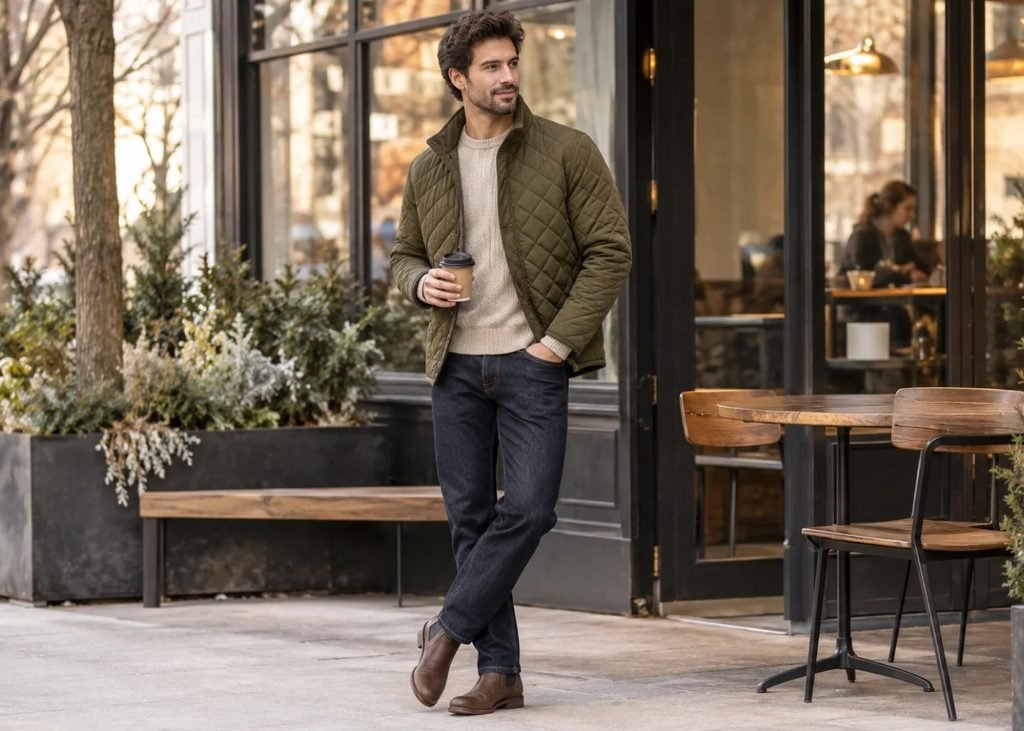
Best for: 40°F–50°F / 4°C–10°C
The Formula: Oatmeal crew-neck sweater + dark indigo straight-leg jeans + brown leather Chelsea boots + olive quilted jacket.
Why it works: The warm oatmeal knit softens the dark denim, while the quilted jacket adds wind protection without the bulk of a heavy parka.
Pro Tip: Cuff your jeans once so the hem sits cleanly over the boot shaft without bunching.
Visual Slot: Place a street-style photograph or flat-lay collage showing the complete outfit here.
2. The Everyday Layered Look
Best for: 35°F–45°F / 2°C–7°C
The Formula: White heavyweight T-shirt + grey flannel overshirt + black jeans + leather sneakers + short insulated jacket.
Why it works: The white base layer creates a clean foundation, while the flannel adds texture. Black jeans anchor the lighter upper layers.
Pro Tip: Keep the T-shirt relatively fitted when wearing a relaxed overshirt. This keeps the silhouette clean instead of shapeless.
Visual Slot: Place an everyday winter outfit photograph or flat-lay here.
3. The Relaxed Weekend Outfit
Best for: 30°F–40°F / -1°C–4°C
The Formula: Navy crew-neck sweater + relaxed dark jeans + white leather sneakers + charcoal puffer jacket.
Why it works: Relaxed denim and a puffer create a comfortable weekend silhouette, while clean sneakers keep the outfit from looking overly heavy.
Pro Tip: If the puffer has an oversized fit, keep the sweater and jeans closer to a regular or straight fit.
Visual Slot: Place a casual weekend winter outfit image here.
4. The Smart-Casual Dinner Look
Best for: 35°F–45°F / 2°C–7°C
The Formula: Black merino turtleneck + charcoal trousers + dark brown Chelsea boots + camel wool overcoat.
Why it works: The fine-knit turtleneck creates a clean line underneath the structured coat. Camel and charcoal add contrast without making the outfit feel loud.
Pro Tip: Choose a turtleneck that sits close to your neck without restricting movement.
Visual Slot: Place a smart-casual winter dinner outfit photograph or flat-lay here.
5. The Casual Office Outfit
Best for: 35°F–45°F / 2°C–7°C
The Formula: Light blue Oxford shirt + fine-knit navy sweater + grey wool trousers + brown leather boots + charcoal overcoat.
Why it works: The shirt adds structure, while the fine-knit sweater provides warmth without creating excessive bulk underneath the coat.
Pro Tip: Leave a small amount of the shirt collar visible above the sweater for a polished finish.
Visual Slot: Place an office-ready men’s winter outfit image here.
6. The Cold-Weather Commute
Best for: Below 32°F / 0°C
The Formula: Merino thermal + chunky knit sweater + dark denim + insulated parka + lug-sole boots.
Why it works: This combination prioritizes insulation and weather protection. The parka blocks wind while the layered knitwear helps retain warmth.
Pro Tip: For snow and icy conditions, choose boots with water-resistant construction and deep rubber tread.
Visual Slot: Place an outdoor winter commuting image showing the insulated layers and boots here.
7. The Date-Night Outfit
Best for: 35°F–48°F / 2°C–9°C
The Formula: Burgundy fine-knit sweater + black straight-leg trousers + black leather boots + dark wool coat.
Why it works: Burgundy introduces controlled color, while black trousers and boots create a streamlined foundation.
Pro Tip: Keep accessories understated so the sweater and coat remain the visual focus.
Visual Slot: Place a polished men’s winter date-night outfit image here.
8. The Textured Winter Look
Best for: 40°F–52°F / 4°C–11°C
The Formula: Cream crew-neck sweater + brown corduroy trousers + brown lace-up boots + navy wool coat.
Why it works: Cream brightens the outfit, while corduroy introduces texture. Navy and brown create a classic combination that feels distinctly seasonal.
Pro Tip: Limit heavily textured pieces. The sweater and corduroy already provide enough visual interest.
Visual Slot: Place a textured winter outfit image or flat-lay here.
9. The Easy Travel Outfit
Best for: Variable Indoor/Outdoor Temperatures
The Formula: Merino T-shirt + lightweight overshirt + relaxed trousers + clean leather sneakers + packable insulated jacket.
Why it works: Travel often means moving between cold outdoor conditions and heated indoor spaces. Lightweight layers give you more temperature control without sacrificing comfort.
Pro Tip: Choose wrinkle-resistant fabrics and comfortable shoes for long periods of walking or sitting.
Visual Slot: Place a men’s winter travel outfit image here.
The 3-Layer Rule: How to Avoid the “Marshmallow” Look
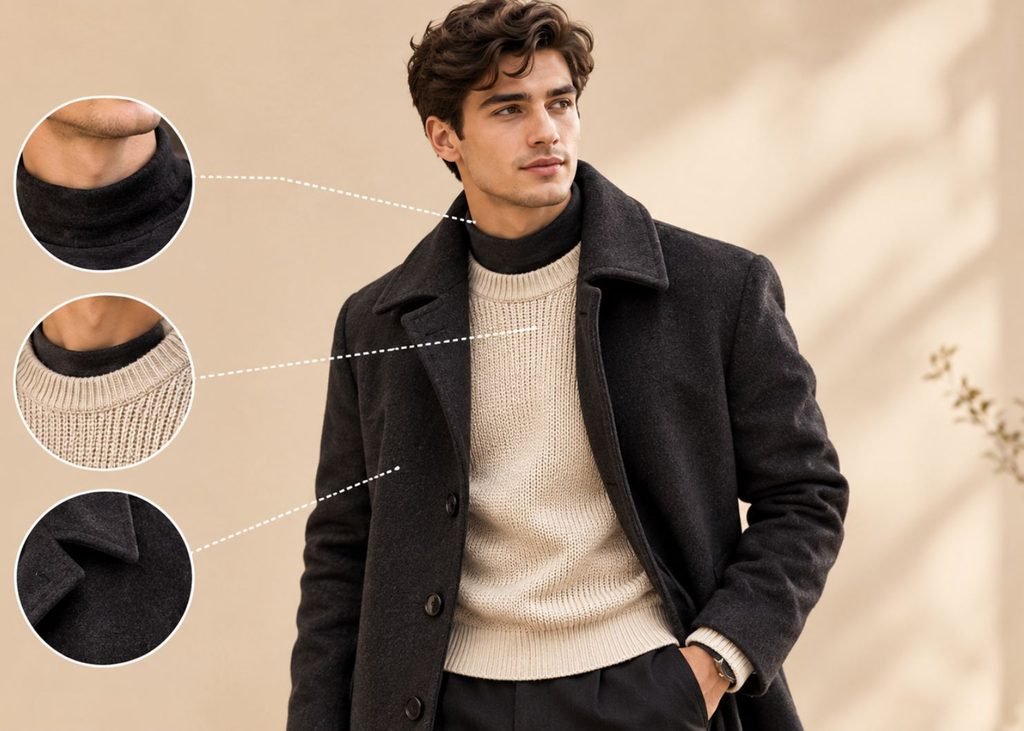
Effective layering follows a strict thin-to-thick and fitted-to-relaxed progression. Each layer needs enough room to drape cleanly over the piece beneath it without restricting your shoulders or arms.
1. Base Layer: Fitted
Keep the base layer close to the body. A fitted T-shirt, long-sleeve shirt, or merino thermal creates a comfortable foundation without unnecessary volume.
Merino wool outer layers works particularly well because it provides insulation while managing moisture and maintaining breathability.
2. Mid-Layer: Structured
The middle layer provides insulation and contributes most of the visible texture.
Good choices include:
- Fine-knit merino sweaters
- Lambswool sweaters
- Flannel overshirts
- Fleece
- Lightweight quilted layers
- Cardigans
Avoid forcing a thick cable-knit sweater underneath a slim-fitting coat. Your shoulders and arms should move naturally.
3. Outer Layer: Roomy
Your coat or jacket needs enough shoulder and chest room to accommodate the layers underneath. If the fabric pulls across your back or arms when you move, the outer layer is too restrictive.
Three Quick Fixes for Better Proportions
Balance volume: Pair a bulky puffer jacket with slim-straight jeans, or a tailored long overcoat with moderately relaxed trousers. Avoid oversized tops and oversized bottoms unless you are deliberately creating a streetwear silhouette.
Show a sliver of collar: A small amount of white or light-colored fabric beneath a dark sweater creates separation around the neck and frames the face.
Prioritize warm, lightweight fabrics: Merino wool and cashmere deliver strong insulation without the thickness of standard cotton layers—eliminating bulk before you even put on a coat.
How to Choose Colors for Winter Outfits
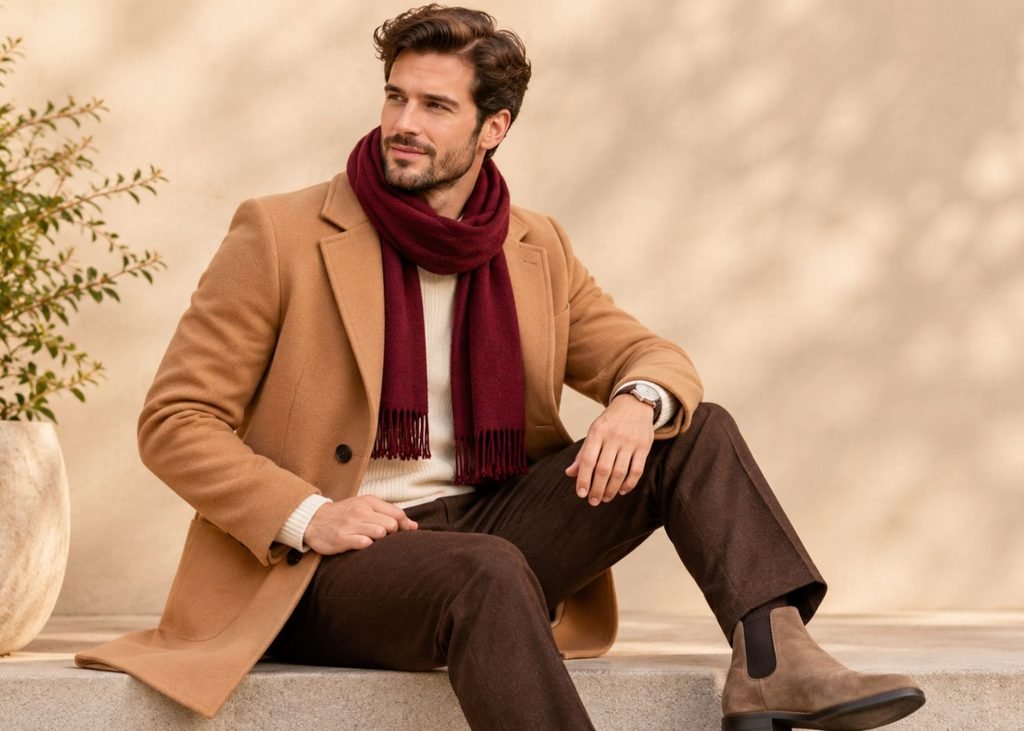
Winter wardrobes naturally suit deep neutrals, but an effective color palette does not need to be entirely black, grey, or navy.
Use the 60-30-10 color rule to create controlled contrast:
- 60%: Main neutral anchor such as charcoal, navy, black, or dark brown.
- 30%: Secondary neutral such as cream, oatmeal, grey, or camel.
- 10%: Accent color such as burgundy, rust, forest green, or deep blue.
For example, wear a charcoal coat and dark jeans as your 60%, add an oatmeal sweater as your 30%, and finish with a burgundy scarf as your 10%.
Easy Winter Color Combinations
- Camel + dark brown
- Navy + grey
- Black + cream
- Olive + black
- Burgundy + navy
- Charcoal + oatmeal
- Brown + forest green
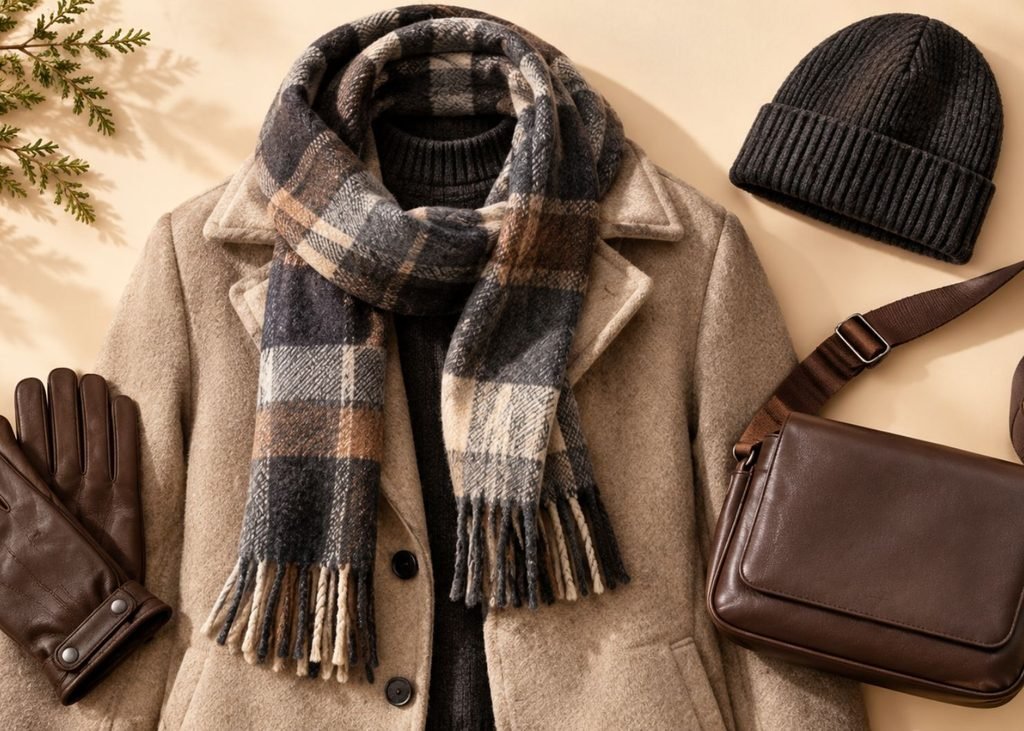
If you are building outfits quickly, stick to two neutral shades and let a single accessory carry your 10% accent color. It creates intentional contrast with zero risk of clashing.
Winter Accessories That Actually Add Value
Winter accessories should serve a practical purpose while complementing the rest of your outfit.
Scarves
A brushed wool scarf seals the gap around your collar while adding rich texture. Stick to grey, camel, navy, or burgundy so it pairs effortlessly with every coat you own.
Beanies
A ribbed merino or cashmere beanie finishes off casual jackets without looking sloppy. Keep the cuff folded once so it sits cleanly above your ears.
Gloves
Lined leather gloves belong with wool overcoats and smart-casual outfits, while insulated technical gloves handle freezing commutes and outdoor errands.
Socks
Swap thin cotton dress socks for heavyweight merino wool socks when wearing boots. Match them to your trousers for a seamless leg line, or pick a darker shade of your accent color.
How to Choose the Right Winter Footwear
Winter footwear needs to provide more than style. Traction, insulation, and weather resistance become important when temperatures fall or surfaces become wet and slippery.
Chelsea Boots
Chelsea boots create a clean silhouette with jeans, wool trousers, and overcoats. Choose rubber or textured soles for wet winter conditions.
Lace-Up Boots
Leather or suede lace-up boots work particularly well with denim, corduroy, and heavier outerwear. Their substantial shape balances the visual weight of winter clothing.
Leather Sneakers
Low-top leather or suede sneakers suit dry, mild winter days. Pair them with straight-leg jeans, chinos, or relaxed trousers.
When conditions turn icy, snowy, or particularly wet, prioritize footwear designed for traction and weather protection rather than appearance alone.
4 Winter Styling Mistakes That Ruin a Good Outfit
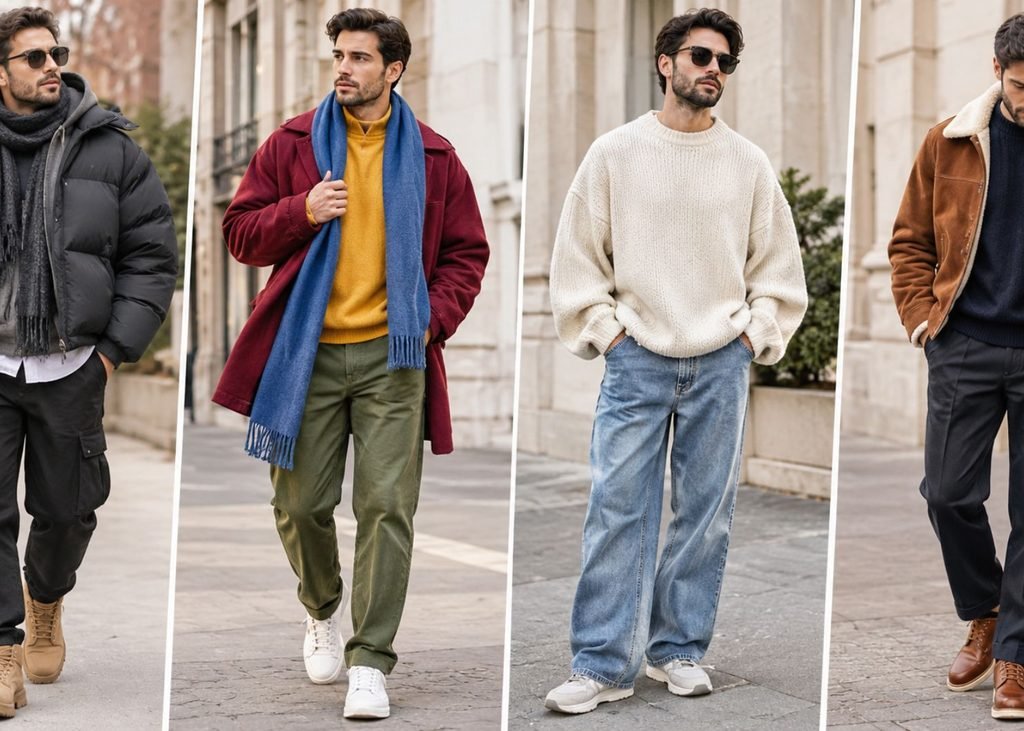
1. Wearing Smooth Dress Soles in Slippery Weather
Smooth leather soles provide poor traction on wet or icy pavement. Rubber, lugged, or other traction-focused soles are non-negotiable for safe traction in slippery winter conditions.
2. Ignoring Coat Fit
A coat that fits perfectly over a T-shirt may feel restrictive over a sweater. Check the shoulders, chest, and upper arms when trying on winter outerwear. You should move naturally without the fabric pulling.
3. Ignoring Fabric Weight
Winter outfits look far more cohesive when your top and bottom share similar fabric weights. A heavy wool overcoat paired with thin summer-weight chinos creates a visual mismatch.
4. Over-Matching Accessories
Your scarf, beanie, gloves, and shoes do not need to match exactly. Keep them within the same color family instead. Charcoal, grey, navy, brown, and neutral shades naturally complement one another.
How to Build a Timeless Men’s Winter Wardrobe
Winter trends change, but a practical wardrobe starts with pieces that remain useful year after year.
Build your foundation around:
- A versatile wool coat
- A practical insulated jacket
- A merino or lambswool sweater
- A fine-knit turtleneck
- Dark straight-leg denim
- Corduroy or wool trousers
- Leather Chelsea or lace-up boots
- A neutral scarf
- A wool or cashmere beanie
Focus on fit and fabric before chasing trends. A well-fitting coat in a versatile color remains useful long after a short-lived trend disappears.
Once these nine staples are in your closet, you can experiment with seasonal trends through a single statement jacket or textured sweater—without ever needing a full wardrobe overhaul.
Explore more styling inspiration in our fashion collection and mens fashion.
Conclusion
Creating stylish men’s winter outfits does not require a huge wardrobe or complicated styling rules. The right combination of fabric, layering, fit, proportion, and color creates outfits that look intentional while keeping you comfortable.
Start with versatile winter staples such as merino sweaters, dark denim, wool trousers, practical boots, and a reliable coat. Then adjust the layers according to the temperature and occasion.
Whether you are dressing for a casual coffee run, a workday, a weekend outing, travel, or a dinner date, these outfit formulas provide a practical starting point.
The best-dressed men in winter aren’t wearing the most expensive clothes—they’re wearing the smartest layers for the weather outside.
Frequently Asked Questions
What should men wear in winter?
Men should build winter outfits around a fitted base layer, insulating mid-layer, and weather-protective outer layer. Pair these with heavier trousers and footwear suited to the conditions. Adjust the number and thickness of layers according to temperature, wind, rain, snow, and time spent outdoors.
Can men wear sneakers in winter?
Yes, low-top leather or suede sneakers work well on dry, mild winter days above 35°F (2°C). Pair them with wool socks and straight-leg jeans or chinos. For snow, slush, or icy conditions, switch to insulated leather boots with rubber lug soles for traction and water resistance.
What type of coat is best for winter?
A single-breasted wool overcoat in charcoal, navy, or camel is the most versatile winter coat for smart-casual and office wear. For temperatures below freezing, heavy snow, or outdoor commutes, a waterproof down parka or matte puffer jacket provides superior insulation and wind protection.
What are the best winter colors for men?
The best winter colors are deep neutrals—navy, charcoal, black, dark brown, and olive—paired with warm light tones like cream, oatmeal, and camel. To add visual interest without clashing, introduce rich accent shades like burgundy, rust, or forest green through scarves and knitwear.
How many layers should men wear in winter?
Three layers provide a practical starting point: a fitted base layer, an insulating middle layer, and a weather-resistant outer layer. Add or remove layers according to temperature and activity. A freezing outdoor commute requires more insulation than a short trip between a car and a heated building.
How can men layer clothes without looking bulky?
Follow a thin-to-thick and fitted-to-relaxed progression. Keep the base layer close to the body, choose a moderate mid-layer, and select an outer coat with enough room for movement. Fine merino sweaters and other lightweight insulating fabrics reduce bulk while maintaining warmth.
Are wool sweaters good for winter?
Yes, wool is the ideal winter fabric because it regulates body temperature while remaining naturally breathable. Merino wool excels in base layers and fine-knit sweaters by delivering high warmth without bulk, while heavyweight wool coats provide unbeatable insulation in dry, cold weather.
What should men wear for a casual winter outfit?
A sweater or hoodie, straight-leg jeans, practical boots or sneakers, and a puffer or quilted jacket create an easy casual winter outfit. Add a wool scarf or ribbed beanie when temperatures drop. Keep the colors coordinated and balance oversized pieces with cleaner-fitting trousers.