
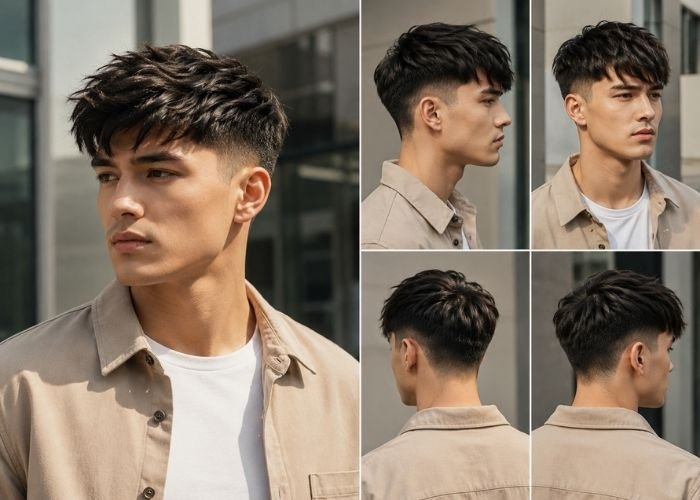
Finding a haircut that’s stylish, easy to manage, and suitable for almost every occasion can feel overwhelming. Trends change quickly, but some hairstyles remain popular because they strike the perfect balance between practicality and modern style. Low taper fade straight hair is one of those timeless choices.
For men with straight hair, this haircut offers several advantages. The smooth texture of straight hair naturally highlights the fade’s clean blend, creating a sharp yet subtle finish. Unlike high or skin fades, a low taper fade keeps more hair on the sides, making it an excellent option if you want a polished appearance without exposing too much scalp.
Whether you’re preparing for your first barber visit, looking to refresh your current style, or simply exploring haircut ideas, understanding how a low taper fade works can help you make the right decision. This guide covers everything you need to know—from choosing the right variation and styling it at home to maintaining the cut and avoiding common mistakes.
What Is a Low Taper Fade?
A low taper fade is a haircut where the hair gradually transitions from longer lengths at the top to shorter lengths around the ears and neckline. Unlike a dramatic skin fade, the transition begins lower on the head and blends softly, creating a natural, refined appearance.
The fade usually starts just above the ears before tapering down toward the neckline. Because the change in length is subtle, the haircut works well in both professional and casual settings.
A Low Taper Fade Typically Features:
- A gradual fade beginning above the ears
- A clean, tapered neckline
- More hair left on the sides than a mid or high fade
- A natural blend rather than a dramatic contrast
- Flexibility to pair with both short and medium-length hairstyles
This combination makes it one of the most versatile haircuts for men with straight hair.
Why Does It Work So Well for Straight Hair?
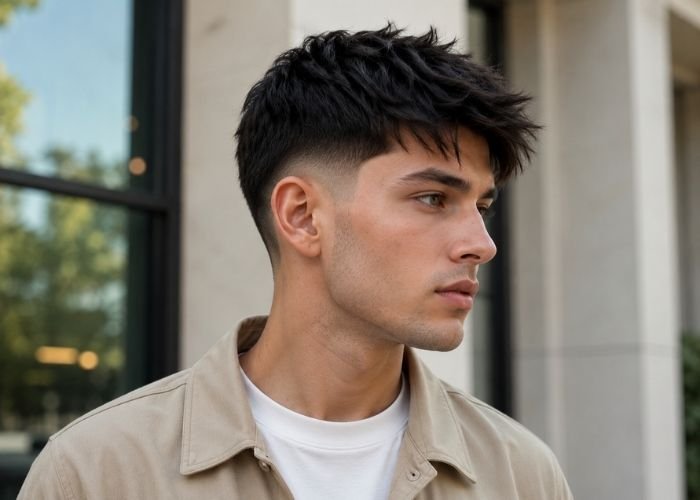
Straight hair reflects light evenly and naturally displays clean lines. As a result, the smooth transition of a low taper fade becomes more noticeable, giving the haircut a crisp, well-defined appearance.
Unlike curly or wavy hair, which can hide blending details, straight hair reveals every transition. That’s why precision is especially important when cutting and styling this haircut.
Barber’s Pro Tip
Straight hair doesn’t have curls to disguise uneven blending. Ask your barber to use scissor-over-comb through the upper transition area to soften the weight line. This technique creates a smoother blend and prevents the sides from appearing bulky as the haircut grows out.
Low Taper Fade vs. Regular Taper
Many people use the terms “taper” and “fade” interchangeably, but they’re not exactly the same.
| Feature | Low Taper Fade | Regular Taper |
| Blend | Short hair gradually fades into longer hair | Hair shortens slightly around the edges |
| Starting Point | Just above the ears and neckline | Sideburns and neckline only |
| Contrast | More noticeable | Very subtle |
| Overall Look | Modern and clean | Classic and conservative |
| Maintenance | Every 3–4 weeks | Every 4–6 weeks |
If you want a haircut that looks modern without being overly bold, a low taper fade is often the better choice.
Is a Low Taper Fade Right for You?
A low taper fade is a great option if you:
- Prefer a clean, low-maintenance haircut
- Have naturally straight hair
- Want a style that’s suitable for work, school, or formal occasions
- Like experimenting with different hairstyles on top
- Want a haircut that grows out neatly between barber visits
It suits most face shapes and can be customized to match your hair length, personal style, and grooming routine.
Why Straight Hair Is Perfect for a Low Taper Fade
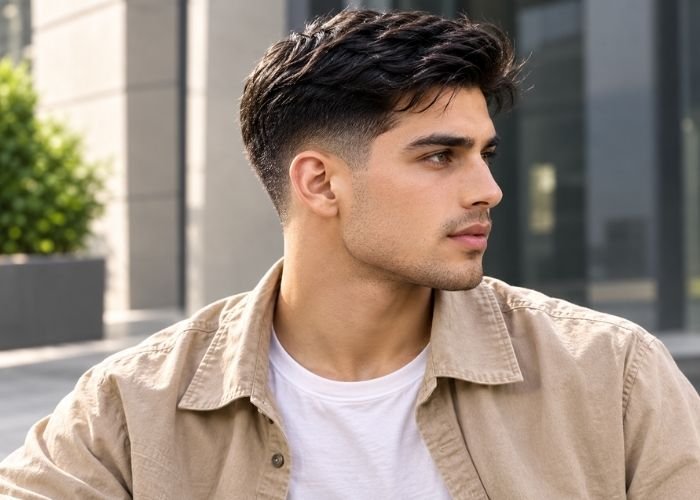
Not every haircut looks the same on every hair type. One of the biggest advantages of a low taper fade is how well it complements straight hair. Because straight hair has a smooth texture and naturally falls in one direction, it showcases the clean blending of a taper fade better than most other hair types.
Whether your hair is fine, thick, or somewhere in between, a low taper fade creates a balanced look by removing bulk around the sides while keeping enough length on top for styling. The result is a haircut that’s modern, easy to maintain, and suitable for everything from the office to weekend outings.
Unlike curly or wavy hair, straight hair doesn’t hide uneven blending. Every transition in the fade is visible, which is why precision is so important. A skilled barber can create a seamless fade that enhances the natural flow of your hair and gives it a polished finish.
Barber’s Insight
Straight hair tends to lie flat against the scalp, especially after washing. If your goal is to add volume, avoid letting your hair air-dry completely. Blow-dry it while it’s still slightly damp using your fingers or a vent brush to lift the roots before applying styling product.
Benefits of a Low Taper Fade for Straight Hair
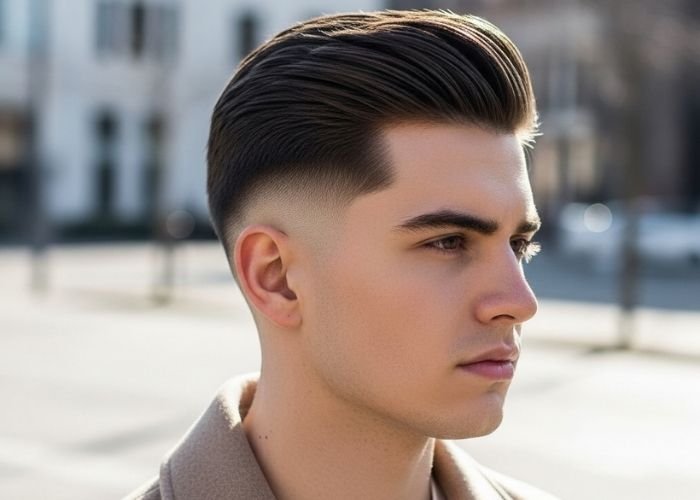
Here are some reasons why this haircut continues to be one of the most requested styles in barbershops.
1. Clean and Sharp Appearance
Straight hair naturally highlights the smooth transition of a taper fade. Since there are no curls or waves to interrupt the blend, the haircut appears crisp from every angle.
This makes it an excellent choice if you prefer a polished hairstyle that looks neat without requiring excessive styling.
2. Works for Every Occasion
One of the biggest strengths of a low taper fade is its versatility.
You can wear it:
- At work
- At school or college
- At weddings
- During business meetings
- On casual weekends
- At formal events
The haircut never feels too bold or too plain, making it suitable for almost every lifestyle.
3. Pairs with Many Hairstyles
A low taper fade doesn’t limit how you style the hair on top.
Popular options include:
- Textured Crop
- Classic Side Part
- Modern Quiff
- Slick Back
- Ivy League
- Crew Cut
- French Crop
- Messy Textured Style
- Brush Back
- Curtains (Medium Length)
Because the fade stays low around the ears and neckline, the top remains the main focus of your hairstyle.
4. Easy to Maintain
Compared to a skin fade, a low taper fade grows out more naturally.
Most people only need a cleanup every 3–4 weeks, depending on how quickly their hair grows.
That makes it an excellent option if you don’t want frequent barber visits.
5. Looks Great with Facial Hair
If you have a beard or even light stubble, a low taper fade creates a smooth transition between your haircut and facial hair.
A barber can blend the fade directly into your beard for a more connected and polished appearance.
Common Challenges with Straight Hair
Although straight hair offers many advantages, it also comes with a few styling challenges.
Hair Can Look Flat
Straight hair naturally falls downward, especially if it’s fine.
Without proper styling, your haircut may lack volume.
Solution
- Blow-dry upward instead of downward.
- Use a lightweight sea salt spray before drying.
- Finish with matte clay instead of heavy gel.
Thick Straight Hair Can Feel Bulky
If you have thick straight hair, the sides may become heavy as the haircut grows.
Solution
Ask your barber to remove internal weight using thinning shears or point-cutting techniques while keeping enough structure for the fade.
Fine Straight Hair Can Lose Shape
Fine hair often separates throughout the day.
Solution
Choose products that add texture instead of shine.
Products like matte clay or texture powder provide grip without making fine hair appear greasy.
Best Low Taper Fade Variations for Straight Hair
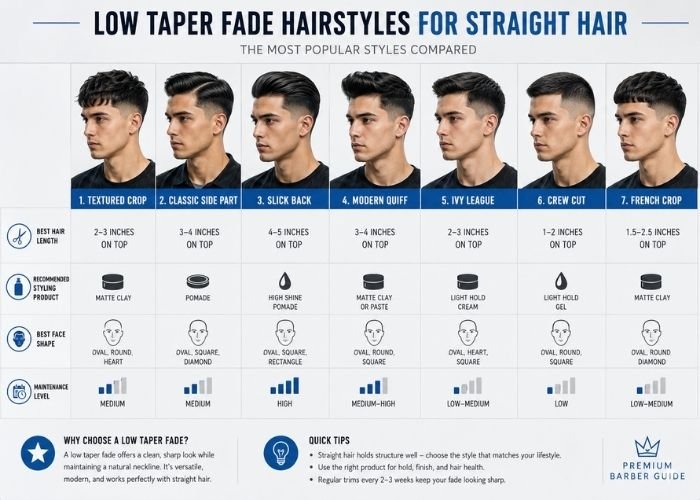
Choosing the right variation depends on your hair length, face shape, and daily styling routine. The table below gives you a quick comparison before we look at each style in detail.
| Style Variation | Best Hair Length | Recommended Product | Best Face Shape | Maintenance |
| Textured Crop | 2–3 inches | Matte Clay or Texture Powder | Oval, Round | Low |
| Classic Side Part | 3–4 inches | Hair Cream or Light Pomade | All Face Shapes | Low |
| Slick Back | 4–6 inches | Water-Based Pomade | Square, Oval | Medium |
| Modern Quiff | 3–5 inches | Sea Salt Spray + Matte Clay | Round, Square | Medium |
| Ivy League | 2–4 inches | Styling Cream | Oval, Diamond | Low |
| Crew Cut | 1–2 inches | Matte Paste | All Face Shapes | Very Low |
| French Crop | 2–3 inches | Texture Paste | Oval, Long | Low |
1. Textured Crop with Low Taper Fade
Best for: Men who want a modern, low-maintenance hairstyle with natural movement.
The textured crop is one of the easiest styles to wear with straight hair. Instead of trying to create a perfectly smooth finish, this haircut embraces soft texture and separation.
The low taper fade removes bulk from the sides while the textured top adds volume and dimension.
How to Style
- Start with towel-dried hair.
- Spray 2–3 pumps of sea salt spray evenly through the roots.
- Blow-dry using your fingers to lift the hair upward.
- Warm a pea-sized amount of matte clay between your palms.
- Work the product from the back toward the front.
- Pinch small sections to create natural texture.
Estimated Styling Time: 5 minutes
Barber Tip
Straight hair often falls flat after a few hours. Instead of adding more product, lightly dampen your hands and reshape the hair with your fingers. This refreshes the texture without making the hair feel heavy.
2. Classic Side Part with Low Taper Fade
Best for: Professionals and anyone who prefers a timeless hairstyle.
A side part never goes out of style. Pairing it with a low taper fade gives the haircut a cleaner, more modern finish while keeping it appropriate for business settings and formal occasions.
This style works especially well on medium-length straight hair because the natural texture makes the part look sharp and defined.
How to Style
- Apply a lightweight styling cream to damp hair.
- Create your preferred side part with a fine-tooth comb.
- Blow-dry in the direction of the part while lifting the front slightly.
- Finish with a small amount of water-based pomade for a soft shine.
The result is a polished hairstyle that stays in place throughout the day without looking stiff.
3. Slick Back with Low Taper Fade
Best for: Medium to longer straight hair and a refined, sophisticated look.
The slick back has remained popular for decades because it combines elegance with versatility. When paired with a low taper fade, it creates a balanced hairstyle that’s suitable for both formal events and smart-casual outfits.
Unlike traditional slick backs that rely on heavy grease, the modern version uses lightweight, water-based pomades for flexibility and a natural finish.
How to Style
- Apply a small amount of pomade to damp hair.
- Blow-dry while brushing the hair backward.
- Use a wide-tooth comb to maintain a relaxed shape.
- Finish with a light mist of hairspray if extra hold is needed.
4. Modern Quiff with Low Taper Fade
Best for: Men who want extra volume and a stylish everyday look.
The modern quiff is one of the most popular hairstyles to pair with a low taper fade. It creates height at the front while the fade keeps the sides neat and balanced. This combination works especially well for men with straight hair because the longer top can be shaped into a clean, structured style.
If you have a round face, a quiff can make your face appear longer by adding vertical height. It also works well for square and oval face shapes.
How to Style
- Start with slightly damp hair.
- Apply 2–3 sprays of sea salt spray to the roots.
- Blow-dry while lifting the front upward with your fingers or a vent brush.
- Warm a pea-sized amount of matte clay between your hands.
- Apply the product from the back toward the front.
- Shape the front upward and slightly backward to create volume.
Estimated Styling Time: 6–7 minutes
Barber Tip
Straight hair naturally falls forward. While blow-drying, point the airflow upward and backward instead of directly downward. This creates long-lasting lift without needing excessive product.
5. Ivy League with Low Taper Fade
Best for: Professionals, students, and men who prefer a polished appearance.
The Ivy League haircut combines a slightly longer crew cut with a neatly styled side part. When paired with a low taper fade, it becomes one of the most versatile hairstyles available.
This style requires very little maintenance while remaining suitable for business meetings, interviews, weddings, and everyday wear.
Why Choose This Style?
- Professional appearance
- Easy morning routine
- Suitable for most face shapes
- Looks clean as it grows out
Styling Tips
Apply a small amount of lightweight styling cream to damp hair and comb it into a natural side part. For a softer finish, use your fingers instead of a comb.
6. Crew Cut with Low Taper Fade
Best for: Men who want the easiest haircut to maintain.
A crew cut paired with a low taper fade offers a clean, athletic look. The short length on top means almost no styling is required, making it ideal for busy professionals, athletes, or anyone who prefers a simple grooming routine.
Benefits
- Very low maintenance
- Quick morning routine
- Cool and comfortable in warm weather
- Highlights facial features
Styling Tips
Most crew cuts require only a small amount of matte paste to add subtle texture. If your hair is naturally thick, simply brushing it into place may be enough.
7. French Crop with Low Taper Fade
Best for: Men who like modern European-inspired hairstyles.
The French crop features a textured top with a short fringe across the forehead. The low taper fade keeps the sides clean while drawing attention to the textured top.
This style is particularly flattering for men with oval or long face shapes because the fringe helps balance facial proportions.
Styling Tips
- Apply texture powder or matte clay.
- Use your fingertips to separate small sections of hair.
- Avoid creating a perfectly smooth finish—the French crop looks best with natural texture.
Which Low Taper Fade Variation Is Right for You?
Choosing the right variation depends on your lifestyle, hair length, and how much time you’re willing to spend styling your hair.
| Hairstyle | Best For | Styling Difficulty | Daily Styling Time |
| Textured Crop | Casual, modern look | Easy | 5 min |
| Side Part | Office and formal wear | Easy | 4 min |
| Slick Back | Medium-length hair | Moderate | 6 min |
| Modern Quiff | Maximum volume | Moderate | 7 min |
| Ivy League | Professional appearance | Easy | 3–4 min |
| Crew Cut | Minimal maintenance | Very Easy | 1–2 min |
| French Crop | Trendy textured style | Easy | 4–5 min |
Best Low Taper Fade for Your Face Shape
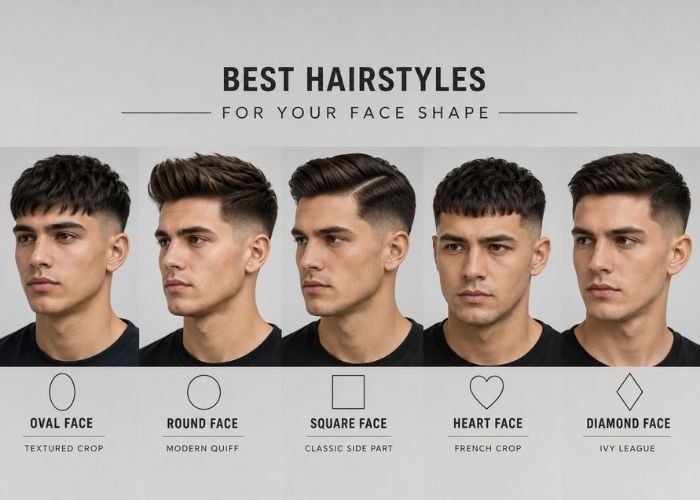
Your face shape plays an important role in choosing the most flattering hairstyle.
Oval Face
An oval face is considered the most versatile because it has balanced proportions.
Recommended Styles
- Textured Crop
- Side Part
- Slick Back
- Quiff
- Ivy League
- Crew Cut
Round Face
Round faces benefit from hairstyles that add height and reduce width.
Best Choices
- Modern Quiff
- Slick Back
- Textured Crop
Avoid
Heavy fringes that cover the forehead, as they can make the face appear rounder.
Square Face
A strong jawline pairs well with structured hairstyles.
Recommended Styles
- Side Part
- Crew Cut
- Slick Back
- Ivy League
Heart Face
Heart-shaped faces have a wider forehead and a narrower chin.
Best Choices
- Textured Crop
- French Crop
- Side Part
Diamond Face
Diamond face shapes have wider cheekbones and a narrower forehead.
Recommended Styles
- Ivy League
- Quiff
- Side Part
5-Minute Daily Styling Routine for Straight Hair
One of the biggest challenges with straight hair is that it can look flat if you don’t style it correctly. This simple routine helps create natural volume while keeping your low taper fade looking fresh.
Step 1: Prep Your Hair (1 Minute)
Start with hair that’s about 80% dry after showering.
Spray 2–3 pumps of sea salt spray onto the roots and mid-lengths.
This adds grip and helps fine straight hair appear fuller.
Step 2: Blow-Dry for Volume (2 Minutes)
Using medium heat, blow-dry your hair upward and slightly backward.
Instead of using a comb immediately, lift the hair with your fingers or a vent brush.
This technique creates natural height and prevents straight hair from lying flat against the scalp.
Barber Tip: Always keep the hairdryer moving. Holding heat in one spot can dry out the hair and make it more difficult to style.
Step 3: Apply Styling Product (1 Minute)
Warm a pea-sized amount of matte clay between your palms until it becomes soft.
Apply the product starting at the back of your head, then work forward.
This prevents the front from becoming overloaded with product.
Step 4: Shape Your Hairstyle (1 Minute)
Use your fingers for a relaxed, textured finish or a wide-tooth comb if you prefer a cleaner style such as a side part or slick back.
If needed, finish with a light mist of flexible hairspray for all-day hold.
Best Styling Products for Straight Hair
Choosing the right product depends on the finish you want.
| Product | Best For | Finish | Hold |
| Matte Clay | Textured Crop, Quiff | Natural | Medium–Strong |
| Sea Salt Spray | Volume | Matte | Light |
| Water-Based Pomade | Slick Back | Shiny | Medium |
| Hair Cream | Side Part | Natural Shine | Light |
| Texture Powder | Fine Hair | Matte | Medium |
| Flexible Hair Spray | Finishing | Natural | Light |
Low Taper Fade vs. Mid Fade vs. High Fade vs. Skin Fade
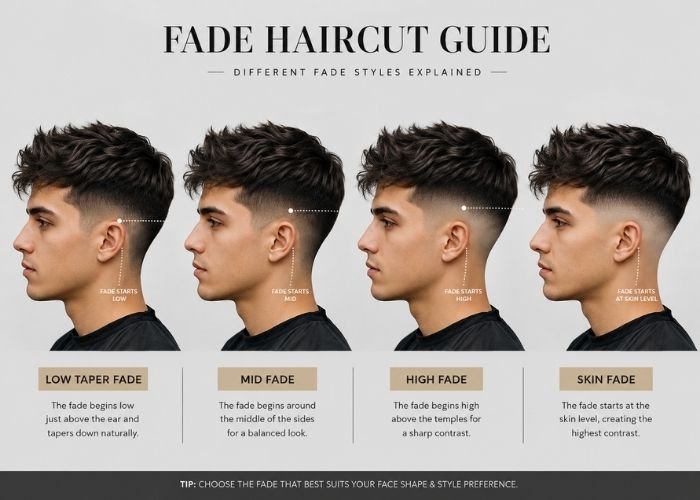
Many people confuse tapers and fades or aren’t sure which fade suits them best. While all fade haircuts gradually shorten the hair on the sides and back, the starting point and overall appearance are very different.
Use the comparison table below to choose the option that matches your style and maintenance preferences.
| Feature | Low Taper Fade | Mid Fade | High Fade | Skin Fade |
| Starts | Just above the ears and neckline | Around the temples | Near the top of the sides | Blends down to bare skin |
| Overall Look | Subtle and professional | Balanced and modern | Bold and eye-catching | Sharp and dramatic |
| Scalp Visibility | Very little | Moderate | Moderate to high | High |
| Best For | Office, school, everyday wear | Casual and professional | Trendy styles | High-contrast modern looks |
| Maintenance | Every 3–4 weeks | Every 2–3 weeks | Every 2–3 weeks | Every 1–2 weeks |
| Styling Difficulty | Easy | Easy | Moderate | Moderate |
Quick Recommendation: If you’re getting your first fade haircut, start with a low taper fade. It’s easier to maintain, grows out naturally, and works with almost every hairstyle.
How Often Should You Get a Trim?
One reason many people choose a low taper fade is that it continues to look neat as it grows out. However, regular trims help keep the fade sharp and prevent the sides from becoming bulky.
| Hair Growth | Recommended Trim |
| Fast-growing hair | Every 2–3 weeks |
| Average hair growth | Every 3–4 weeks |
| Longer hairstyles | Every 4–5 weeks |
If you’re growing your hair out on top, ask your barber to clean only the fade and neckline during maintenance visits.
Common Styling Mistakes to Avoid
Even a great haircut can lose its shape if it’s styled incorrectly. Avoid these common mistakes to keep your low taper fade looking its best.
Using Too Much Product
Applying a large amount of clay or pomade can make straight hair look greasy and heavy.
Better approach: Start with a pea-sized amount and add more only if needed.
Skipping Blow-Drying
Many people let straight hair air-dry completely, which often leaves it flat.
Better approach: Blow-dry your hair while it’s still slightly damp to create natural lift at the roots.
Waiting Too Long Between Haircuts
A low taper fade gradually loses its clean shape as the sides grow.
Better approach: Schedule a maintenance trim every three to four weeks.
Choosing the Wrong Styling Product
Heavy gels can make straight hair stiff and unnatural.
Better approach: Use matte clay for texture or a water-based pomade if you prefer a polished finish.
Ignoring Hair Health
Healthy hair is easier to style and holds its shape better.
Maintain your hair by:
- Using a gentle shampoo two or three times a week
- Conditioning regularly
- Avoiding excessive heat
- Eating a balanced diet
- Staying hydrated
Barber Insider Secrets
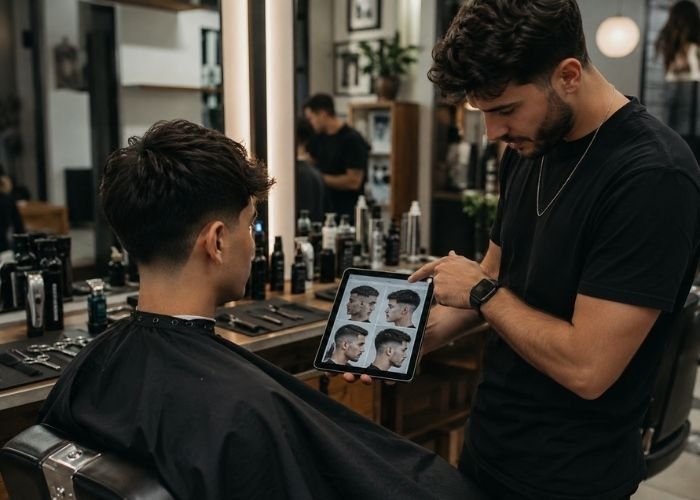
Professional barbers rely on small techniques that make a big difference in how a haircut looks and grows out. Here are a few insider tips you can use at your next appointment.
Ask for Weight Removal, Not Just Shorter Hair
Straight hair can become bulky around the upper sides. Instead of asking your barber to cut it shorter, ask them to remove weight while keeping the overall length. This helps the haircut sit naturally.
Keep More Length Around the Crown
If the crown is cut too short, straight hair may stick up and become difficult to style.
Leaving slightly more length in this area creates a smoother transition from the top to the faded sides.
Point-Cutting Adds Natural Texture
Point-cutting is a technique where the barber cuts into the ends of the hair rather than straight across. This softens the finish and helps straight hair move more naturally.
Less Product Often Looks Better
Many modern hairstyles rely on movement instead of stiffness. Using a small amount of product usually creates a cleaner, more natural finish.
Exactly What to Tell Your Barber
If you’re unsure how to explain the haircut you want, use this script during your appointment.
Is a Low Taper Fade Worth It?
For most men with straight hair, the answer is yes.
A low taper fade combines style, versatility, and practicality in a way that few other haircuts can. It looks clean without being overly dramatic, works in both casual and professional settings, and pairs well with a wide range of hairstyles.
Whether you prefer a textured crop, a sleek side part, or a voluminous quiff, the low taper fade provides the perfect foundation.
Conclusion
The low taper fade remains one of the most versatile and timeless haircuts for straight hair. Its subtle blend, clean edges, and ability to pair with a variety of hairstyles make it suitable for beginners and experienced style enthusiasts alike.
With the right variation, proper styling products, and regular maintenance, you can enjoy a haircut that looks polished every day without requiring a complicated routine. By understanding your hair type, face shape, and styling preferences, you’ll be able to choose a low taper fade that complements your features and fits your lifestyle.
Remember, the best haircut isn’t just about following trends—it’s about finding a style that makes you feel confident and is easy to maintain. A low taper fade offers exactly that balance.
Frequently Asked Questions
Is a low taper fade good for straight hair?
Yes. Straight hair naturally highlights the smooth blend of a low taper fade, creating a clean and polished appearance that’s easy to style.
Does straight hair stick up with a low taper fade?
Sometimes. If the upper sides are cut too short, straight hair may stick out. Ask your barber to leave some weight and blend the transition using scissor-over-comb techniques.
How long does a low taper fade last?
Most low taper fades stay neat for 3–4 weeks before needing a cleanup, although faster-growing hair may need a trim sooner.
Which styling product is best for straight hair?
For most styles, matte clay provides natural texture and flexible hold. If you prefer a shiny finish, choose a water-based pomade.
Can I get a low taper fade with thin straight hair?
Yes. A low taper fade works well with fine hair, especially when paired with products that add texture and volume instead of weight.
Is a low taper fade professional?
Yes. Its subtle transition makes it one of the most workplace-friendly fade haircuts.
How long should the hair on top be?
A length of 3–4 inches offers the most styling flexibility for side parts, textured crops, quiffs, and slick backs.
What’s the difference between a taper and a fade?
A taper shortens hair mainly around the sideburns and neckline, while a fade blends the hair much higher up the sides for a more noticeable transition.