
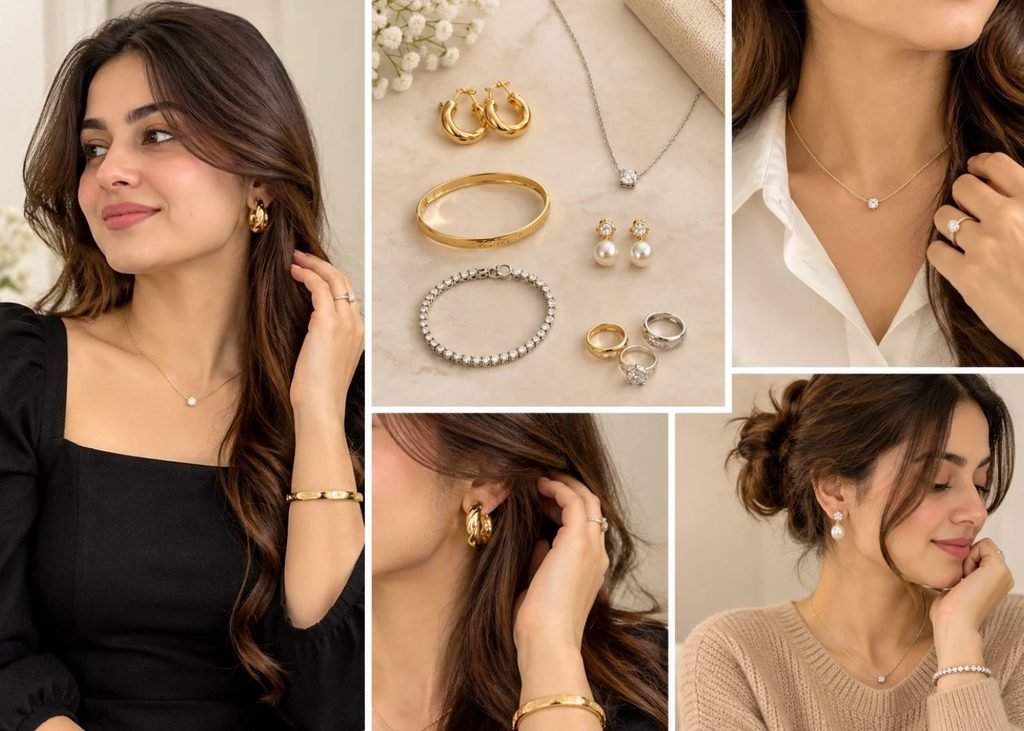
You put on a great outfit, look in the mirror, and something still feels unfinished. Nine times out of ten, the missing piece isn’t another layer of clothing—it’s the right jewelry.
How to choose jewelry for Any Outfit doesn’t require memorizing strict fashion rules. Once you understand how proportions, necklines, and metal tones interact with your clothes, styling becomes effortless. Follow these seven practical rules to match jewelry with any outfit—whether you’re heading to the office, grabbing coffee, or dressing for a wedding.
Quick Guide: Start with your neckline, check your outfit’s colors and details, consider the occasion, and choose one main jewelry piece. Then add simple supporting pieces to complete the look.
1. Consider the Neckline of Your Outfit
Your neckline is one of the easiest places to start when choosing jewelry. The right necklace should follow or complement the shape of your top or dress rather than fight against it.
V-Neck
A V-neck naturally draws the eye downward, so a pointed pendant or Y-necklace follows that shape beautifully. Choose a 16–18-inch necklace for a balanced look.
Skip wide chokers or bulky round collars that compete with the V shape.
Crew Neck
Crew-neck tops sit close to the base of the neck. A collar necklace creates a defined frame, while a long pendant creates more space between the neckline and the jewelry.
For a collar necklace, choose around 14–16 inches. For a long pendant, 20 inches or longer creates a more noticeable drop.
High Neck or Turtleneck
A high neckline already provides plenty of visual detail around the neck. Skip the necklace and let your earrings take the spotlight.
Bold hoops, sculptural earrings, or gemstone drops add interest without disappearing into the fabric.
Strapless or Off-Shoulder
Open necklines leave the collarbone and shoulders exposed, making them ideal for a choker, collarbone chain, or statement necklace.
Keep the necklace around 14–16 inches when you want it to sit close to the neckline. Avoid extremely long chains that visually break up the open space.
Button-Down Shirt
A button-down shirt gives you several styling options. Layer delicate chains inside an open collar for a relaxed look, or wear a single pendant for a cleaner finish.
Avoid heavy statement necklaces over a fully buttoned collar because they compete with the structure of the shirt.
Neckline Cheat Sheet
| Neckline Type | Best Necklace Choice | Necklace Length | What to Skip |
| V-Neck | Pointed pendant or Y-necklace | 16–18 inches | Wide chokers or bulky round collars |
| Crew Neck | Collar necklace or long pendant | 14–16″ or 20″+ | 18″ chains that tangle with the fabric seam |
| High Neck / Turtleneck | Skip the necklace; wear bold earrings | — | Short delicate chains that disappear |
| Strapless / Off-Shoulder | Choker, collarbone chain, or statement piece | 14–16 inches | Extra-long chains that break up the neckline |
| Button-Down Shirt | Layered delicate chains inside the collar | 16–18 inches | Heavy statement pieces over buttoned collars |
2. Match Jewelry With the Color of Your Outfit and Skin Undertone
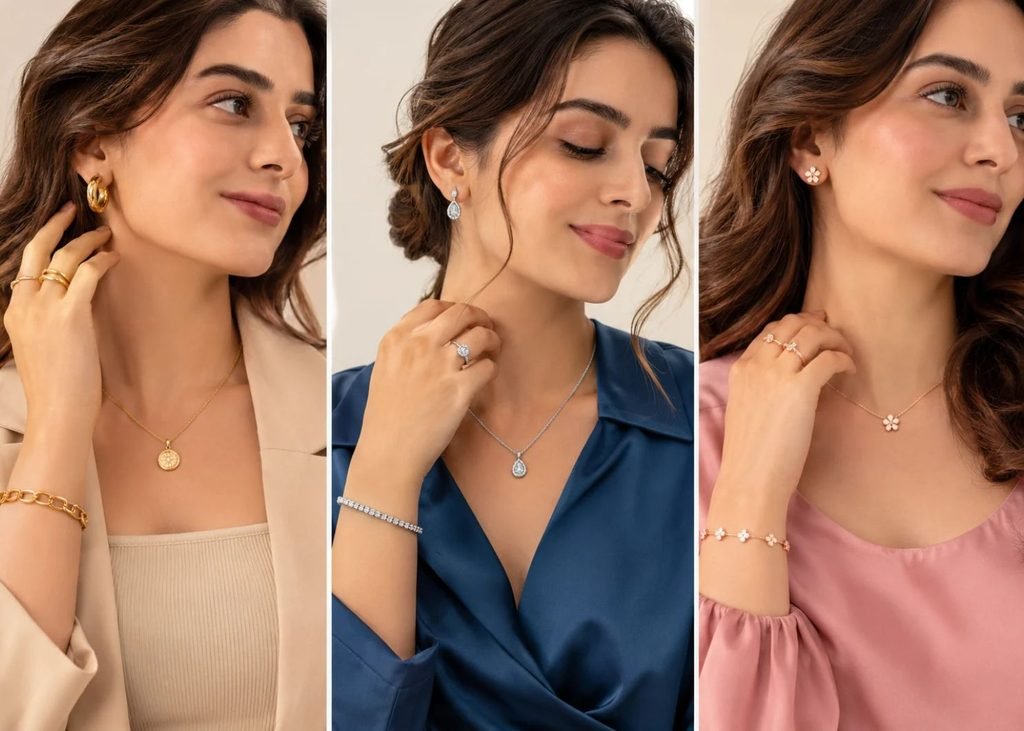
Color plays a major role in how jewelry looks against your clothes and skin. You don’t need to match your jewelry exactly to your outfit. Instead, choose metal tones that complement the overall color palette.
Quick Skin Undertone Check
Look at the veins on the inside of your wrist. If they look greenish, you have warm undertones and gold will naturally glow against your skin. If they look blue or purple, you have cool undertones that shine in silver or platinum. If you see both, you’re neutral—meaning every metal works on you.
This is only a styling guide, not a strict rule. If you love a particular metal, wear it. Personal preference matters more than a color chart.
Gold Jewelry
Gold brings out the richness in warm, earthy tones like:
- Brown
- Beige
- Cream
- Mustard
- Orange
- Olive green
- Warm red
A cream knit top with gold hoops creates a warm, polished everyday combination.
Silver Jewelry
Silver creates a crisp contrast against cool and neutral colors such as:
- Black
- White
- Grey
- Blue
- Purple
- Cool green
A black blazer with silver earrings and a simple silver watch creates a clean, classic look.
Rose Gold Jewelry
Rose gold has a softer pink tone that pairs naturally with pastel and neutral shades. Try it with blush, cream, light blue, soft grey, or muted pink.
Remember, these combinations are guidelines rather than rules. Gold can look striking with black, and silver can look beautiful with warm colors.
3. Think About the Occasion
The jewelry you wear for a coffee date should not necessarily be the same jewelry you choose for a wedding or work meeting. Let the occasion determine how bold, delicate, or practical your accessories should be.
Everyday Outfits
For everyday dressing, choose lightweight, snag-free pieces that you can almost forget you’re wearing.
Good options include:
- Huggie hoops
- A 16-inch initial or bar pendant
- Thin chain bracelets
- Simple stacking rings
- Textured medium hoops
Pro styling tip: Swap basic studs for textured medium hoops when you’re wearing a plain T-shirt and jeans. The small change instantly gives a simple outfit more structure.
Workwear
Work jewelry should communicate polished, quiet confidence. Classic watches, pearl or diamond studs, and a single fine chain create a professional finish without distracting from your outfit.
Pro tip: Avoid stacked bangles that clink against your desk or keyboard during meetings. Choose pieces that look polished but stay practical throughout the day.
Weddings and Special Events
Formal fabrics such as silk, satin, and chiffon handle sparkle effortlessly. This is the right setting for chandelier earrings, gemstone drops, or a statement tennis necklace.
Pro styling tip: Choose one focal point. If your earrings are dramatic, keep the necklace minimal—or skip it altogether.
4. Balance Simple and Detailed Pieces
Think of your outfit as a canvas: the louder the clothing, the quieter your jewelry should be.
This doesn’t mean you can never wear bold jewelry with a bold outfit. It simply means you should decide which element gets the most attention.
When Your Outfit Is Simple
A simple outfit gives jewelry room to become the focal point.
For example, a little black dress or crisp white T-shirt acts as a neutral backdrop. Add chunky gold hoops, a bold cuff, or layered chains to create visual interest.
The same principle works with simple knitwear, plain button-down shirts, and solid-color dresses.
When Your Outfit Is Detailed
Let the fabric lead when you’re wearing florals, sequins, embroidery, ruffles, or bold patterns.
With a busy floral dress, pull one secondary color from the print—such as warm amber or cool blue—and echo it through subtle stud earrings or a dainty bracelet.
This creates coordination without trying to match every color in the outfit.
5. Choose Jewelry That Matches Your Outfit’s Style
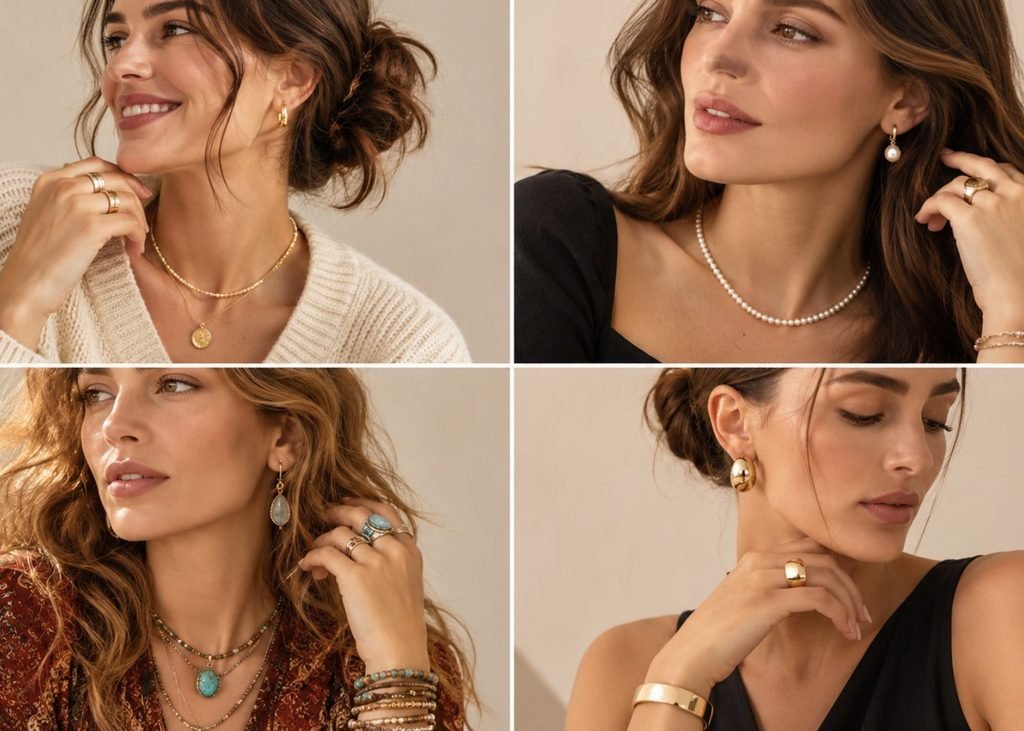
Jewelry should feel like part of your outfit rather than an unrelated addition. Matching the jewelry style to the clothing style creates a more intentional look.
Casual Style
Casual outfits pair naturally with relaxed, wearable pieces such as:
- Huggie hoops
- Herringbone chains
- Stacking rings
- Beaded bracelets
- Woven bracelets
These pieces add texture without making jeans, T-shirts, sweaters, or casual dresses feel overdressed.
Classic Style
Classic clothing calls for timeless jewelry. Freshwater pearls, solitaire studs, signet rings, and a leather-strap or link watch complement tailored pieces without competing with them.
A blazer, straight-leg trousers, and a simple pearl earring are an easy example of this approach.
Bohemian Style
Bohemian outfits work well with jewelry that has texture and an organic feel. Try hammered metals, turquoise or raw gemstone pendants, coin necklaces, and stacked midi rings.
Layering is especially effective with relaxed dresses, flowing skirts, and textured fabrics.
Modern or Minimalist Style
Modern outfits benefit from clean shapes and controlled detail. Sculptural ear cuffs, geometric bar earrings, sleek box chains, and a single bold dome ring can create a strong look without excessive layering.
The goal is precision rather than quantity.
6. Use the “Rule of One”
One of the easiest ways to avoid over-accessorizing is to follow the Rule of One: pick one hero piece per outfit, and let everything else play a supporting role.
Your hero piece should be the first jewelry item people notice.
Hero: Statement Earrings
If you’re wearing shoulder-grazing statement earrings, skip the necklace completely. Add only a slim ring or delicate bracelet if needed.
Hero: Bold Necklace
If your necklace is a bold collar or layered design, switch to tiny studs or huggies. Your neckline already has enough visual activity.
Hero: Stacked Cuff Bracelets
If stacked cuffs are the focus, keep your earrings and necklace ultra-minimal. Small studs and a fine chain will support the look without competing with your wrists.
The Rule of One is especially useful when you’re wearing embellished clothing. It gives the eye somewhere to land instead of making every accessory compete for attention. Explore more styling inspiration in our fashion collection and jewellery collection.
7. Consider the Metal and Overall Jewelry Combination
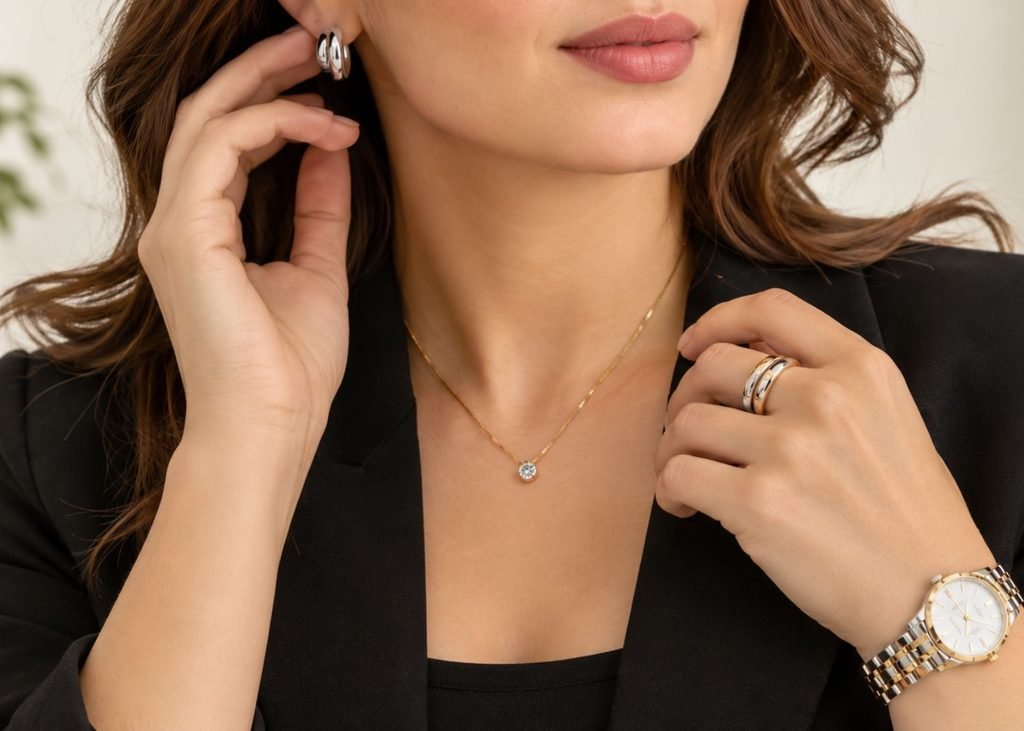
Once you’ve chosen your jewelry style, decide how you want your metals to work together.
For beginners, wearing one dominant metal is the easiest way to create a coordinated appearance. Gold creates warmth, silver offers a cooler finish, and rose gold adds a softer tone.
But you don’t have to stick to one metal.
Mixing Metals
Mixing gold and silver jewelry can look modern when the combination feels intentional. Start with two metal tones instead of mixing several different finishes at once.
For example, pair a silver watch with a delicate gold necklace and a mixed-metal ring.
The Bridge Piece Trick
The easiest way to mix gold and silver is to wear one two-tone piece—like a mixed-metal watch, a twisted two-tone ring, or a layered necklace that already combines both metals.
That single piece visually ties your separate gold and silver accessories together, so the mix looks deliberate rather than accidental.
You can also repeat the mixed-metal combination in another small accessory. This creates a visual connection across the outfit.
Bonus Tip: Factor in Your Hairstyle
Your hairstyle changes how visible your jewelry is, especially earrings. Consider your hair before choosing your final accessory.
Hair Up
With a ponytail, bun, or pixie cut, your ears and neck are fully visible. This is the best time for:
- Drop earrings
- Statement hoops
- Ear climbers
- Sculptural earrings
Because your hair is away from your face, you can use a stronger earring shape without it getting lost.
Hair Down
Loose waves and straight hair can hide small earrings. Delicate studs may disappear behind your strands.
Instead, choose medium-to-large hoops, bright metallic finishes, or shiny gemstones that catch the light through your hair.
Common Jewelry Styling Mistakes to Avoid
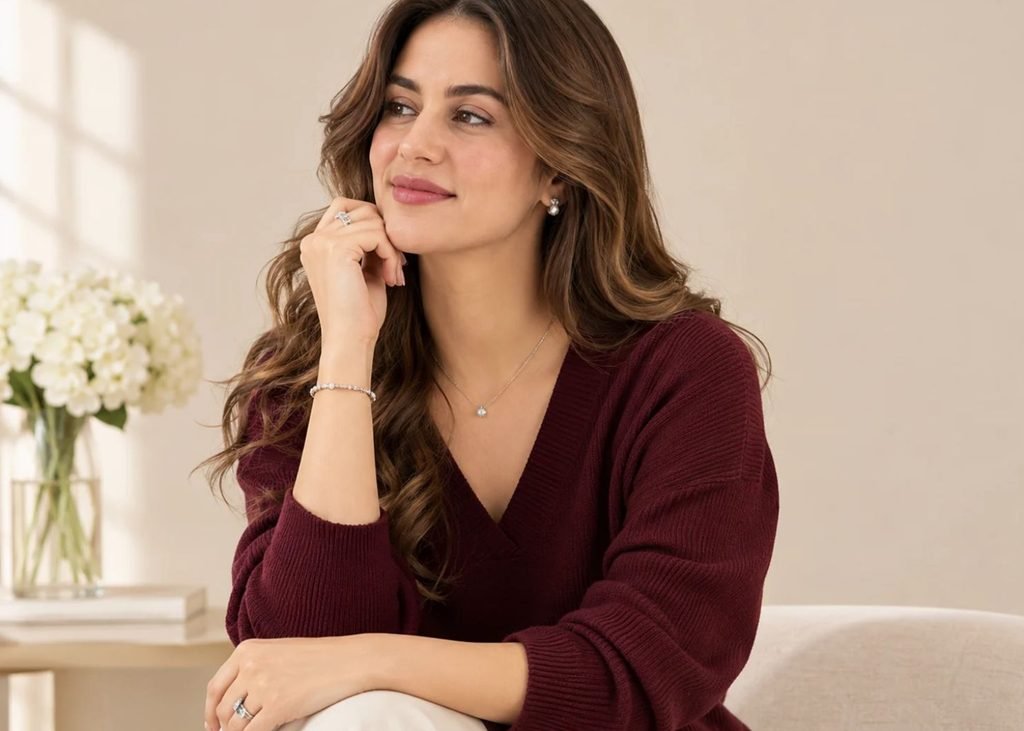
Even a well-planned outfit can lose its balance when the jewelry works against it. Watch out for these common mistakes.
1. Over-Accessorizing Every Zone
Wearing bold earrings, a statement necklace, stacked bracelets, and several large rings at the same time creates too many focal points.
Give one area the spotlight and let the rest stay quiet.
2. Fighting the Neckline
A necklace that crosses over a high collar or competes directly with a complicated neckline can make the outfit look cluttered.
Choose jewelry that follows the neckline instead of fighting it.
3. Being Too “Matchy-Matchy”
Wearing an identical matching jewelry set from head to toe can make an outfit feel dated.
Instead, mix textures and shapes while keeping the overall color palette connected.
4. Ignoring Weight and Comfort
Heavy statement earrings may look beautiful for the first hour but become uncomfortable after several hours.
Consider how long you’ll wear your jewelry before choosing dramatic pieces. Style should never require constant adjustment or discomfort.
A Simple Formula for Choosing Jewelry
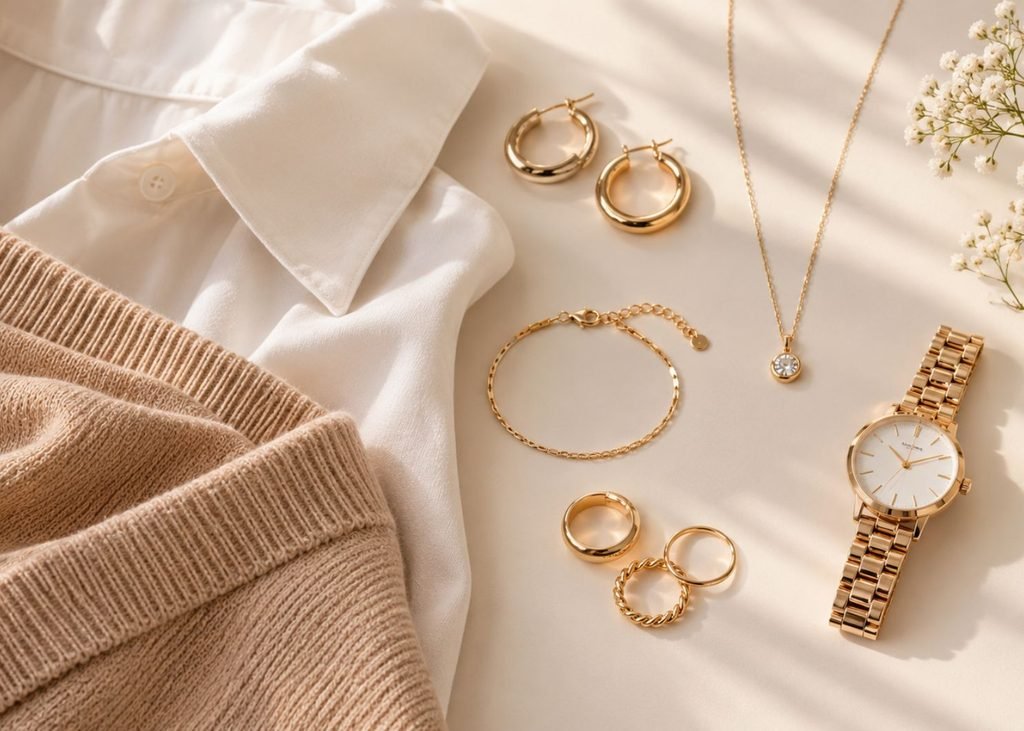
When you’re standing in front of your wardrobe and don’t know what jewelry to wear, use this seven-step formula:
- Check the neckline and choose a necklace that complements its shape.
- Look at the outfit’s colors and choose a complementary metal or stone.
- Identify the occasion and adjust the level of detail.
- Check the outfit’s details and decide whether you need a bold or subtle accessory.
- Match the jewelry style to the overall style of your clothing.
- Choose one hero piece using the Rule of One.
- Check your hairstyle and comfort before finishing the look.
If the outfit still feels unfinished, add one small supporting piece. If it already feels busy, remove one accessory.
Putting It All Together
Learning how to choose the right jewelry for any outfit is less about following strict rules and more about understanding balance.
Start with the neckline. Consider your outfit’s colors, your skin undertone, the occasion, and the amount of detail in your clothing. Then choose jewelry that matches the overall style and select one hero piece to lead the look.
You don’t need a large jewelry collection to create different outfits. A few versatile pieces—such as hoops, a simple pendant, a fine bracelet, stacking rings, and one statement accessory—can work across casual, professional, and formal looks.
Most importantly, use these rules as a starting point rather than a restriction. Try different combinations, pay attention to proportions, and wear the pieces that make you feel comfortable and confident.
Frequently Asked Questions
How do I choose the right jewelry for an outfit?
Start with the neckline, outfit color, occasion, and level of detail. Choose jewelry that complements rather than competes with your clothing. For a busy outfit, use simpler pieces; for a simple outfit, let one statement accessory become the focal point.
Should jewelry match my clothes?
Jewelry does not need to match your clothes exactly. Instead, choose colors and metals that complement your outfit. Gold adds warmth to earthy shades, while silver creates a crisp finish with cool and neutral colors.
How do I know whether gold or silver jewelry suits me?
Check the veins on your wrist. Green-looking veins often indicate warm undertones, which pair naturally with gold. Blue or purple-looking veins suggest cool undertones, which suit silver. If you see both, you likely have neutral undertones.
What necklace should I wear with a V-neck?
A pointed pendant or Y-necklace follows the natural shape of a V-neck. A 16–18-inch necklace usually creates a balanced look. Avoid very wide chokers or bulky round collars that compete with the neckline.
Can I mix gold and silver jewelry?
Yes. Gold and silver can create a modern combination when they look intentional. A simple way to connect both metals is to wear a two-tone watch, ring, or necklace as a bridge piece between the different accessories.
How many pieces of jewelry should I wear at once?
There is no fixed number, but beginners can use the Rule of One: choose one hero piece and keep the other accessories understated. This creates a clear focal point without making the outfit look overcrowded.
What jewelry should I wear with a printed dress?
Keep the jewelry relatively simple when wearing a bold print. Pick one secondary color from the pattern and repeat it subtly in your earrings, bracelet, or ring. This creates coordination without competing with the print.
What jewelry looks best with a high-neck or turtleneck top?
Skip the necklace and focus on earrings, rings, or bracelets. Bold hoops, drop earrings, or sculptural styles stand out against a high neckline without creating unnecessary layers around the neck.

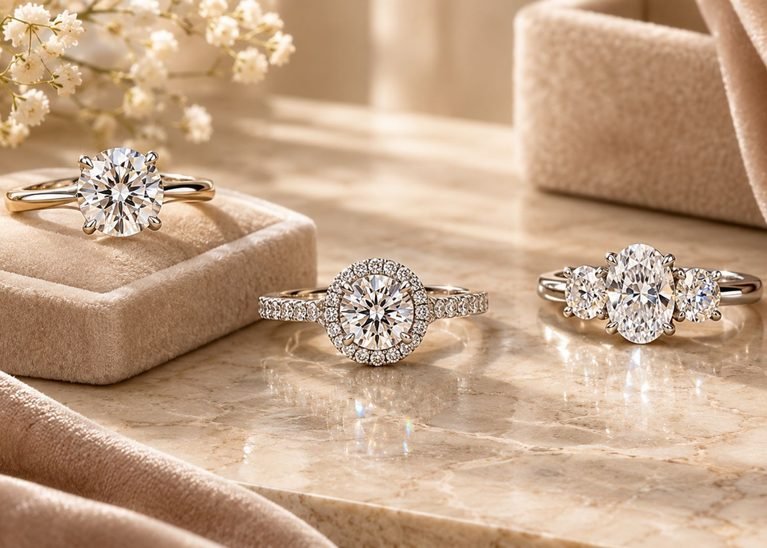


[…] Durability: Both are made of diamond material and have a Mohs hardness rating of 10, making them suitable for everyday jewelry. […]