
Monochrome dressing is one of the simplest ways to look effortlessly stylish without spending hours planning your outfit. Whether you’re getting ready for work, meeting friends for brunch, or building a more intentional wardrobe, wearing one color family from head to toe can instantly make your look feel polished and put together.
Despite its sophisticated appearance, monochrome styling is surprisingly beginner-friendly. You don’t need a large wardrobe, expensive designer pieces, or expert fashion knowledge to master it.
The key is understanding how to combine different shades, textures, and layers within the same color family to create depth and balance.
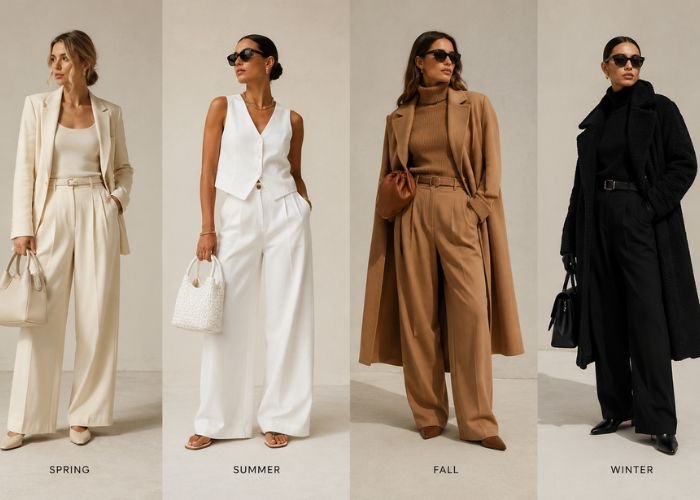
From soft spring neutrals to rich fall earth tones and cozy winter layers, monochrome outfits work beautifully in every season.
In this guide, you’ll learn exactly how to build monochrome outfits year-round, discover seasonal color ideas, avoid common styling mistakes, and create a versatile wardrobe you can wear again and again.
What Is a Monochrome Outfit?
A monochrome outfit is a look built around one base color. Instead of mixing multiple colors, you combine different shades, tones, and textures within the same color family.
For example:
- Light beige trousers with a cream sweater
- Charcoal jeans paired with a black blazer
- A navy shirt styled with dark blue trousers
- An all-white outfit featuring different fabric textures
Many people assume monochrome dressing means wearing one exact color from head to toe. In reality, the most stylish monochrome looks combine lighter and darker variations of the same hue.
This creates visual depth while maintaining a clean, cohesive appearance.
The 60-30-10 Rule for Tonal Balance
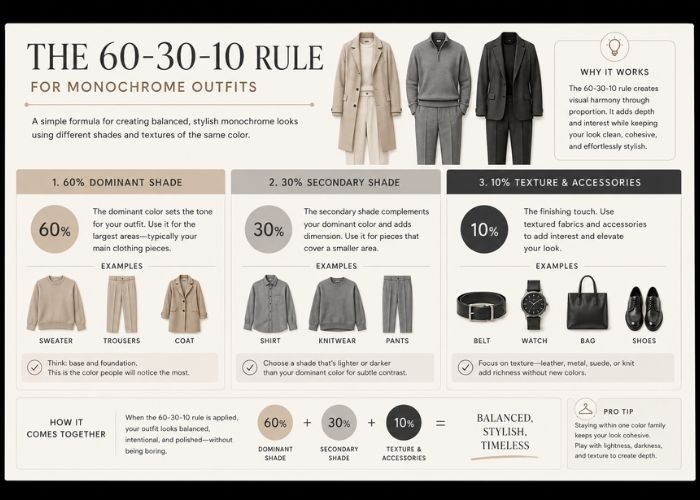
To prevent your outfit from looking like a flat uniform, break your single-color family down by percentages.
- Use your dominant shade for 60% of the look, such as your trousers and outerwear.
- Choose a secondary shade or lighter tint for 30%, usually your top or knitwear.
- Reserve the remaining 10% for a textured accessory, such as shoes, a belt, or a handbag.
For example 60-30-10 rule for tonal balance, you might wear camel trousers and a matching coat for the majority of your outfit, add a cream sweater for contrast, and finish with textured suede boots.
This simple formula helps beginners create balanced monochrome outfits with minimal effort.
Why Monochrome Outfits Are So Popular
Monochrome dressing has remained a fashion favorite because it combines simplicity with versatility.
It Simplifies Your Morning Routine
When your wardrobe is built around a few complementary color families, getting dressed becomes easier and faster.
It Creates a Polished Appearance
Monochrome outfits naturally look more intentional because the colors flow seamlessly throughout the look.
It Works for Every Personal Style
Whether your style is minimalist, casual, sporty, elegant, or professional, monochrome dressing adapts easily.
It Supports a Capsule Wardrobe
Choosing versatile pieces within the same color palette allows you to create more outfits with fewer items.
It Creates a Lengthening Effect
Wearing similar shades from head to toe creates a continuous visual line that can make your silhouette appear longer and more balanced.
How to Build a Monochrome Outfit
Creating a monochrome outfit is easier than you think when you follow a few simple styling principles.
Step 1: Choose Your Base Color
Start with a color you already enjoy wearing and have several pieces in your wardrobe.
Beginner-friendly options include:
- Black
- White
- Gray
- Beige
- Camel
- Navy
- Olive green
- Chocolate brown
Neutral shades are especially versatile because they transition seamlessly between seasons.
Step 2: Play with Optical Weight (Shades vs. Tints)
Avoid matching your top and bottom exactly unless you’re wearing a tailored suit.
A simple styling trick is to keep lighter shades, also known as tints, near your face to draw attention upward. Place deeper shades on the lower half of your body to create balance.
For example, pair a cream sweater with camel trousers or style a light gray cardigan with charcoal pants.
This subtle shift in optical weight creates a more flattering and dynamic silhouette.
Step 3: Mix High-Contrast Textures
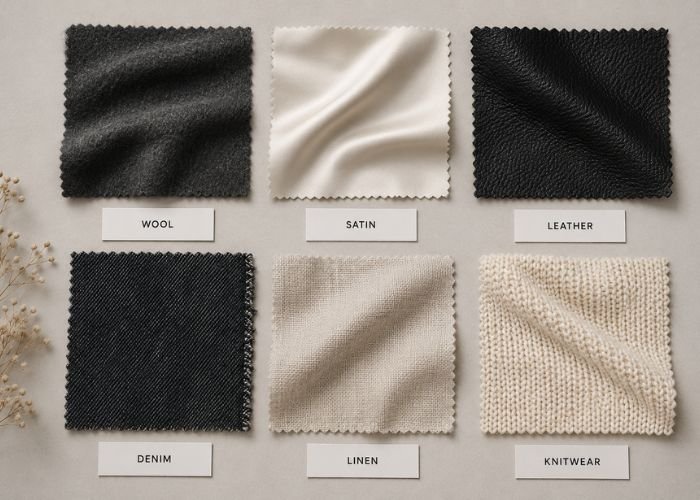
Texture is the secret weapon of monochrome dressing.
If every piece has the same flat finish, your outfit can feel uninspired.
Create visual interest by combining rough, soft, smooth, and structured materials.
Try combinations like:
- A chunky knit sweater with a satin skirt
- Raw denim with a polished leather jacket
- Linen trousers with a fine-gauge cotton shirt
- Wool tailoring with suede accessories
The greater the contrast in textures, the more elevated your monochrome outfit will look.
Step 4: Use Accessories Strategically
Accessories should enhance your outfit rather than compete with it.
Consider adding:
- Structured handbags
- Minimal jewelry
- Scarves
- Belts
- Sunglasses
- Watches
Metallic accents such as gold and silver work particularly well because they add contrast without disrupting your color palette.
Spring Monochrome Outfit Ideas
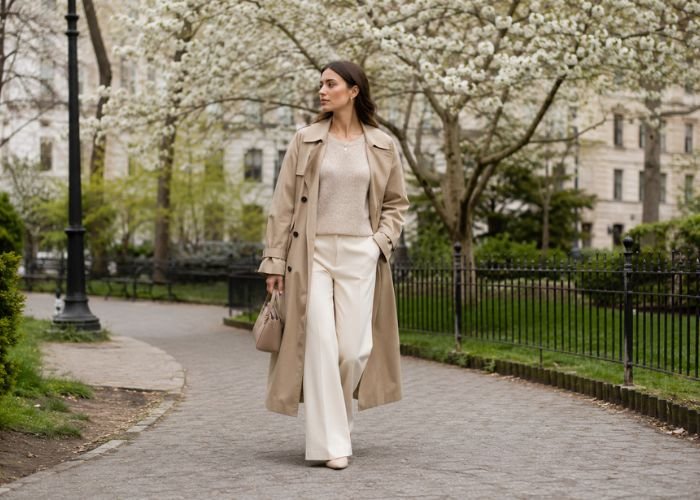
Spring is the perfect time to experiment with lighter shades and breathable layers.
Focus on soft colors and versatile pieces that adapt to changing temperatures.
Best Colors for Spring
- Cream
- Sage green
- Soft blue
- Blush pink
- Light gray
- Lavender
Outfit Idea 1: Soft Beige Layers
Pair cream wide-leg trousers with a lightweight oatmeal knit top and a classic beige trench coat.
Finish the look with nude ballet flats and a matching crossbody bag.
Outfit Idea 2: Sage Green Casual Look
Wear sage green jeans with a mint-colored T-shirt and a lightweight cardigan in a slightly darker shade.
Complete the outfit with white sneakers.
Outfit Idea 3: Modern Monochrome Denim
Combine light-wash jeans with a chambray shirt and a medium-wash denim jacket.
Different blue tones add dimension while keeping the look cohesive.
Spring Styling Tips
- Choose breathable fabrics like cotton and lightweight knits.
- Layer pieces you can easily remove throughout the day.
- Mix soft shades rather than exact color matches.
Summer Monochrome Outfit Ideas
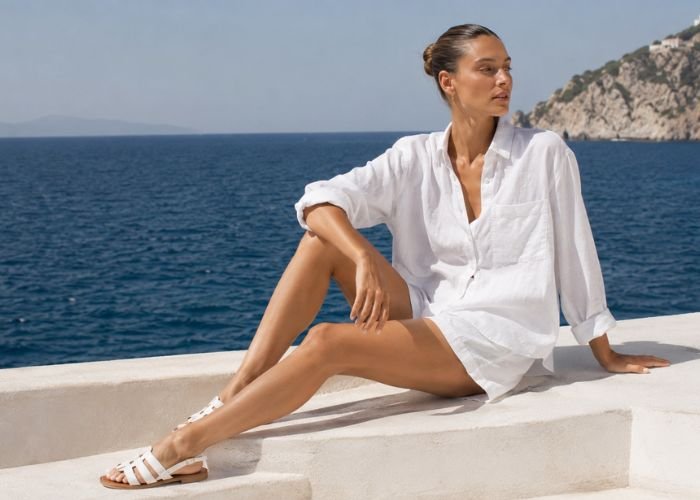
Warm weather calls for lightweight fabrics and easy silhouettes.
Choose airy materials that keep you comfortable while maintaining a refined look.
Best Colors for Summer
- White
- Sand
- Sky blue
- Light yellow
- Soft coral
- Beige
Outfit Idea 1: Crisp All-White Linen
Pair white linen shorts with an oversized white button-down shirt.
Roll the sleeves, partially tuck the shirt, and add white leather sandals.
Finish with gold jewelry and oversized sunglasses.
Outfit Idea 2: Neutral Resort Look
Wear a sand-colored maxi dress with tan flat sandals and a woven handbag.
Layer delicate gold necklaces for added interest.
Outfit Idea 3: Tonal Blue Casual Outfit
Combine light blue shorts with a slightly darker tank top and matching canvas sneakers.
Add a denim overshirt for cooler evenings.
Summer Styling Tips
- Prioritize breathable fabrics like linen and cotton.
- Avoid heavy layers.
- Add hats and sunglasses for functional style.
Fall Monochrome Outfit Ideas
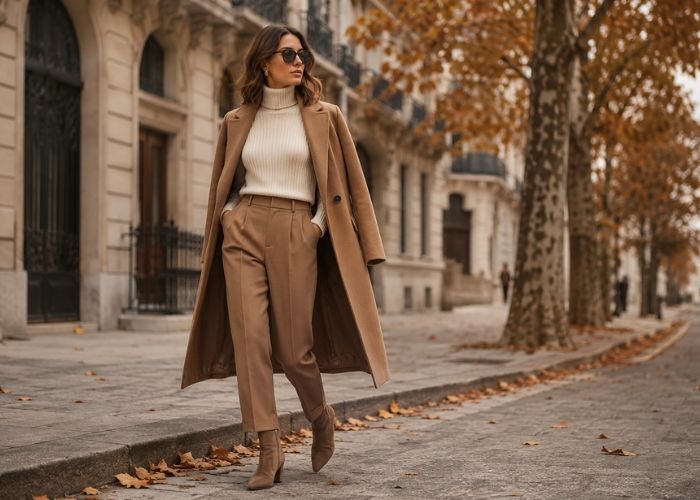
Fall is one of the easiest seasons for monochrome dressing because layers naturally create depth and texture.
Best Colors for Fall
- Camel
- Chocolate brown
- Olive green
- Rust
- Burgundy
- Charcoal gray
Outfit Idea 1: The Tailored Camel Cascade
Instead of choosing pieces in the exact same tan shade, create a gradient effect.
Pair high-waisted camel wool trousers with a cream-toned ribbed turtleneck tucked neatly at the waist.
Layer a structured camel overcoat over your shoulders rather than putting your arms through the sleeves. This styling technique creates an intentional, multi-dimensional drape.
Complete the look with suede ankle boots and a textured leather handbag.
Outfit Idea 2: Olive Green Layers
Style olive cargo trousers with a forest green knit sweater and a utility jacket in a deeper shade.
Add matching ankle boots for a cohesive finish.
Outfit Idea 3: Burgundy Workwear
Pair burgundy tailored trousers with a wine-colored blouse and a structured blazer.
This sophisticated look transitions easily from office meetings to evening dinners.
Fall Styling Tips
- Mix wool, suede, leather, and knit fabrics.
- Create gradients instead of exact color matches.
- Use scarves and boots to add texture.
Winter Monochrome Outfit Ideas

Winter offers endless opportunities to experiment with texture and layering.
Rich fabrics and darker tones create timeless monochrome looks.
Best Colors for Winter
- Black
- Charcoal
- Navy
- Deep brown
- Ivory
- Forest green
Outfit Idea 1: The Textured All-Black Uniform
An all-black outfit can easily look flat if you rely only on cotton.
Elevate this classic look by mixing structural fabrics.
Pair heavy-knit black cashmere trousers with a dense matte-black turtleneck.
Layer a long bouclé or boiled wool overcoat on top and finish with high-shine patent leather boots that catch the light.
The contrast between matte and glossy textures creates visual depth while keeping the outfit sleek.
Outfit Idea 2: Cozy Gray Layers
Combine charcoal knit pants with a medium-gray sweater and a light gray wool coat.
Add a matching scarf and leather gloves for extra warmth.
Outfit Idea 3: Navy Tonal Dressing
Wear dark navy jeans with a fine-knit navy sweater and a tailored overcoat in a slightly lighter blue.
Finish with leather boots in a matching shade.
Winter Styling Tips
- Focus on layered textures instead of layered colors.
- Choose warm fabrics such as cashmere, wool, and fleece.
- Use scarves, gloves, and hats within the same color family.
Common Monochrome Styling Mistakes to Avoid
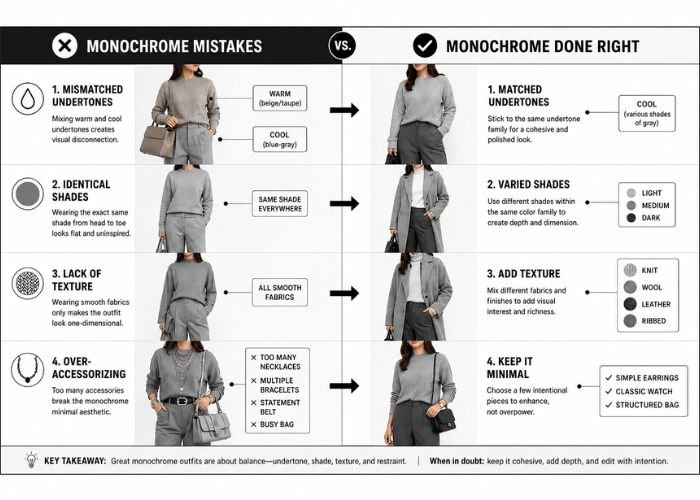
Even simple styling formulas can go wrong without attention to detail.
Wearing the Exact Same Shade Everywhere
Identical shades can make your outfit appear flat.
Mix lighter and darker tones to create depth.
Ignoring Fabric Texture
Texture is essential for creating dimension.
Combine different materials to make your outfit more visually interesting.
Overusing Accessories
Too many statement pieces can distract from the clean aesthetic of monochrome dressing.
Choose one or two accessories that complement your look.
Choosing the Wrong Seasonal Fabrics
Heavy knits in summer or lightweight cotton in winter can make your outfit feel impractical.
Match your fabrics to the season.
Ignoring Undertones in Neutrals
Not all whites, grays, and beiges are the same.
Mixing a warm cream with a cool, blue-based white can make your outfit look mismatched.
The Fix
Hold your clothing pieces next to each other under natural light before getting dressed.
Check that all your neutrals share the same undertone, either warm and cool undertones.
How to Build a Monochrome Capsule Wardrobe
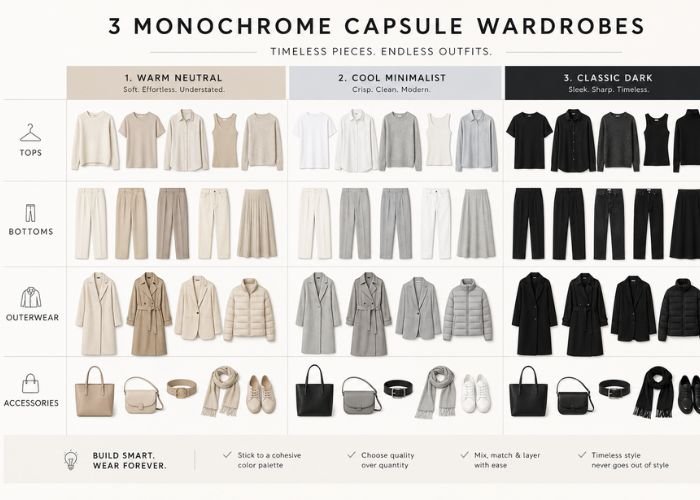
Building a monochrome capsule wardrobe makes getting dressed easier while helping you maximize every item you own.
Start by choosing two or three core color palettes that suit your personal style and lifestyle needs.
| Core Palette | Base Essential Top | Essential Bottom | Best Outerwear Layer |
| The Warm Neutral | Cream fine-knit crewneck | Camel tailored trousers | Oversized trench coat |
| The Cool Minimalist | Heather gray T-shirt | Charcoal pleated trousers | Tailored wool blazer |
| The Classic Dark | Black ribbed mock-neck | Heavy-wash black denim | Leather moto jacket |
Once you establish your core palette, invest in versatile essentials such as:
- T-shirts and tanks
- Knitwear
- Tailored trousers
- Denim
- Lightweight outerwear
- Seasonal coats
- Shoes and accessories
A thoughtfully curated wardrobe allows you to create dozens of outfit combinations with fewer pieces.
Conclusion
Monochrome dressing proves that great style doesn’t have to be complicated.
By focusing on one color family and experimenting with shades, textures, and layering techniques, you can create polished outfits for every season.
Remember the key principles: follow the 60-30-10 rule, balance optical weight by using lighter shades near your face, and mix contrasting textures to add depth.
Whether you’re drawn to soft spring neutrals, airy summer whites, rich autumn earth tones, or classic winter blacks, monochrome styling offers endless opportunities to create outfits that feel effortless and refined.
Start with colors you already love, build gradually, and let your wardrobe evolve season by season.
Frequently Asked Questions
What is the difference between monochrome and tonal dressing?
Monochrome dressing focuses on one color family, while tonal dressing specifically combines multiple shades and tints within that color.
Which monochrome color is easiest for beginners?
Neutral shades such as black, gray, navy, beige, and cream are the easiest to style because they work across seasons and occasions.
How do I stop a monochrome outfit from looking boring?
Mix different textures, incorporate multiple shades, and use accessories strategically.
Can monochrome outfits work for formal occasions?
Yes. Monochrome dressing often looks sophisticated and elegant, making it ideal for work events, weddings, and evening occasions.
Do my shoes need to match my monochrome outfit exactly?
No. Your shoes should complement the overall color family, but they do not need to be an exact match.
Can I wear monochrome outfits year-round?
Absolutely. Adjust your fabrics, layers, and color choices to suit each season while maintaining a consistent color palette.