

If you have ever looked at Korean skincare and felt overwhelmed by endless serums, toners, and masks, you are not alone. For years, K-Beauty became famous for complicated 10-step routines and glowing “glass skin.” But in 2026, things look very different.
Today, Korean skincare is becoming simpler, smarter, and more beginner-friendly. Instead of using too many products, the focus has shifted toward healthy-looking skin, barrier repair, and long-term skin health.
In 2026, we’ve moved past the 10-step “glass skin” trend toward Skip-care—a minimalist approach focused on high-performance ingredients that repair the skin barrier rather than just making it look shiny. Another major trend is Skin Longevity, which focuses on maintaining healthy skin for years instead of chasing quick results.
The best part? You do not need expensive products or a complicated routine to get started.
This guide will help you understand how to start a Korean skincare routine in a simple, realistic, and beginner-friendly way. Whether you have dry, oily, sensitive, or combination skin, you will learn exactly what products to use, which ingredients matter, and how to avoid common mistakes.
What Is a Korean Skincare Routine?
A Korean skincare routine is a skincare approach that focuses on hydration, prevention, and skin health rather than covering problems after they appear.
Instead of harsh treatments, Korean skincare works gently to improve the skin barrier over time. This is why many people love K-Beauty—it encourages consistency and healthy habits rather than overnight miracles.
Unlike traditional skincare routines that focus heavily on strong treatments, Korean skincare emphasizes:
- Gentle cleansing
- Layered hydration
- Skin barrier repair
- Prevention before correction
- Healthy, glowing skin
The goal is not perfect skin. The goal is healthier-looking skin that feels balanced and comfortable.
For beginners, this approach works especially well because it allows you to slowly build a routine without damaging your skin.
Do You Really Need a 10-Step Korean Skincare Routine?
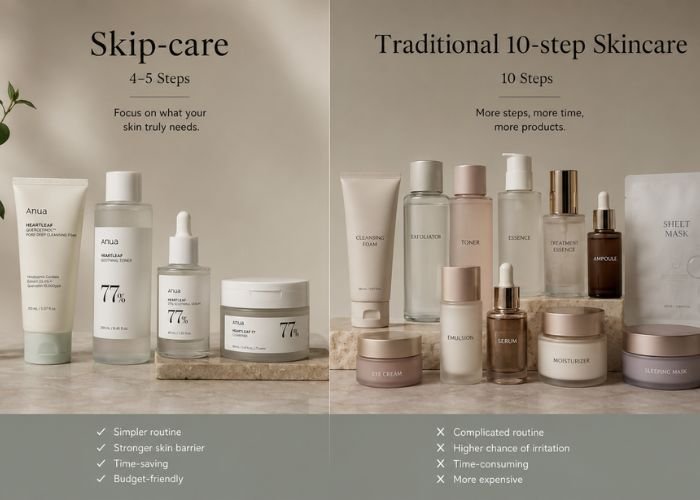
One of the biggest misconceptions about Korean skincare is that everyone follows a long, complicated routine. In reality, most people today use a simplified version.
In 2026, the focus is on minimalism and effectiveness, not the number of products.
Here is a simple breakdown:
| Routine Type | No. of Steps | Best For |
| The Essentialist | 3 Steps | Busy mornings & ultra-sensitive skin |
| The Standard | 5 Steps | Beginners looking for visible change |
| The Glass Skin | 7+ Steps | Advanced users & skin enthusiasts |
If you are new to Korean skincare, start with a simple 4–5 step routine.
You can always add more products later if your skin needs extra care.
Remember: using too many products at once may irritate your skin instead of helping it.
Why Korean Skincare Is So Popular in 2026

Korean skincare continues to grow because people want gentle skincare that actually works.
In 2026, beauty trends are moving away from heavy makeup and filters. More people want naturally healthy skin that looks fresh without needing full coverage.
Here are a few reasons Korean skincare is still trending:
1. It Focuses on Prevention
Instead of fixing damage later, Korean skincare helps prevent dryness, irritation, and premature aging early.
2. Better Ingredients
K-Beauty is known for innovative ingredients that support skin healing.
Popular ingredients include:
- Centella Asiatica (Cica)
- Rice Extract
- Snail Mucin
- Ceramides
- Hyaluronic Acid
New 2026 ingredients are also making waves, which we will discuss later.
3. It Works for Different Skin Types
Whether your skin is oily, acne-prone, dry, or sensitive, Korean skincare can be adjusted to fit your needs.
Understanding Your Skin Type Before Starting
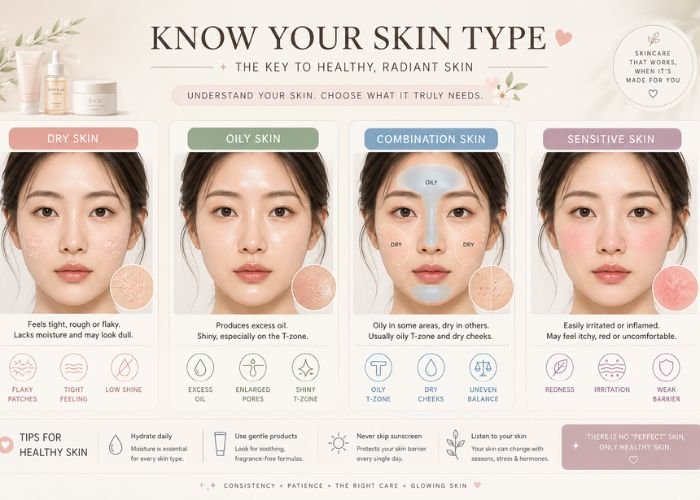
Before buying products, you should first understand your skin type.
Choosing products that match your skin makes a huge difference.
Dry Skin
Your skin may feel:
- Tight
- Flaky
- Rough
- Dull
Look for products with:
- Ceramides
- Rice extract
- Squalane
- Hyaluronic acid
Oily Skin
Your skin may look shiny and feel greasy quickly.
Choose lightweight products with:
- Niacinamide
- Green tea
- Tea tree extract
Combination Skin
This means your skin is oily in some places and dry in others.
Usually:
- Oily T-zone (nose, forehead)
- Dry cheeks
Balanced hydration works best here.
Sensitive Skin
Sensitive skin becomes irritated easily.
Avoid:
- Strong fragrance
- Harsh exfoliants
- Alcohol-heavy products
Instead, choose calming ingredients like:
- Cica
- Panthenol
- Mugwort
Pro Tip: To find your skin type, wash your face with water and wait 30 minutes. If it feels tight, you’re Dry. If it’s shiny all over, you’re Oily. If only the nose is shiny, you’re Combination.
Step-by-Step Korean Skincare Routine for Beginners in 2026
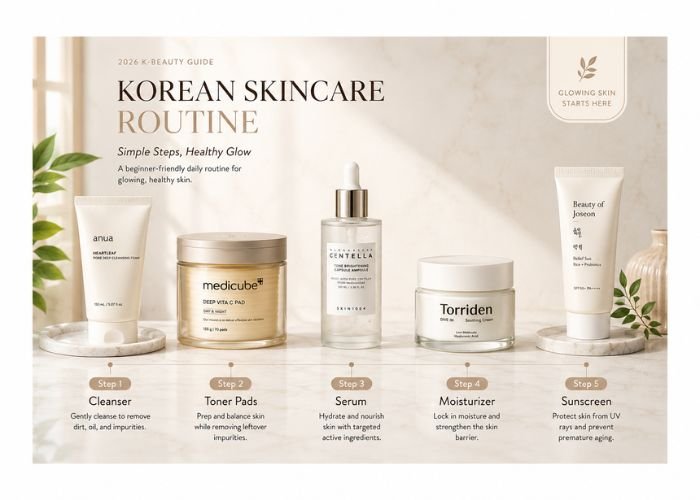
Now let’s build your beginner-friendly routine.
You do not need 10 steps. These essentials are enough.
Step 1: Start With a Gentle Cleanser
Cleansing removes dirt, oil, and sunscreen.
However, harsh cleansers can damage your skin barrier.
In 2026, many people are moving away from strong foaming cleansers and switching to gentler options like:
- Milk cleansers
- Micellar toners
- Low-pH gel cleansers
These products clean the skin without leaving it dry.
Example:
If your face feels “squeaky clean,” your cleanser may be too harsh.
A good cleanser should leave your skin feeling soft and comfortable.
Step 2: Apply Toner for Hydration
Toners in Korean skincare are designed to hydrate, not dry out the skin.
In 2026, toner pads are becoming more popular than traditional liquid toners because they are convenient and beginner-friendly.
Benefits of toner:
- Adds hydration
- Prepares skin for serums
- Helps calm irritation
Look for ingredients like:
- Rice water
- Cica
- Panthenol
Example:
If your skin feels dry after washing, toner helps restore moisture quickly.
Step 3: Add a Serum for Skin Concerns
Serums target specific concerns like:
- Acne
- Dullness
- Dark spots
- Fine lines
Choose only one serum at first.
For 2026, look for PDRN serums if you want cellular-level repair.
Trending ingredients include:
Niacinamide
Best for oily skin and enlarged pores.
Vitamin C
Brightens dull skin.
PDRN (Salmon DNA)
Helps support skin healing and repair.
Exosomes
A growing skincare trend focused on skin regeneration.
Do not combine too many active ingredients in the beginning.
Step 4: Moisturize to Protect the Skin Barrier
Moisturizer is essential—even for oily skin.
Skipping moisturizer can actually make oily skin worse.
Choose based on skin type:
Gel Moisturizer
Best for oily skin.
Cream Moisturizer
Best for dry skin.
Lightweight Lotion
Great for combination skin.
The goal is to lock in hydration and strengthen the skin barrier.
Step 5: Never Skip Sunscreen
If there is one skincare step you should never ignore, it is sunscreen.
UV damage can cause:
- Dark spots
- Premature aging
- Uneven texture
Apply SPF every morning, even indoors.
Choose SPF 30 or higher.
Korean sunscreens are popular because they feel lightweight and comfortable under makeup.
Trending Korean Skincare Ingredients in 2026
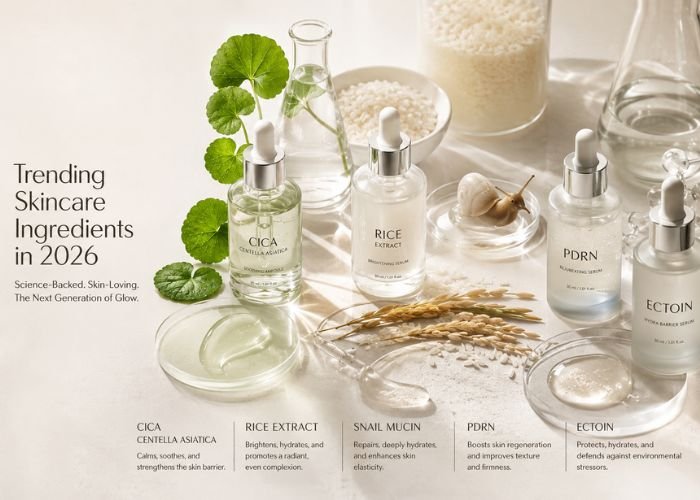
New ingredients continue to shape K-Beauty trends.
Here are some worth knowing:
Cica (Centella Asiatica)
Helps calm redness and irritation.
Best for:
- Sensitive skin
- Acne-prone skin
Rice Extract
Known for brightening and hydration.
Best for:
- Dull skin
- Uneven texture
Snail Mucin
Supports hydration and skin repair.
Best for:
- Dry skin
- Damaged skin barrier
PDRN (Polydeoxyribonucleotide)
The “it” ingredient of 2026 for skin regeneration and healing.
Many skincare enthusiasts use it for smoother and healthier-looking skin.
Ectoin
A powerhouse ingredient for protecting the skin barrier against modern environmental stress and urban pollution.
Excellent for:
- Sensitive skin
- Dry skin
- Barrier repair
Common Mistakes Beginners Make
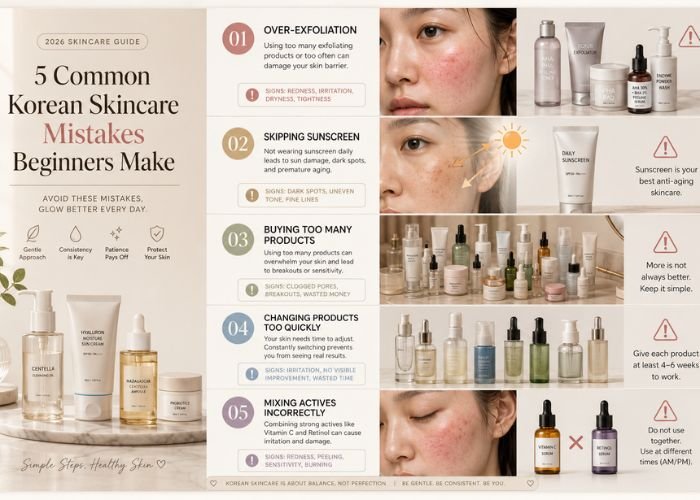
Starting skincare is exciting, but mistakes can slow your progress.
Mistake #1: Buying Too Many Products
More products do not mean better skin.
Start simple.
Mistake #2: Changing Products Too Fast
Give products time to work.
Most skincare takes 4–8 weeks.
Mistake #3: Skipping Sunscreen
Even the best routine will struggle without SPF.
Mistake #4: Over-Exfoliating
Too much exfoliation damages your skin barrier.
Beginners should exfoliate only 1–2 times per week.
Mistake #5: Mixing Vitamin C With Retinol
Beginners often use too many active ingredients at once.
Use Vitamin C in the morning and Retinol or Exosomes at night to reduce irritation and avoid skin sensitivity.
A Simple Beginner Korean Skincare Routine Example
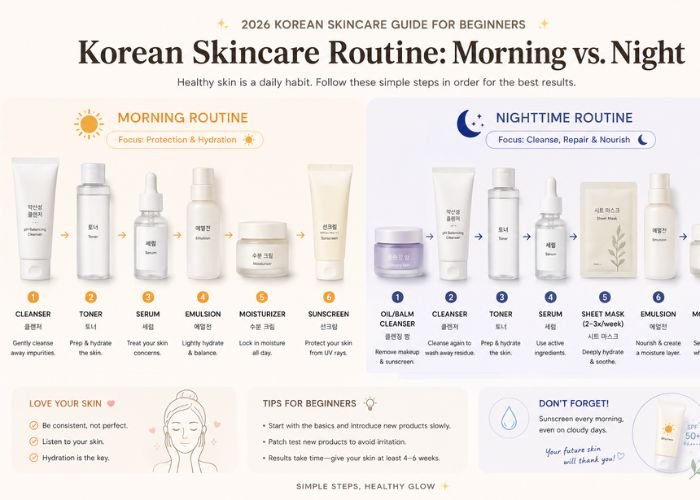
Morning Routine
- Gentle cleanser
- Hydrating toner pad
- Serum
- Moisturizer
- Sunscreen
Night Routine
- Cleanser
- Toner
- Treatment serum
- Moisturizer
Simple routines are easier to stay consistent with.
Consistency matters more than complexity.
How Long Does Korean Skincare Take to Work?
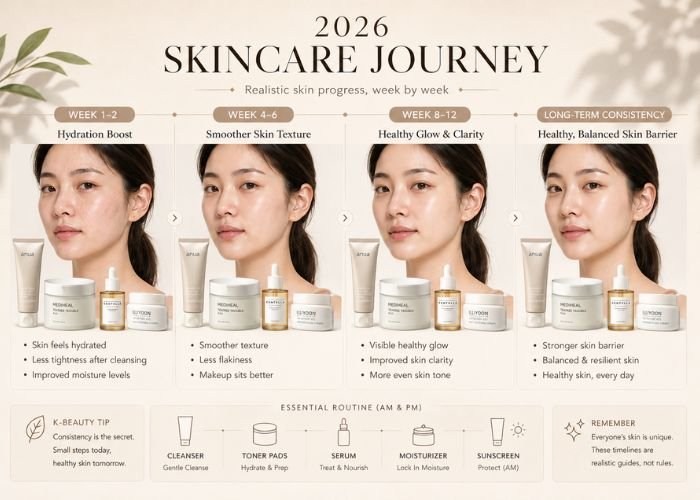
Many beginners expect instant results.
The truth is that skincare takes patience.
Typical timeline:
- 1–2 weeks: Better hydration
- 4–6 weeks: Smoother texture
- 8–12 weeks: Visible improvement
Healthy skin develops gradually.
Conclusion
Starting a Korean skincare routine in 2026 does not have to feel confusing.
You do not need 10 steps, expensive products, or complicated routines to achieve healthier-looking skin.
Instead, focus on the basics:
- Gentle cleansing
- Hydration
- One treatment serum
- Moisturizer
- Sunscreen
Modern Korean skincare is moving toward Skip-care and Skin Longevity, meaning fewer but smarter products that strengthen your skin over time.
Start small, stay consistent, and give your skin time to adjust. Healthy skin is not about perfection—it is about balance.
FAQs
Is Korean skincare good for beginners?
Yes. Korean skincare is beginner-friendly because it focuses on gentle products and hydration.
Do I need 10 skincare steps?
No. A 4–5 step routine is enough for most beginners.
How long before I see results?
Most people notice hydration within a few weeks, while bigger improvements may take 1–3 months.
Can oily skin use moisturizer?
Absolutely. Lightweight gel moisturizers work very well for oily skin.
Is Korean skincare eco-friendly in 2026?
Yes, many K-Beauty brands now focus on refillable packaging and cleaner beauty standards, making Korean skincare a more sustainable option for both your skin and the environment.